

Commercial floor coating
A floor that goes back to work the next morning.
We coat working concrete across Texas and Oklahoma. Warehouses, shops, kitchens, showrooms and hangars. One system, two coats of polyaspartic over a full flake broadcast, ground into the slab so it stays put under forklifts, hot tires and floor scrubbers.
Site walk before we quote · Written scope, no surprise change orders · 1,247 five star Google reviews
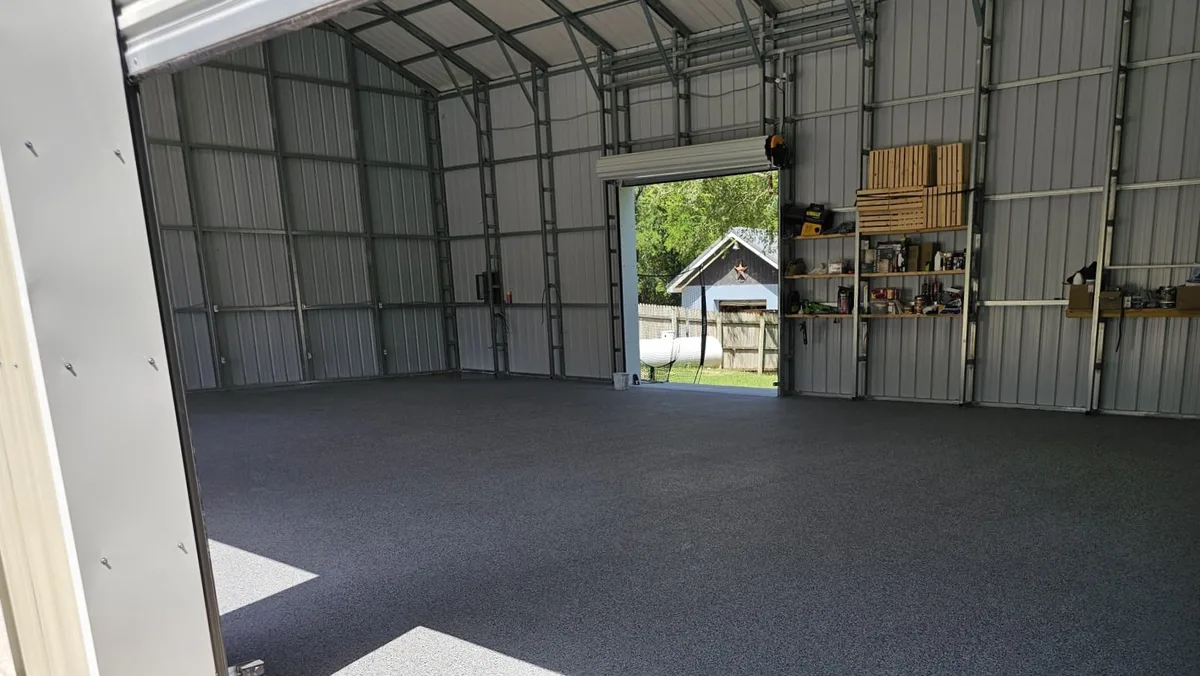 Our work
System
Two coats of polyaspartic
Surface
Full flake broadcast
Prep
Diamond ground, never acid etched
Back in service
Foot traffic next morning
Where it goes
Floors that get used hard.
A commercial slab has a job to do. It takes pallet jacks, dropped tools, grease, cleaning chemicals and a scrubber every night. These are the rooms we build for.
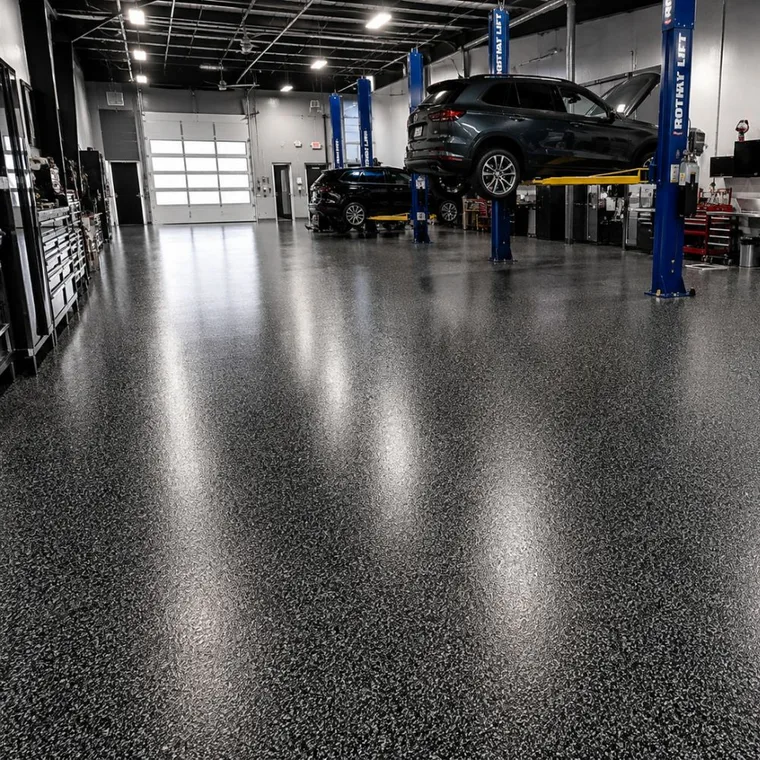
Auto shops and dealerships
Holds up to hot tires, dropped tools and brake fluid. Wipes clean instead of staining.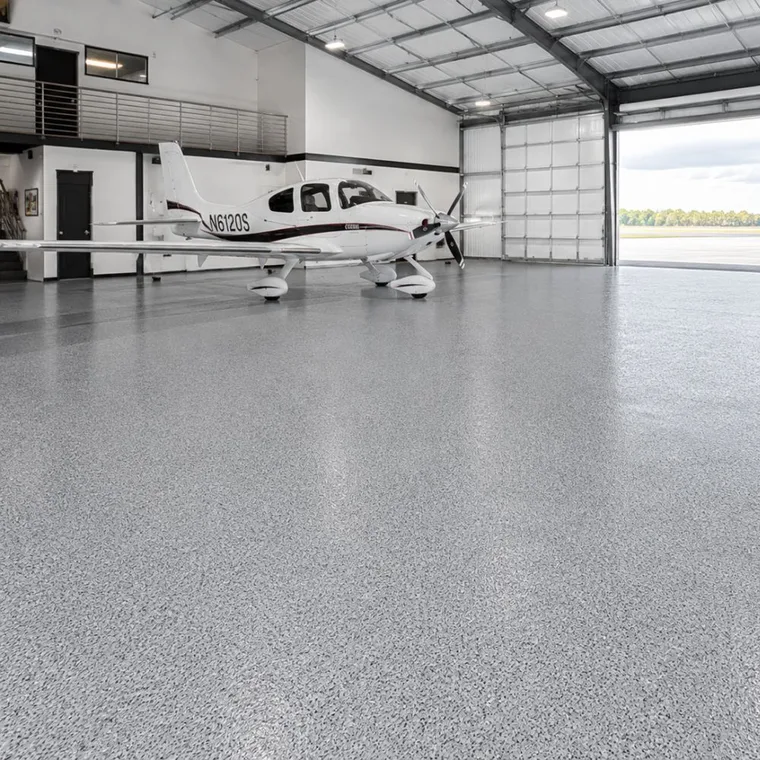
Hangars and aviation
Takes fuel, hydraulic fluid and tow-bar traffic, and stays bright enough to work under a wing.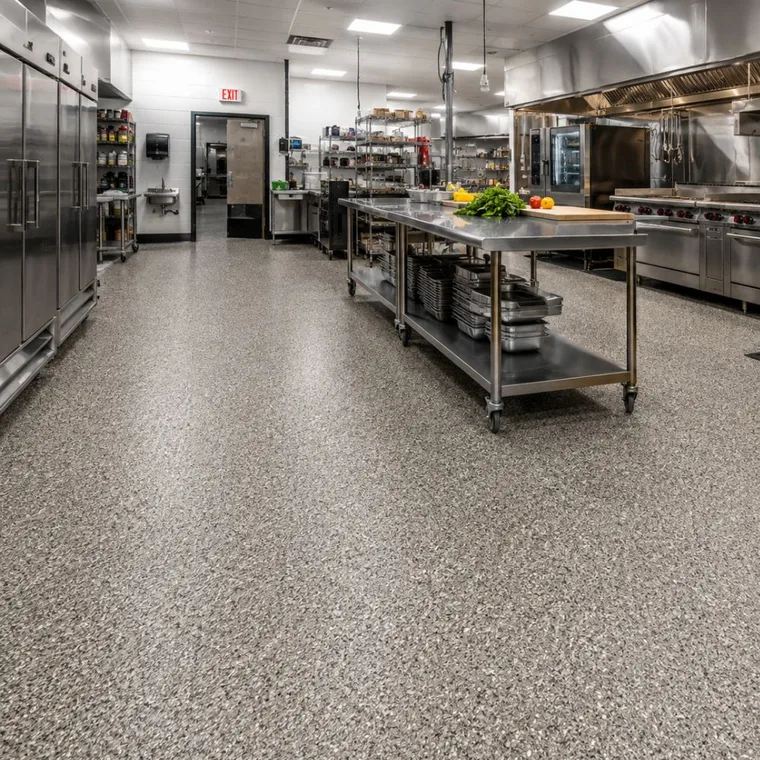
Kitchens and food service
Non porous and coved where you need it. We can add extra grip in wet zones.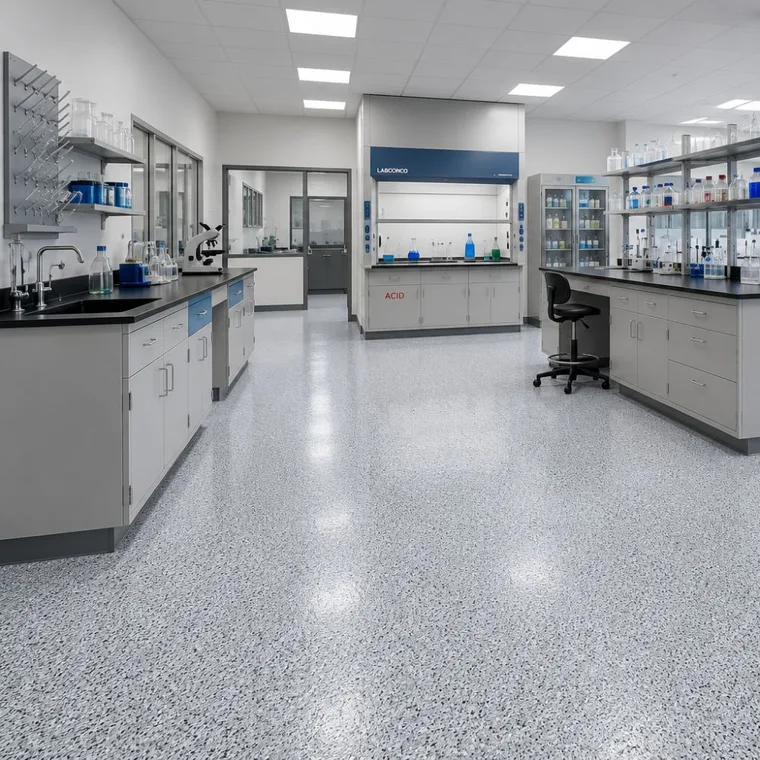
Labs and clinics
A hard, closed surface that mops clean. Light colors keep the room bright.Every space we coat
If it has a concrete floor, it is on this list.
Some of these need extra grip. Some need a light color to lift the room. Some need us to work after you close. Tell us which one you are and we will scope it that way.
Manufacturing, industrial and logistics
- Warehouses
- Distribution centers
- Manufacturing plants
- Light and heavy manufacturing
- Industrial facilities
- Loading docks
- Cold storage rooms
- Storage units
Automotive and parking
- Auto dealerships
- Service centers and car repair
- Tire shops
- Car wash facilities
- Parking garages
- Apartment complex garages
- Airplane hangars
- Fire and police stations
Food and hospitality
- Restaurants and cafes
- Commercial kitchens
- Grocery stores and supermarkets
- Food processing facilities
- Breweries and wineries
- Hotel kitchens and back of house
- Event venues
Retail and public
- Retail stores and storefronts
- Showrooms
- Shopping mall backrooms and corridors
- Churches and activity halls
- Community centers
- Art galleries and studios
- Restrooms and locker rooms
Health, science and animal care
- Medical clinics, non sterile zones
- Hospitals, non sterile areas
- Laboratories
- Veterinary clinics
- Dog daycares and kennels
Office, school and fitness
- Office break rooms and maintenance areas
- Schools and universities, maintenance areas
- Municipal buildings
- Gyms and fitness centers
- Fitness studios
- Technology centers
Not on the list? Ask anyway. The question we actually need answered is what the floor takes all day, not what the building is called.
Why polyaspartic
Built around your downtime, not ours.
The reason we run one system on every job is that it is the one that gets you back open fastest without giving up the hard wearing surface.
UV stable
It does not yellow
Sunlight through a roll-up door or a storefront window turns a lot of coatings amber. Polyaspartic is UV stable, so a dock door bay still matches the back of the building in five years.
Year round
It cures in Texas heat and in the cold
Polyaspartic cures across a much wider temperature range than epoxy, which is one of the reasons we do not install epoxy at all. A January install and a July install both set properly, and that is what makes a one visit schedule realistic.
1 day
Installed in a single visit
Grind, repair, base coat, flake and top coat all happen in one visit for most rooms. Foot traffic is fine the next morning. Rolling loads and vehicles wait 48 hours from the time the top coat goes down.
Seamless
No seams, no grout lines
The finish is continuous across the slab. Nothing collects in a joint, so a mop or a scrubber actually gets the floor clean instead of pushing dirt into a line.
We install polyaspartic and nothing else. No epoxy, no polyurea. It is a narrower business than most coating companies run, and it is the reason our crews are fast and our failure rate is low. The full step by step is on the installation process page.
How a commercial job runs
Four steps, and you know the number before anyone shows up with a grinder.
Tell us about the space
Square footage, what happens on the floor, and when you can be closed. Photos of the slab help more than anything else you can send.
We walk the site
Commercial slabs get measured and inspected in person. Cracks, moisture, old coatings and expansion joints all change the scope, and we would rather find them now.
You get a written scope and a price
Prep method, repair list, system, color, square footage and schedule, all on one document. What is not on it is not in the price, and we do not add to it later.
We install around your hours
Nights, weekends and phased sections so one part of the building keeps running while another is down. Most rooms are one visit.
Budget
What a commercial floor coating costs.
Most commercial polyaspartic work lands in this range, installed. We publish it so you can build a budget before you talk to anyone, including us.
$5 to $10
Per square foot, installedA 5,000 square foot warehouse floor therefore sits somewhere around $25,000 to $50,000. The site walk is what turns that range into one number.
- What the slab is like now A clean, sound slab is the cheap end. Cracks, spalling, moisture and oil saturation all add prep.
- Whether something has to come off first Grinding an old failing coating off is real labor and it is the single biggest swing in a commercial number.
- How big the floor is Square footage works in your favor. The per foot number drops as the area goes up, because mobilization is spread across more floor.
- What the floor has to do Extra grip in a wash bay, a coved edge in a kitchen, a heavier build in a forklift aisle. Spec moves price.
- When we can have it Nights, weekends and phased sections keep you open. They also change the crew schedule, so we price them honestly rather than hiding them.
Get a number
Send us four things and we can scope it.
- Square footage An estimate is fine. We measure it properly at the site walk.
- What the floor takes all day Forklifts, hot tires, grease, chemicals, standing water. This is what sets the spec.
- A few photos of the slab Cracks, old coating, oil staining and joints. Corners and doorways too. Email them to hello@mygaragefloors.com or text them to (469) 990-9990.
- When you can be closed A night, a weekend, or a section at a time. We schedule around it.
No home visit, no sales appointment, no pressure. If the job is not a fit for a polyaspartic system we will say so.
We carry general liability insurance and we will send a certificate to your facility or your general contractor before we mobilize.
Commercial work is quoted, not calculated. The online calculator is built for residential garages, so a commercial floor goes through a person.
Regular territory: Dallas, Fort Worth, Austin, San Antonio, Houston and Oklahoma City. We take commercial work outside those metros too, so ask.
- Commercial inquiry
- Start the form
- Phone
- (469) 990-9990
- hello@mygaragefloors.com
Questions
The ones facility managers ask first.
How long does the floor have to be out of service?
Most rooms are ground, repaired, coated and flaked in a single visit. Foot traffic is fine the next morning. Rolling loads, pallet jacks and vehicles wait 48 hours from the time the top coat goes down.
On a large building we phase it. One section gets coated while the rest of the floor stays open, then we move.
Can you work nights and weekends?
Yes, and on most commercial jobs we do. Tell us the window you can hand the floor over and we will build the schedule around it.
There is already a coating on the slab. Does it have to come off?
Usually yes. We diamond grind the slab open so the new coating bonds to concrete rather than to somebody else's old product. A coating that is already failing will take the new one with it if you cover it instead of removing it.
That is one of the things the site walk is for. Removal changes the price, so we would rather find it before you get the number.
How slippery is it when it is wet?
The flake broadcast gives the floor texture on its own, which is already more grip than a smooth sealed slab. Where you need more, in a kitchen, a wash bay or a walk-in cooler, we add an aggregate to the top coat and the floor comes out with real bite.
Tell us where water lands and we will spec the grip zone by zone.
Do you do epoxy?
No. We install two coats of polyaspartic over a full flake broadcast, and that is the only system we sell. Epoxy is cheaper to buy, slower to cure and it ambers in sunlight. Running one system is why our crews are quick and our callback rate is low.
What colors can we have?
Eight flake colors, and you can see them all on the colors page. Every finish is built the same way, so pick on how the room needs to look rather than on the build.
For a brand-facing space, send us your palette and we will tell you whether a flake blend can get close to it.
How far do you travel?
We run crews across Texas and Oklahoma. Dallas, Fort Worth, Austin, San Antonio, Houston and Oklahoma City are all regular territory, and we take commercial work outside those metros. Ask and we will confirm the drive before we quote.
What warranty comes with a commercial floor?
The warranty terms for a commercial job are written into your proposal, because the right cover depends on what the floor is going to take. You will see them in writing before you sign anything, not after.
Tell us what the floor has to survive.
Send the square footage and a few photos. We will walk the site, put a scope in writing and give you a number.
