Polyaspartic patio floor coating

Polyaspartic patio coating that will not yellow in the Texas sun.

The sun is what ruins a patio floor. We diamond grind the slab, then lay two coats of polyaspartic that will not amber the way an epoxy patio does. Covered patios, back porches, pool surrounds and walkways.

No home visit · No salesperson · 5.0 from 1,200+ Google reviews

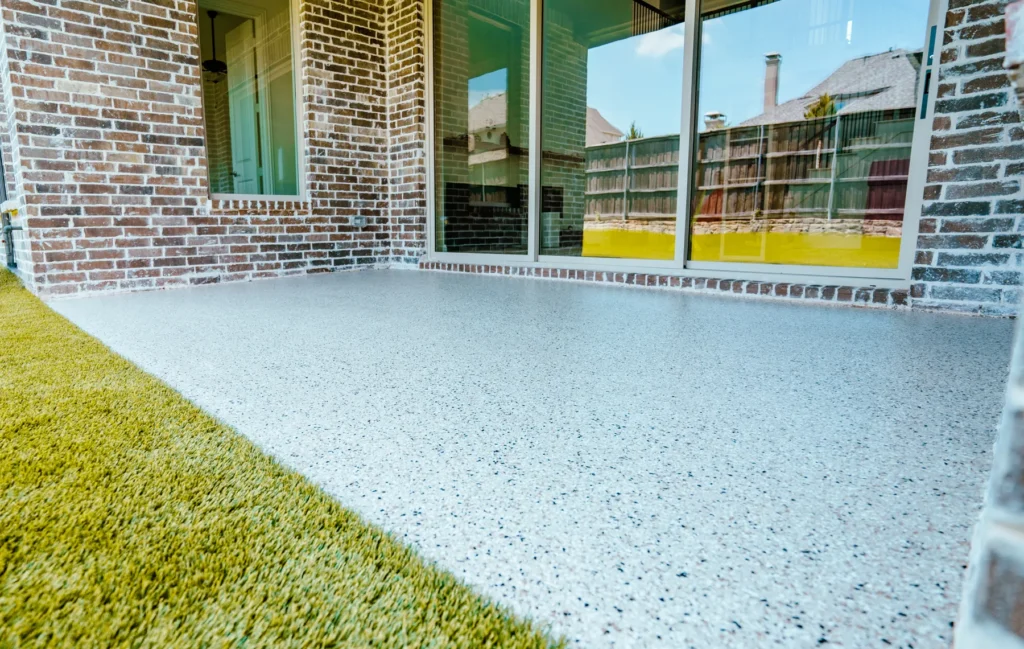
A finished patio floor in light blue and white polyaspartic flake, running up to the brick of the house and the edge of the lawn Our work
10 yrWarranty on patios, pool surrounds and exterior slabs
48 hrBefore the furniture goes back on it
ZeroEpoxy patios installed. Not one, ever
8Flake colors, every one the same build

Polyaspartic or epoxy

Polyaspartic floor coating, built for outside.

Outside is a harder job than a garage. The slab takes direct ultraviolet light, it moves through a Texas freeze and thaw, and water sits on it. Those three things are exactly what epoxy is worst at.

Polyaspartic, what we install

  • Ultraviolet stable, so the color you choose is the color it stays. It does not amber.
  • Stays slightly flexible after it cures, so the slab can move underneath without cracking the finish.
  • Cures through moisture rather than fighting it, which matters on a slab that gets rained on.
  • The flake broadcast leaves real texture underfoot instead of a smooth sealed surface.
  • Each coat is ready for the next one without a long wait between them, so the floor spends less time open to the weather while it is going down.

Epoxy, what we do not

  • Ambers and yellows under ultraviolet light. A gray patio turns tea colored, and no amount of maintenance reverses it.
  • Cures hard and brittle, so the first real slab movement telegraphs straight through as a crack.
  • Blocks moisture rising through the concrete until the pressure lifts it off the slab in sheets.
  • Cheaper by the gallon, which is most of why it is still sold for outdoor work.

We wrote the long version of this, with photographs of what a failed epoxy patio actually looks like, in the dark side of epoxy patios. If you are choosing between the two systems, read that first. If you want the chemistry rather than the photographs, we compare the resins in polyaspartic versus polyurea.

Our work

Patios we have coated.

Real jobs, photographed on the day. No renders and no stock photography.

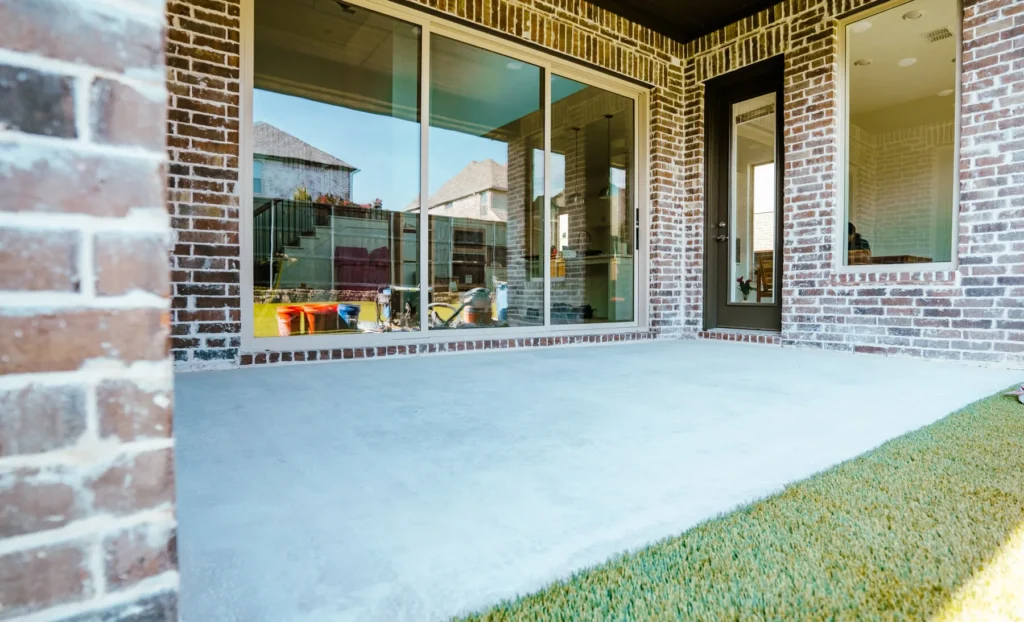
A bare concrete patio slab after a diamond grind, before any coating goes down, outside a brick house
Where every one of these starts: the bare slab, opened up with a diamond grind so the coating bonds to concrete instead of sitting on top of it.
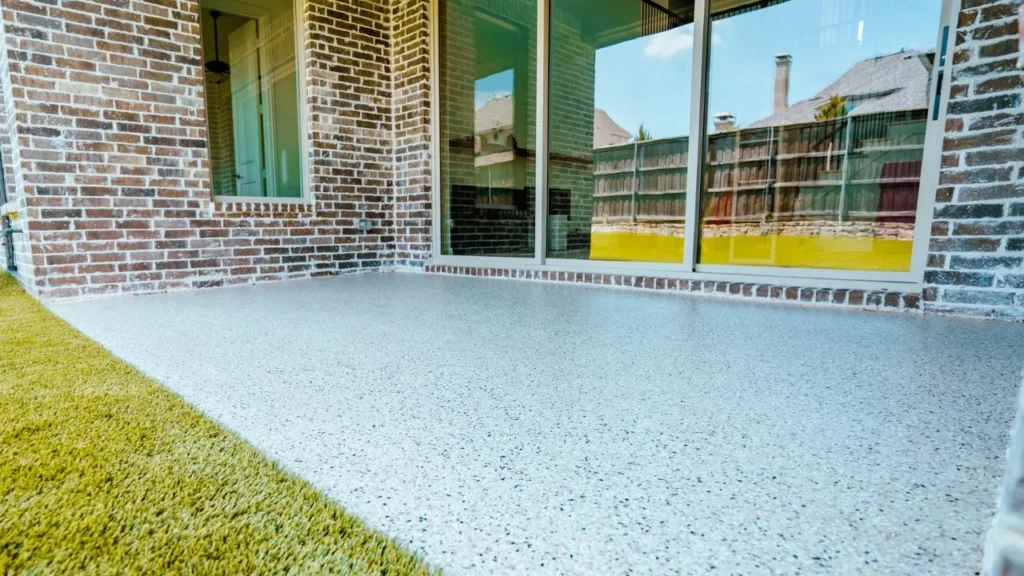
A covered patio finished in light blue and white flake polyaspartic coating next to a brick wall
The same flake blend against brick, under a patio cover.
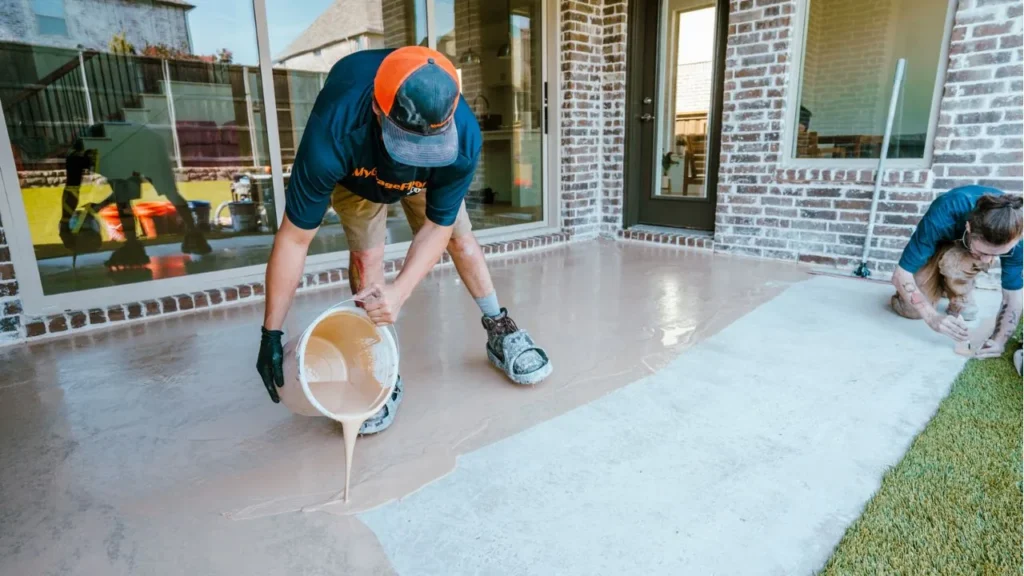
Two installers rolling polyaspartic patio floor coating onto a back patio outside a brick house
Base coat going down on a back patio.
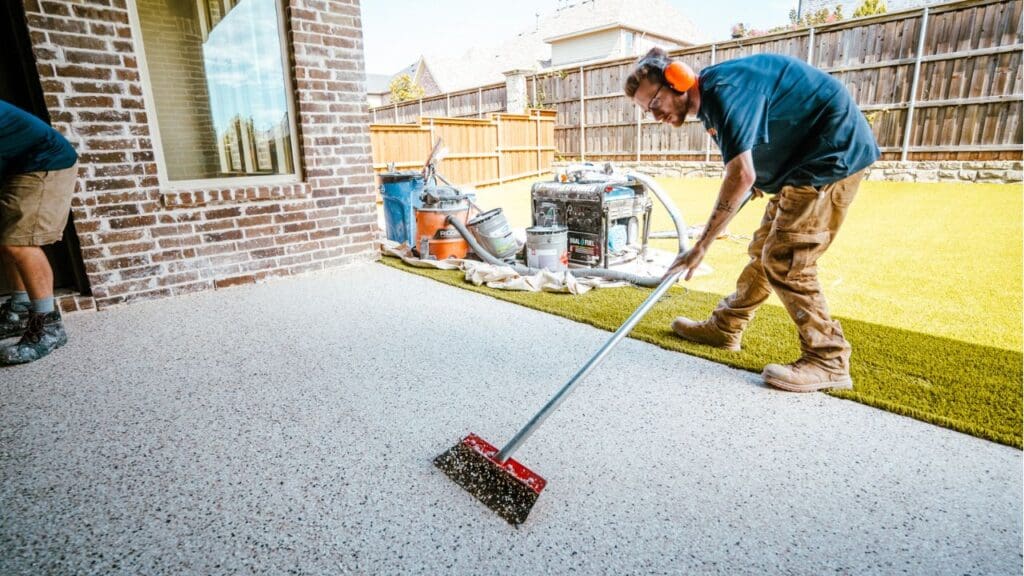
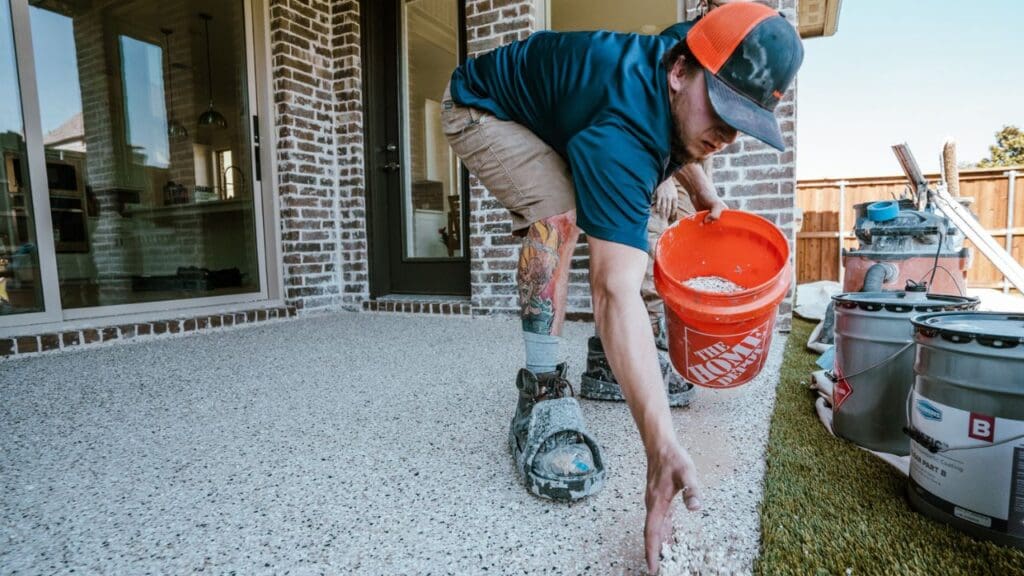
Two installers broadcasting color flake across a covered patio floor coating, one working the wet surface
Flake broadcast, thrown by hand into the wet base coat.
An installer applying the clear polyaspartic top coat to a patio floor with a squeegee
Clear top coat, the layer that takes the sun and the traffic.

Where it goes

Outside concrete we coat.

If it is a residential slab and water can reach it, the system is the same. What changes is the grip we spec and how we handle the edges.

Covered patios

The most common job we do outside. Shade keeps the surface cooler while we work, and the finish holds up to furniture, planters and a grill.

Back porches

Usually a smaller slab with a step or two. The coating runs up over the step and the nose of the tread so there is no seam where water can get under it.

Pool surrounds

Wet feet and standing water, so this is the one place we almost always add aggregate to the top coat for extra bite. Covered for 10 years, same as a patio.

Walkways and sidewalks

Side gates, the run from the drive to the front door, the path round to the back. Narrow slabs that take weather on every side.

Outdoor kitchens

Grease, dropped food and water in one spot. The flake surface cleans with a hose and a deck brush rather than a solvent.

Front entries and steps

The first thing anybody sees. Steps need the aggregate for grip, and the color is usually picked to work with the brick rather than the garage.

How it runs

Five steps, and nobody comes out to sell you anything.

  1. You price it yourself, online

    Put in the patio size and pick a color and you get the real number, not a range. No home visit and no appointment to sit through. Pick your install day in the same form.

  2. We grind the slab open

    Diamond grinders take the top layer off the concrete so the coating bonds to the slab itself, not to old sealer, paint or somebody else’s failed epoxy. This is the step that decides whether a floor lasts.

  3. Cracks and low spots get repaired

    Chips, spalling and cracks are filled and ground flat before any coating goes down. Expansion joints get treated rather than coated over, because a joint is there to move.

  4. Base coat, then the flake

    Polyaspartic base coat goes down and the color flake is broadcast into it while it is still wet, until the slab will not take any more, so the whole surface is covered rather than speckled.

  5. Scrape back, then the clear top coat

    The loose flake is scraped off and vacuumed, then a clear polyaspartic top coat seals everything in. Walk on it the next morning. Put the furniture back after 48 hours.

See the full installation process, step by step.

Warranty

Ten years outside, and we will tell you why it is not lifetime.

10 years on patios, pool surrounds and exterior residential slabs
Life on an interior garage floor, because a closed garage is an easier job
Why an outdoor floor gets the shorter term
A patio takes direct sun, freeze and thaw, and standing water that a garage never sees. We would rather put a number on it that we can stand behind for the whole ten years than promise a lifetime outside and argue with you about it in year twelve.
What the ten years actually covers
Peeling and blistering of the coating itself. If the coating fails, we come back and fix it.
What it does not cover
New movement in the slab underneath. Concrete cracks because the ground moves, and no coating applied to that slab stops it, by us or by anyone else. We will always tell you before we start if we can see a slab that is likely to move. Outside, the written terms also exclude appearance change from sun and weather, water pushing up from under the slab, ordinary wear, impact and scratching, and any work done by somebody else. The full warranty terms list every one of them.
It covers you, not the next owner
The warranty is non-transferable, so it runs to the original purchaser. The floor stays with the house if you sell; the coverage does not. Read the full warranty terms.
“Wow, I never imagined how good my patio could look. Very prompt, professional, and the cleanup was perfect. Also, the anti-skid they put on at the end is perfect for getting in and out of the hot tub and not slippery at all.”
Joy M. · Prosper, Texas · five stars on Google

Read the rest of the reviews

Service area

Six metros across Texas and Oklahoma.

Our own crews, not subcontractors. Pick your city for local pricing and install days.

Questions

Patio coating questions

Is a coated patio slippery when it is wet?

The flake broadcast gives the floor texture on its own, so it already has more grip than a smooth sealed slab. Around a pool, on steps, or anywhere water collects, we add an aggregate to the clear top coat and the surface comes out with real bite. Wet is still wet, though, and no floor changes that. Tell us where the water lands and we will spec the grip for that area.

Can you coat a patio that already has paint or epoxy on it?

Yes, and the old product comes off first. We diamond grind the slab so the new coating bonds to concrete rather than to a finish that is already letting go. A coating that is failing will take a new one down with it if you cover it instead of removing it. Heavy removal can change the price, so we would rather find it before you get the number than after.

Will the color fade in the sun?

Polyaspartic is ultraviolet stable, which is the main reason we use it outside. That is the single biggest difference between what we install and an epoxy patio, which ambers whether it is in the shade or not. Being straight with you about the paperwork: on an outdoor slab the written warranty covers peeling and blistering, and it does not cover appearance change from sun and weather. We would rather you read that here than find it in year six.

How long does a patio floor coating last?

It is covered for ten years outside. In practice the thing that ends an outdoor floor is not the coating wearing out, it is the slab underneath moving and cracking. A polyaspartic finish is slightly flexible, so it tolerates small movement that would crack epoxy straight away.

When can we use the patio again?

You can walk on it the next morning. Keep the furniture and the planters off it for 48 hours from the time the top coat goes down, and give it the same 48 hours before you hose it off.

What are the cracks in my patio going to look like afterwards?

We fill and grind them flat before the coating goes on, so a repaired crack disappears into the flake. Expansion joints are different. A joint exists so the slab can move, so we treat it rather than bury it, and you will still see the line.

What colors can I have?

Eight flake colors, and they are all on the colors page. Every finish is built exactly the same way, so choose on how it looks against your house rather than on the build. Outside, most people pick the blend that works with their brick.

Do you coat the garage and the patio on the same visit?

Usually yes, and it is the cheaper way to do both because the crew, the grinders and the mobilization are already there. Add both slabs in the pricing form and you will see the combined number before you book anything. The garage floor coating page covers the inside job.

How much does patio floor coating cost?

It depends on the square footage, the condition of the slab, the color and whether you need added grip. Rather than publish a range that will be wrong for your patio, we built a form that gives you the real number in about a minute, with no home visit and nobody calling you. See your patio price.

See what your patio costs.

Size, color, install day and the real price, in about a minute. No home visit and no salesperson.

Covered for 10 years outside · Price match guarantee · More questions