Commercial kitchen flooring

Commercial kitchen flooring for grease, hot water and the health inspector.

A kitchen floor takes hot grease, boiling water, food acid and a degreaser mop every single night, and it has to keep its grip while all of that is happening. We diamond grind the slab, cove the coating up the wall and into the drains, and finish it with the texture the room actually needs. Epoxy, polyaspartic, polished concrete and grind and seal are all commercial systems we install, and the site walk is what decides which one goes down.

Site walk before we quote · Written scope, no surprise change orders · 5.0 from 1,200+ Google reviews

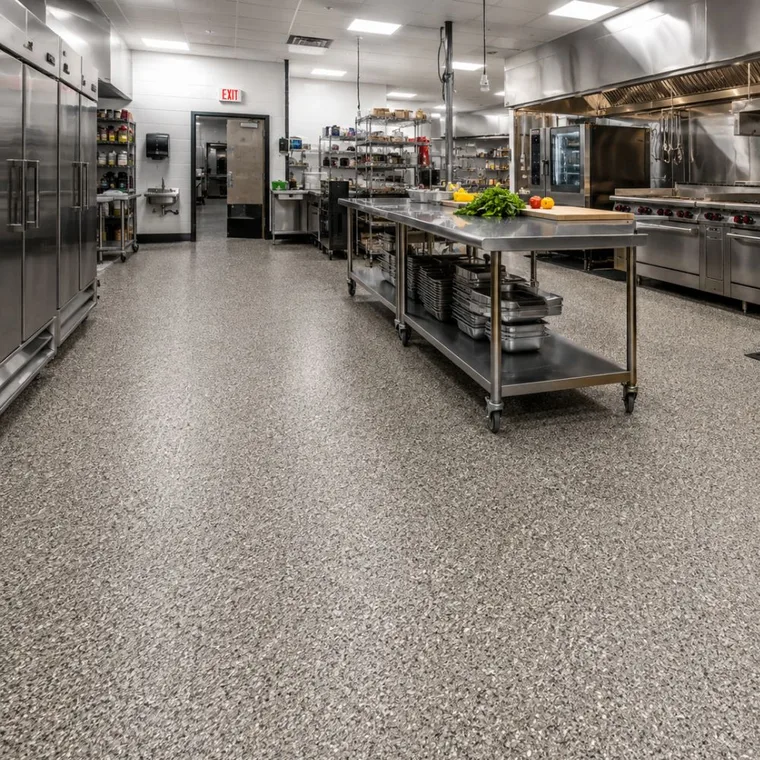
A commercial kitchen with a seamless coated floor running under the line and into the drains
CovedUp the wall and into the drains, so there is no open joint at floor level
GripAggregate in the top coat, specified station by station
GrindWe diamond grind the slab, never acid etch it
OpenNights, weekends and phased sections keep service running

What a kitchen floor takes

Six things a kitchen slab deals with that a dining room floor never does.

Specify the floor around these and it lasts. Specify it around how it looks on the day it is handed over and you are closing the kitchen again in two years.

Hot grease and fryer oil

Grease finds every pinhole and every open joint, and once it is in the slab it is in for good. A sealed, coved surface keeps it on top where a degreaser can lift it, and the cove at the wall is what stops it running into the one gap nobody mops.

Boiling water and steam

Water coming off a kettle or a dish machine is hot enough to shock a coating that is bonded to old sealer rather than to concrete. Grinding the slab open is what makes that bond hold, which is why we grind rather than etch.

Food acid and sugar

Tomato, citrus, vinegar and sugar syrup all attack a floor in their own way, and in a kitchen they land on it daily rather than occasionally. Chemical resistance is a specification, not a bonus, and it is one of the things the site walk settles.

Degreaser, every night

Kitchen cleaning is aggressive by design. The floor gets a caustic degreaser and a deck brush at the end of every service, and it has to take that for years without hazing, softening or lifting at the edges.

Standing water at the dish pit

The dish pit and the ice machine are wet all day, so that is where grip matters most and where a floor fails first. We specify the aggregate in the top coat by station rather than putting one texture across the whole room.

Speed racks, hot pans and dropped steel

Castors drag, racks get shoved into corners and steel gets dropped. A kitchen floor is a working surface, and the build has to be specified for the traffic rather than for the photograph.


Which system goes in a kitchen

Four commercial systems, and the room decides.

Most people call every commercial floor epoxy, and the word is doing a lot of work. These are the four systems we actually install. The choice comes down to what rolls across the floor, what spills on it, how many hours we have between shifts and how it needs to look.

Epoxy

  • Builds thick, so it fills and levels a slab that has been patched over the years.
  • Bonds hard and holds a heavy static load, which suits back of house, dry stores and walk in rooms.
  • Takes longer to cure, so it fits a kitchen that has a full closure or a quiet stretch in the calendar.
  • Often the right base coat under a faster top coat, which is how a lot of commercial floors are actually built.

Polyaspartic

  • Cures fast. Foot traffic the next morning, so a kitchen can close after service and open for breakfast.
  • Chemically resistant to the degreasers, quats and food acids a kitchen uses every night.
  • Stays slightly flexible, so movement in the slab does not crack the finish open.
  • Ultraviolet stable, which matters wherever daylight reaches the floor.
  • Low odour and low VOC, so the building is usable again quickly.

Polished concrete

  • The slab itself, ground and densified rather than coated, so there is no film to peel.
  • Suits dry stores, prep rooms, corridors and front of house where the look is part of the room.
  • Reflects light, which lifts the light level in the whole space without new fittings.
  • Wants a sound slab underneath, which is one of the things we check at the walk.

Grind and seal

  • The slab ground flat and sealed, so a rough or patched floor becomes a cleanable one.
  • The quickest route from bare concrete to a surface that mops rather than absorbs.
  • Sits between a bare slab and a full build, and it can be built on later.
  • A good answer for a back of house area that needs sealing now and a decision later.

The surface

What a finished commercial floor looks like up close.

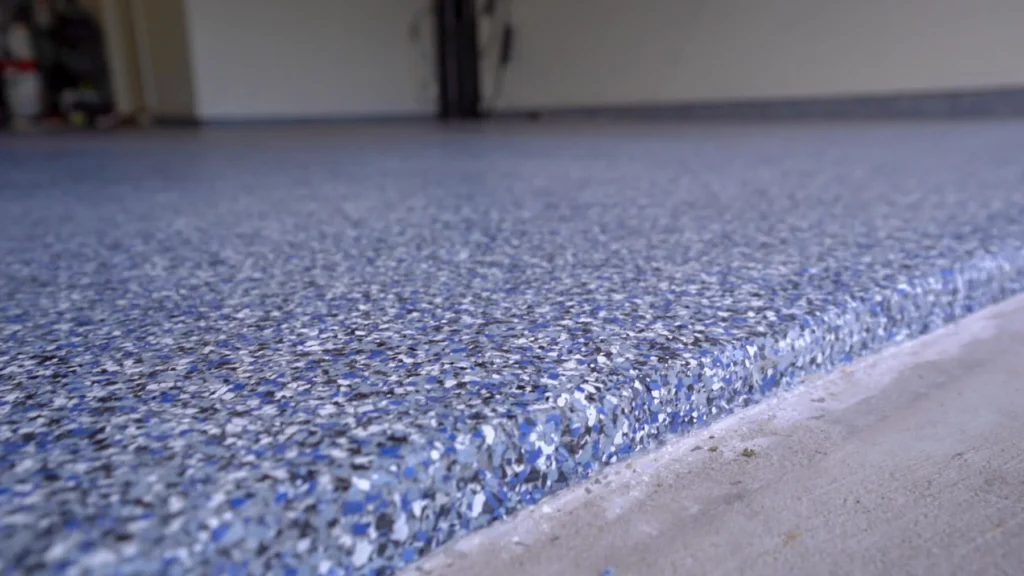
On the left, the kind of kitchen this page is written for. On the right, one of our finished surfaces photographed close enough to see the texture.

A stainless steel commercial kitchen line with a seamless floor running under the equipment
A working line. Everything on this floor is on castors or carries heat, and the drains are the lowest point in the room.
Close up of a finished blue gray flake floor meeting bare concrete at the door line
One of our finished surfaces up close. The texture you can see is the flake, and it is what gives a wet floor its grip.

How a kitchen job runs

Five steps, and you do not lose a service.

A restaurant cannot close for a week, so the schedule is built around your calendar rather than ours.

  1. Site walk before we quote

    We come out and look at the slab, the drains, the coves, the line and the dish pit. Square footage off a drawing does not tell us whether there is a sealer on the concrete, where the water goes, or which stations need extra grip.

  2. A written scope, not a number on a card

    You get the areas, the preparation method, the system by room, the grip specification station by station and the warranty terms in writing. No surprise change orders halfway through, because the walk is where the surprises get found.

  3. We schedule around your service

    Nights, weekends and phased sections. The dish pit goes down while the line keeps working, then we move. Tell us your quietest stretch and we will work to it.

  4. Diamond grinding, repair, coves and drains

    The slab is ground open so the system bonds to concrete rather than to old sealer or a failing coating. Cracks and spalling are repaired, then the coves are formed at the walls and the floor is detailed into every drain.

  5. Build, then a non-slip top coat

    The system specified at the walk goes down in order, and the top coat carries aggregate wherever we have specified grip. Foot traffic the next morning on a polyaspartic build.

The commercial floor coating page covers how we work in a building that cannot close, and the installation process goes through every step in detail.

Who it is for

Restaurants, commissaries and institutional kitchens.

Restaurant and bar kitchens

A line, a dish pit, a walk in and a bar well, all with different grip and different chemicals landing on them. These are the rooms where specifying one texture across the whole floor is the thing that goes wrong.

Commissary and food production

Bigger floors, longer wash downs and equipment that stays put. Here the question is usually how much of the building we can take at once and still leave you producing.

School, hospital and church kitchens

Institutional kitchens have a calendar with real gaps in it, which means a wider set of systems is open to you. A summer break or a quiet week changes what we can recommend.

Warranty

What is covered, in writing, before you sign.

Written into your proposal on a commercial kitchen
Own crews in all six metros, not subcontractors
On a commercial kitchen
The warranty terms are written into your proposal, because the right cover depends on what the floor is going to take. A fryer line degreased nightly is a different floor from a dry store, and quoting one number for both would mean one of you was being sold the wrong promise.
Why we walk the building first
Square footage off a drawing does not tell us whether there is a sealer on the slab, how much moisture is coming up through it, where the water goes or which areas need extra grip. The walk is where the surprises get found, which is why there are no surprise change orders afterwards.
What no coating covers
New movement in the slab underneath. Concrete cracks because the ground moves, and no coating stops that, ours or anybody else’s. If we can see a slab that is likely to move, or moisture pushing up through it, we tell you at the site walk rather than after you have paid. The warranty page lists every term and every exclusion.

Service area

Six metros across Texas and Oklahoma.

Our own crews, not subcontractors. Commercial work is quoted after a site walk.

Questions

Commercial kitchen flooring questions

Do you do commercial epoxy flooring in kitchens?

Yes. Epoxy is one of four commercial systems we install, alongside polyaspartic, polished concrete and grind and seal. Which one goes in your kitchen comes out of the site walk: what the slab is like, what lands on the floor, how much time we have between services and how the room needs to look. On a lot of kitchens the answer is a build that uses more than one of them.

Will the floor be slippery when it is wet and greasy?

Not where we have specified against it. Grip comes from aggregate carried in the top coat, and we specify it station by station rather than putting one texture across the whole room. The dish pit, the ice machine and the area around the fryers usually get more bite than a dry store or a corridor. Tell us at the walk where the water and the grease land.

Can we stay open while you install?

Yes, on most jobs. We work nights, weekends and in phased sections, so one area is down while the rest of the kitchen keeps going, then we move across. Give us your quietest stretch and your service times and we will build the schedule around them.

How soon can we cook on it?

On a polyaspartic build, foot traffic the next morning. Give it 48 hours from the time the top coat goes down before heavy equipment goes back and before a full wash down. An epoxy build cures more slowly, which is part of why the system is chosen at the walk rather than in advance.

What cleaners can we use on it?

Your normal kitchen routine. These systems are specified for the degreasers, quats and food acids a commercial kitchen uses nightly, which is the same reason polyaspartic is specified in veterinary clinics and kennels. No special cleaner, no stripping and no resealing: a mop, a deck brush or a scrubber is enough.

Does it go up the walls and into the floor drains?

Where it needs to. We cove the finish up the wall and carry it into the drain so there is no open joint at floor level for grease and water to get under. That detail is decided at the site walk and written into the scope, because it is the difference between a floor that stays sealed and one that fails at the edges first.

Is polished concrete an option for a kitchen?

In the right rooms, yes. Polished concrete is the slab itself ground and densified, so there is no film to peel, and it suits dry stores, prep rooms, corridors and front of house. A wet cooking line is usually better served by a coated system with aggregate in the top coat. We sell polished concrete and grind and seal on commercial work, so both are genuinely on the table when we walk your building.

What does commercial kitchen flooring cost?

We quote after a site walk, because the price turns on the condition of the slab, the drains and coves, the system the room calls for, the grip specification and how much of the work has to happen at night. You get a written scope rather than a number on a card. Request a quote or call (469) 990-9990.

Tell us what your kitchen floor takes every night.

The line, the dish pit, the walk in or the whole back of house. We will walk the building, write the scope and schedule it around your service.

Site walk before we quote · Commercial floor coating · Warranty · hello@mygaragefloors.com