

Polyaspartic vs polyurea
Polyurea underneath? That's where the yellowing starts.
Many companies use polyurea as the base, then cover it with a polyaspartic top coat, while still calling the system "polyaspartic." As the top coat wears, the polyurea underneath can yellow and show through. We don't mix systems. Polyaspartic base. Polyaspartic top coat. Top to bottom.
No home visit. No sales appointment. No pressure.
The short answer
If you only read one screen, read this one.
It holds its color in sunlight, bonds deeper into the concrete, and does not yellow at any depth. The polyurea used as a base coat does yellow. That is why it gets buried.
Polyurea goes down first because it is cheaper, then polyaspartic goes over the top of it. The quote says polyaspartic. Only the coat you can see is.
Nearly every company finishes with a polyaspartic top coat. Almost nobody starts with one. Ask what the first coat is, because that is the layer that fails.
Cut the floor in half
Same top coat. Completely different floor.
Almost every company finishes with polyaspartic. Almost nobody starts with it. Here are the three floors you will be quoted, in cross section.
Epoxy base
Epoxy base. Polyaspartic top.
- Top coat is polyaspartic, same as ours
- Base sits on the concrete instead of bonding into it
- Goes rigid, then cracks when the slab moves
- Hot tires lift the base and the floor comes with it
Polyurea base
Polyurea base. Polyaspartic top.
- A real upgrade over an epoxy base
- The base still yellows once the top coat wears thin
- Sets very fast, which leaves a short window to get the bond right
- Sold as polyaspartic when only the top coat is
100% polyaspartic
Polyaspartic base. Polyaspartic top.
- Never yellows, at any depth
- Bonds down into the concrete, not onto it
- Flexes with the slab through Texas heat
- Lifetime warranty, and the lowest price
The question was never which product is named on the brochure. It is how far down the polyaspartic goes. Ours goes all the way to the concrete. See how we build the four layers, coat by coat.
Side by side
What you are actually comparing.
Eleven questions worth asking before you sign anything.
Every column ends in polyaspartic. Only one of them starts there. That is the entire difference, and it is the one line item most quotes leave out. Our price match only compares systems that match ours coat for coat, for the same reason.
The honest part
Where polyurea genuinely wins.
Polyurea is a good material. If a company is offering you a polyurea base instead of an epoxy one, they have already made the harder of the two decisions.
It beats epoxy on almost everything
Polyurea flexes with the slab, cures in hours instead of days, and handles hot tires far better than epoxy. If your only two options are polyurea and epoxy, take the polyurea. Then ask whether there is a third option.
It is tougher on impact
Polyurea is used to line truck beds and bridge decks for a reason. In raw impact and abrasion, that flexibility is real. On a garage slab it is sunlight where it gives ground, which is why it never gets used as the visible coat.
It is cheaper per gallon
Polyurea costs less than polyaspartic, which is why so many systems use it for the thick coat underneath and save the better material for the thin one on top. That is a budget decision, and it is being made about your floor.
It sets fast, which cuts both ways
A polyurea base can be recoated the same day. It also gives the crew a very short working window, so a rushed or undertrained installer has far less room to correct a mistake before the material is locked in.
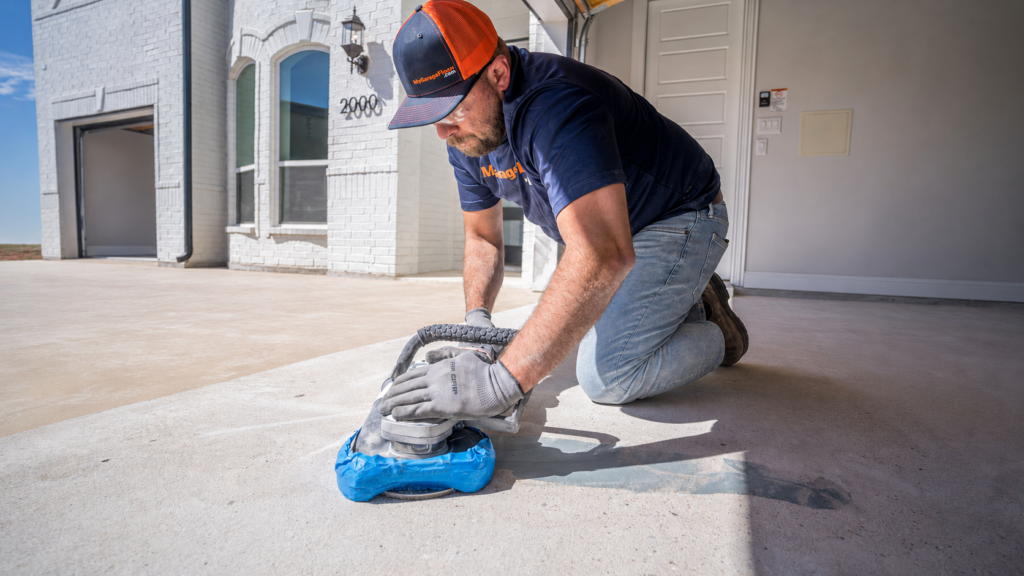
Read the quote, not the brochure
Why a polyurea floor gets sold to you as polyaspartic.
Because technically it is not a lie. The top coat really is polyaspartic. The word on the brochure describes the last coat that went down, not the system underneath it.
Here is how it usually reads. The quote says "polyaspartic garage floor coating." The finished floor looks identical to ours on install day. Two years in, the difference starts showing: the top coat wears thin in the tire paths, the polyurea base underneath meets sunlight for the first time, and the floor takes on a warm cast that no cleaning removes. By then the company that installed it is discussing what the warranty does not cover.
We do not sell polyurea or epoxy at all. Base coat and top coat are the same polyaspartic, and that is the only system we are willing to put a lifetime warranty on.
If a quote will not name the base coat in writing, that is the answer.
Polyurea vs polyaspartic cost
The full system costs less than the hybrid, not more.
That surprises people, so here is where the money actually goes.
Per square foot, industry
What a professionally installed coating typically runs. Most of that is not material. It is the commission, the showroom and the in-home sales appointment.
Layers you are paying for
In a hybrid system the expensive polyaspartic is only the thin top coat. The thick layer underneath is the cheaper material, priced to you as if it were not.
Salespeople to pay for
No commission, no showroom, no home visit. Price your floor online in about a minute and the number you see is the number you pay.
Cost of a warranty claim
If a full polyaspartic floor ever peels or delaminates while you own the home, we come back and fix it. A cheaper base coat is only cheaper until it fails.
We guarantee the best garage floor at the lowest price backed for life. That simple.
Full polyaspartic, installed
What the system looks like on a real slab.
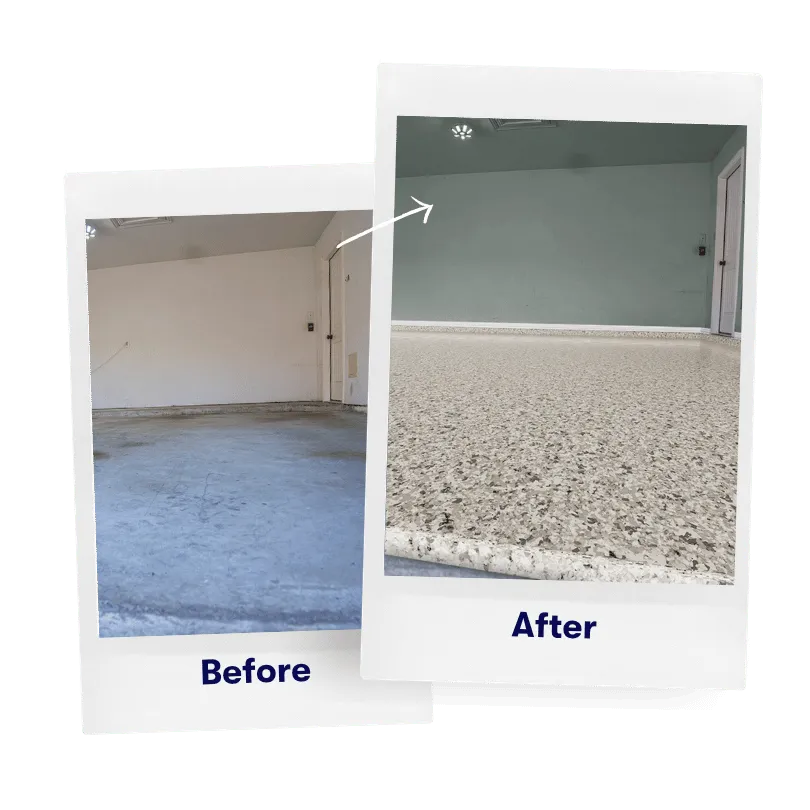
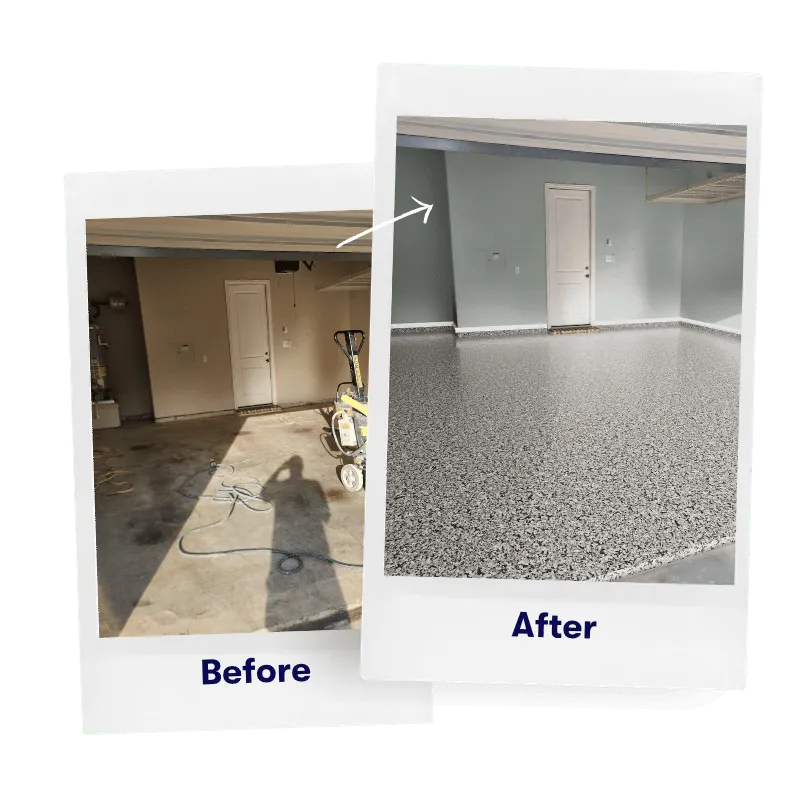
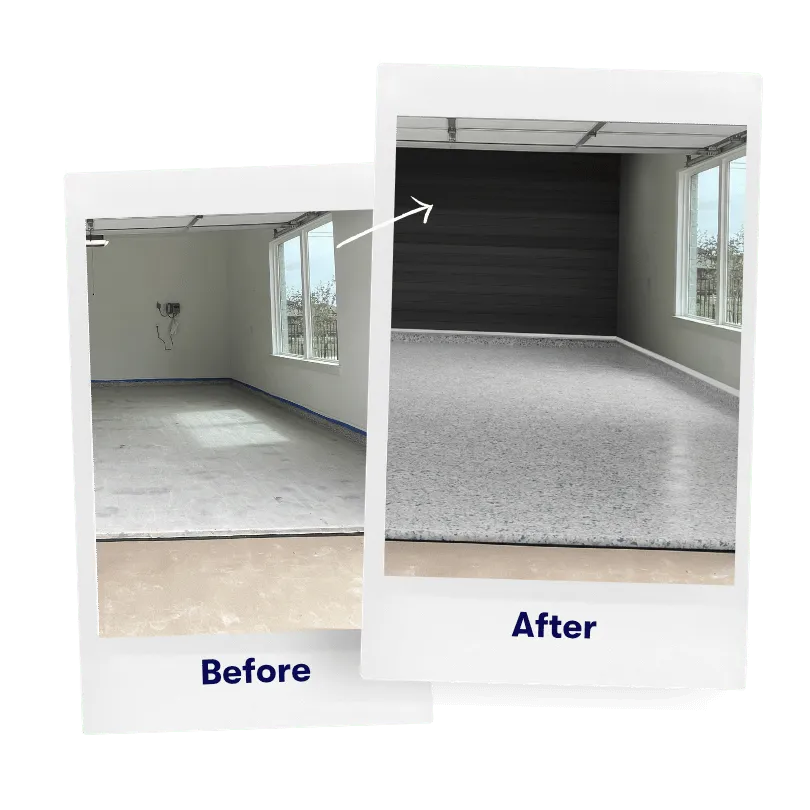
See every flake color we install, or read the nine step installation process we follow on every job.
Common questions
Polyaspartic vs polyurea.
Is polyaspartic the same as polyurea?
On your floor they are two different coats. Polyurea is the cheaper base most companies start with. Polyaspartic is the coat that goes over it. A mixed system uses both, and only the layer you can see is polyaspartic. We use polyaspartic for the base and the top, so there is nothing cheaper hiding underneath.
Which is better, polyurea or polyaspartic?
Polyaspartic, and the gap shows up in the base coat rather than the finish. Both cure fast and both flex with the slab. Polyaspartic also keeps its color at every depth, bonds deeper into ground concrete, and can be the coat you see, which a polyurea base cannot. A floor that is polyaspartic all the way down has no weaker layer waiting underneath.
What is the difference between polyurea and polyaspartic?
Where each one can be used, and what sunlight does to it. Polyurea holds up fine underneath but discolors once light reaches it, so it only works buried. Polyaspartic keeps its color, so it can be the coat you see. The difference you will actually notice is exactly that: a polyurea base goes warm and yellow once the coat above it wears thin, and a polyaspartic base never does.
Do you install polyurea?
No. We install polyaspartic for the base coat and the top coat, and we do not install epoxy at all. Nothing cheaper goes underneath. That is the only system we are willing to put a lifetime warranty on.
Why does a polyurea floor need a polyaspartic top coat?
Because the base would yellow if you left it exposed. The top coat is doing the UV work for the whole system. It also means the floor is only as strong as the layer underneath it, which is the layer you never see and rarely get told about. Ask any company what their base coat is before you sign.
How much does a polyurea or polyaspartic garage floor cost?
The industry charges $6 to $8 per square foot for a professional coating. We cut the salespeople, the commissions and the showrooms, and the savings go into the price instead. You can price your own garage online in about a minute, with no home visit and no phone call, and the number you see is the number you pay.
Is polyaspartic the same as polyurethane?
No. Polyurethane is a different product entirely, and it is usually used as a thin sealer over epoxy rather than as a coating in its own right. It is softer than polyaspartic, takes far longer to cure, and most polyurethane top coats are not UV stable either. Polyaspartic and polyurethane get compared because both are sold as clear coats, but they are not close in performance.
How long does a polyaspartic floor last?
20+ years for a full polyaspartic system. It does not yellow, and it flexes with the concrete through Texas and Oklahoma temperature swings instead of cracking. Maintenance is soap and a mop. Epoxy typically gives you 1 to 10 years. A hybrid depends entirely on how good the base coat underneath was.
Can I coat my own garage floor?
Big box epoxy kits exist, and they are the reason so many garages get recoated. Polyaspartic and polyurea both set fast, which leaves a very short working window, and the grinding step matters more than the coating step. Get either one wrong and the floor fails. This is a job for a trained crew.
What does the warranty cover?
Lifetime warranty on interior garage floor installations. 10 years on patios and outdoor concrete. 2 years on commercial floors. No registration is needed, because the warranty is attached to the job. If it ever peels or delaminates while you own the property, we come back and fix it at no charge.
See what a full polyaspartic floor costs.
About a minute, no home visit, and the price you see is the price you pay.
Polyaspartic base. Polyaspartic top. Backed for life.
