Industrial floor coating

Industrial floor coating for plants, shops and production floors.

A production floor takes point loads, dropped steel, hydraulic fluid and solvent, and it has to stay marked out so people and equipment keep apart. We diamond grind the slab, repair what is underneath it and put down the system the building calls for. Epoxy, polyaspartic, polished concrete and grind and seal are all commercial systems we install, and the site walk is what decides which one.

Site walk before we quote · Written scope, no surprise change orders · 5.0 from 1,200+ Google reviews

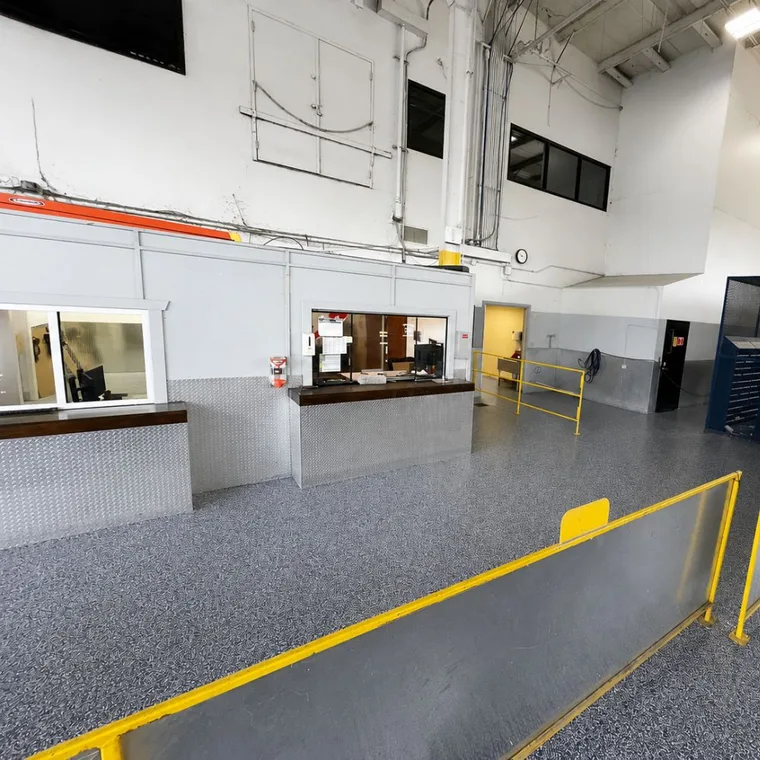
A manufacturing floor with a coated surface running between machines and marked walkways
LoadsSpecified for forklifts, point loads and dropped steel
MarkedAisles, walkways and equipment zones coated in, not taped on
GrindWe diamond grind the slab, never acid etch it
OpenNights, weekends and phased bays keep production running

What a plant floor takes

Six things a production slab deals with that an office floor never does.

Specify the floor around these and it lasts. Specify it around how it looks on handover and you are grinding it off again in two years.

Point loads and dropped steel

A machine foot, a jack stand or a pallet of bar stock puts more load through a few square inches than a forklift puts through a whole tyre. That is a build specification, and it is the first thing we take off a site walk.

Forklift and pallet jack traffic

Hard wheels turning under load are what scrub a floor open, and they do it in the same places every day: the turn out of a bay, the pinch point at a door, the apron in front of the racking.

Hydraulic fluid, coolant and solvent

On bare or sealed only concrete these soak in, darken the slab and keep coming back up. On a sealed surface they sit on top where they can be wiped, which also means a spill stops being a slip hazard the moment somebody gets to it.

Heat, sparks and welding

Weld spatter and grinding sparks land on the floor around a bay all day. Where that is happening, the specification changes, and a site walk is the only way to find out where it is happening in your building.

Chemical spills and wash down

Some plants hose the floor, some never do. The cleaning routine changes which system makes sense as much as the traffic does, so it is one of the questions we ask rather than one we assume.

Dust and tyre marking off bare concrete

An uncoated slab gives off fine dust continuously and picks up black tyre marks that never fully come out. Sealing it stops the dust at the source instead of sweeping it from one end of the building to the other.


Which system goes on a plant floor

Four commercial systems, and the building decides.

Most people call every commercial floor epoxy, and the word is doing a lot of work. These are the four systems we actually install. The choice comes down to what rolls across the floor, what spills on it, how many hours we have between shifts and how it needs to look.

Epoxy

  • Builds thick, which is what carries point loads from machine feet and racking posts.
  • Fills and levels a slab that has been patched, cored and repaired over the years.
  • Takes a longer cure, which fits a plant with a shutdown week or a bay that can stay down.
  • Works as the base of a build with a faster top coat over it, which is how most heavy floors are specified.

Polyaspartic

  • Cures fast, so a bay goes down after the last shift and takes traffic on the next one.
  • Chemically resistant to coolant, hydraulic fluid and the solvents a shop actually uses.
  • Stays slightly flexible, so slab movement does not crack the finish open and let moisture in.
  • Ultraviolet stable, which matters at roller doors and anywhere daylight reaches the floor.
  • Takes colour cleanly, so aisles, walkways and equipment zones are coated in rather than taped on.

Polished concrete

  • The slab itself, ground and densified, so there is no film on top to chip or peel.
  • Hard wearing under constant wheeled traffic, which suits long aisles and open production floors.
  • Reflects light down the length of a building, which lifts the light level without new fittings.
  • Wants a sound slab underneath, which is one of the things the walk establishes.

Grind and seal

  • The slab ground flat and sealed, so a rough floor becomes one that sweeps and mops.
  • Stops concrete dust at the source, which is often the reason a plant calls in the first place.
  • The quickest route to a sealed surface across a large area.
  • Can be built on later, so a building can be sealed now and specified further when it suits.

The surface

What a finished commercial floor looks like up close.

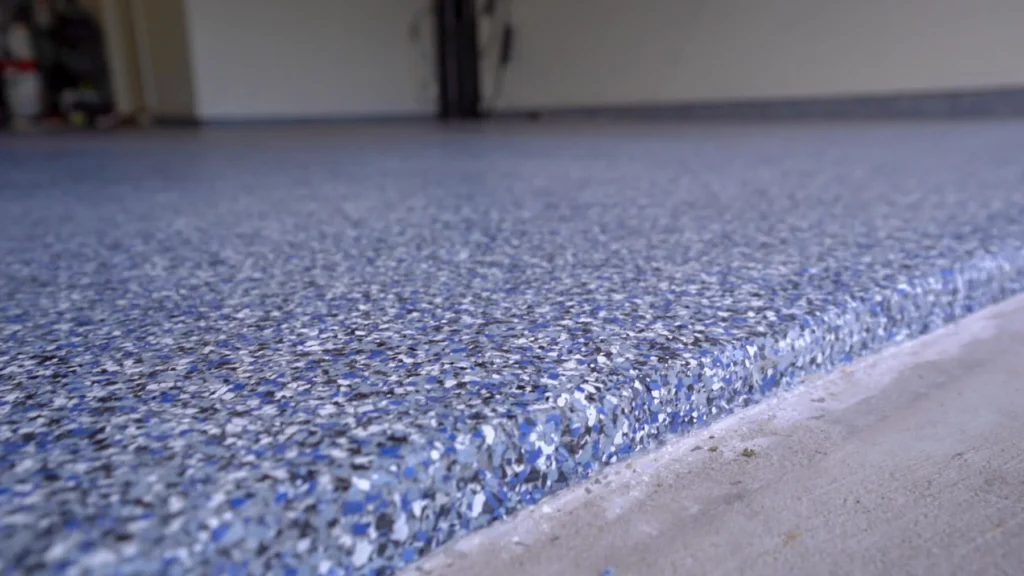
On the left, the kind of building this page is written for. On the right, one of our finished surfaces photographed close enough to see the texture.

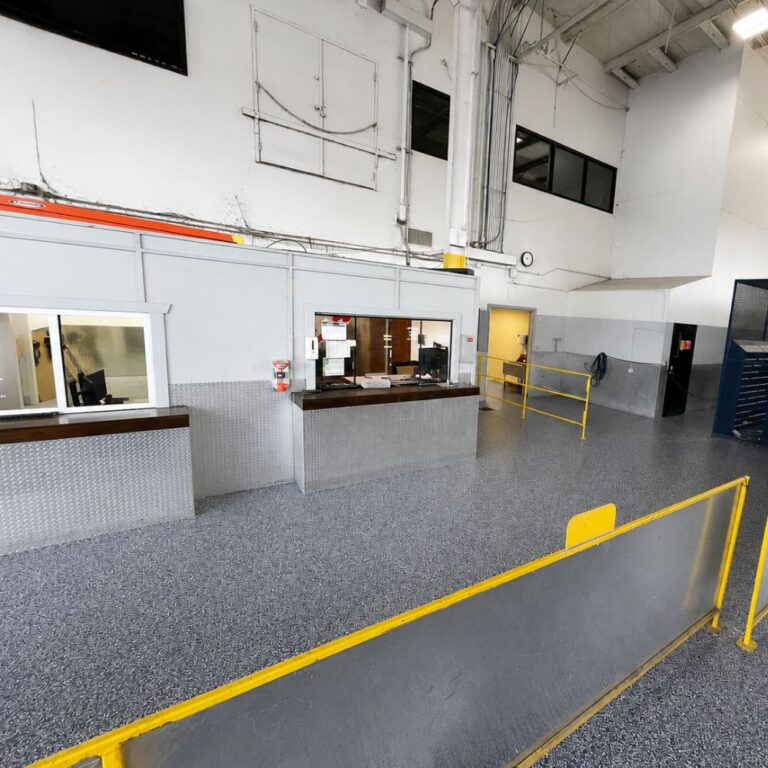
A manufacturing and industrial floor with machinery bays and a coated walking surface
A production floor. The load is concentrated under the machines and the wear is concentrated in the aisles between them.
Close up of a finished blue gray flake floor meeting bare concrete at the door line
One of our finished surfaces up close. The texture you can see is the flake, and it is what gives a wet floor its grip.

How a plant job runs

Five steps, and production keeps running through all of them.

A plant cannot stop for a week, so the schedule is built around your shifts rather than ours.

  1. Site walk before we quote

    We come out and look at the slab, the bays, the aisles, the drains and the doors. Square footage off a drawing does not tell us where the point loads are, what is already on the concrete or how much moisture is coming up through it.

  2. A written scope, not a number on a card

    You get the areas, the preparation method, the system by zone, the line marking and the warranty terms in writing. No surprise change orders halfway through, because the walk is where the surprises get found.

  3. We schedule around your shifts

    Nights, weekends and phased bays. One bay is down while the rest of the plant keeps producing, then we move. Tell us your shutdown window or your quietest shift and we will work to it.

  4. Diamond grinding and repair

    The slab is ground open so the system bonds to concrete rather than to old sealer or a failing coating. Cracks, spalling and old core holes are repaired, and expansion joints are detailed rather than coated over.

  5. Build, line marking, top coat

    The system specified at the walk goes down in order, aisles and walkways are coated in, and the top coat carries aggregate wherever grip has been specified. Foot traffic the next morning on a polyaspartic build.

The commercial floor coating page covers how we work in a building that cannot close, and the installation process goes through every step in detail.

Who it is for

Plants, fabrication shops and fleet maintenance.

Manufacturing and fabrication

Machine bays, material handling aisles and assembly areas, usually with different answers in each. This is where coating the walkways in, rather than taping them, is the part that pays for itself.

Auto, truck and fleet shops

Lifts, drains, oil, coolant and tyres. A shop floor is read as a sales tool by every customer who walks in, so the finish is doing two jobs at once.

Processing and packaging

Wash down, chemical exposure and constant wheeled traffic in the same building. The cleaning routine usually drives the specification more than the traffic does.

Warranty

What is covered, in writing, before you sign.

Written into your proposal on an industrial floor
Own crews in all six metros, not subcontractors
On an industrial floor
The warranty terms are written into your proposal, because the right cover depends on what the floor is going to take. A weld bay is a different floor from a finished goods aisle, and quoting one number for both would mean one of you was being sold the wrong promise.
Why we walk the building first
Square footage off a drawing does not tell us whether there is a sealer on the slab, how much moisture is coming up through it, where the water goes or which areas need extra grip. The walk is where the surprises get found, which is why there are no surprise change orders afterwards.
What no coating covers
New movement in the slab underneath. Concrete cracks because the ground moves, and no coating stops that, ours or anybody else’s. If we can see a slab that is likely to move, or moisture pushing up through it, we tell you at the site walk rather than after you have paid. The warranty page lists every term and every exclusion.

Service area

Six metros across Texas and Oklahoma.

Our own crews, not subcontractors. Commercial work is quoted after a site walk.

Questions

Industrial floor coating questions

Do you do commercial epoxy flooring for industrial buildings?

Yes. Epoxy is one of four commercial systems we install, alongside polyaspartic, polished concrete and grind and seal. On a heavy floor the answer is often a build that uses more than one of them: an epoxy base for thickness and load, a faster top coat so the bay goes back into service quickly. Which combination is right comes out of the site walk.

Will it hold up to forklift traffic?

That is a build specification rather than a yes or no. Hard wheels turning under load are the hardest thing a floor takes, and they do it in the same places every day. We specify the build around where that traffic actually is, which is why the walk matters more than the square footage.

Can you coat around machinery that cannot be moved?

Yes. We work in phased bays and detail the floor up to machine feet, pits and plinths rather than asking you to clear the building. Where equipment can be moved for a shift we will say so at the walk, because it usually buys you a better edge.

Can we keep producing while you install?

Yes, on most jobs. Nights, weekends and phased bays, so one area is down while the rest of the plant keeps running, then we move across. Give us your shutdown window or your quietest shift and we will build the schedule around it.

Can you mark out aisles and walkways?

Yes, and coated in rather than taped on. Colour is carried in the system itself, so a walkway line does not peel at the corner the way tape does and does not need replacing every year. The layout is agreed at the walk and drawn into the written scope.

What about oil, coolant and solvent spills?

On a sealed surface they stay on top where they can be wiped, instead of soaking into the slab and coming back up. That also means a spill stops being a slip hazard as soon as somebody gets to it. Which system we specify depends on what is actually spilling and how often, which is a question we ask at the walk.

Is polished concrete worth considering for a plant?

Often, yes. Polished concrete is the slab itself ground and densified, so there is no film on top to chip, and it holds up well under constant wheeled traffic down a long aisle. It also reflects light, which lifts the light level in the whole building. We sell polished concrete and grind and seal on commercial work, so both are genuinely on the table.

What does industrial floor coating cost?

We quote after a site walk, because the price turns on the condition of the slab, the system the building calls for, the line marking, the joint detail and how much of the work has to happen outside production hours. You get a written scope rather than a number on a card. Request a quote or call (469) 990-9990.

Tell us what your plant floor takes all day.

Machine bays, aisles, wash down areas or the whole building. We will walk it, write the scope and schedule it around your shifts.

Site walk before we quote · Commercial floor coating · Warranty · hello@mygaragefloors.com