Forklift and pallet jack traffic
Hard wheels turning under load are what open a floor up, and they do it in the same spots every day: the turn at the end of an aisle, the pinch point at a dock door, the apron in front of the racking.


Warehouse floor coating
A warehouse floor is the one surface every pallet, every wheel and every picker touches, and on bare concrete it gives off dust while it wears. We diamond grind the slab, repair what is under it, coat the aisles and walkways in and seal the rest. Epoxy, polyaspartic, polished concrete and grind and seal are all commercial systems we install, and the site walk is what decides which one.
Site walk before we quote · Written scope, no surprise change orders · 5.0 from 1,200+ Google reviews
What a warehouse floor takes
Specify the floor around these and it lasts. Specify it around how it looks on handover and you are back on bare concrete inside two years.
Hard wheels turning under load are what open a floor up, and they do it in the same spots every day: the turn at the end of an aisle, the pinch point at a dock door, the apron in front of the racking.
A pallet corner catching the floor is a point impact, and it happens hundreds of times a shift. The build has to be specified for that rather than for foot traffic.
A loaded racking upright puts more load through a base plate than a forklift puts through a whole tyre. Where the racking is going, and where it already is, changes the specification.
An uncoated slab gives off fine dust continuously. It lands on stock, in fans and in people, and sweeping moves it rather than removing it. Sealing the slab stops it at the source.
The dock apron takes steel plates, water blown in off the yard and the worst of the temperature swing. It is almost always the first area to fail and the first one we look at.
Bare concrete absorbs light. A sealed or polished floor reflects it, which makes labels readable further down an aisle without adding a single fitting.
Which system goes in a warehouse
Most people call every commercial floor epoxy, and the word is doing a lot of work. These are the four systems we actually install. The choice comes down to what rolls across the floor, what spills on it, how many hours we have between shifts and how it needs to look.
The surface
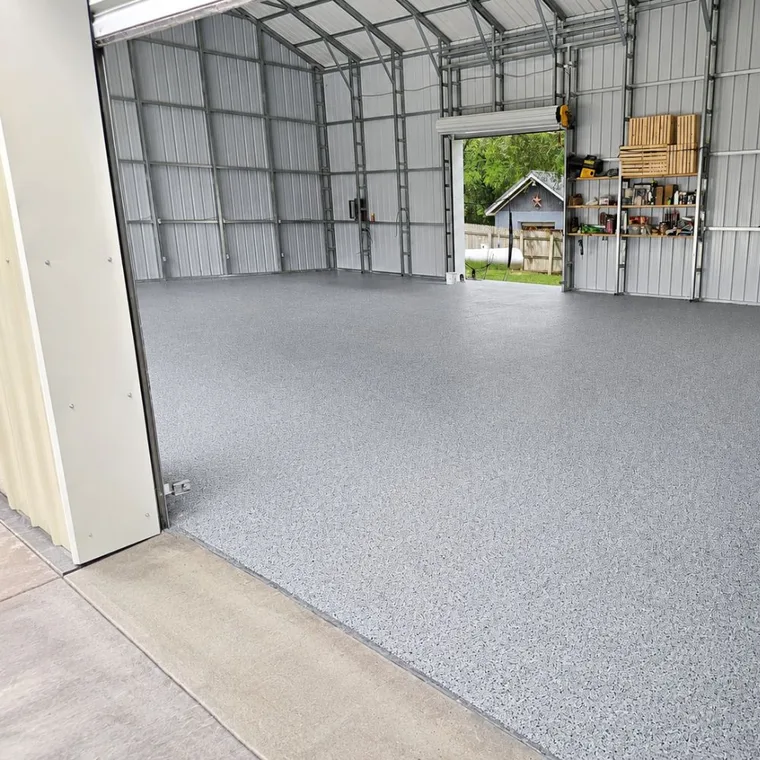
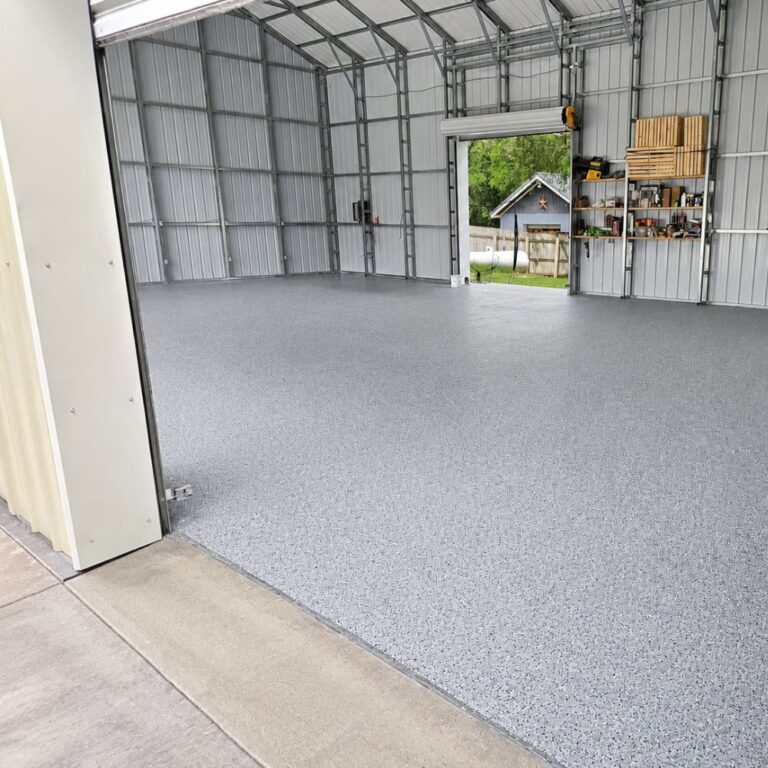
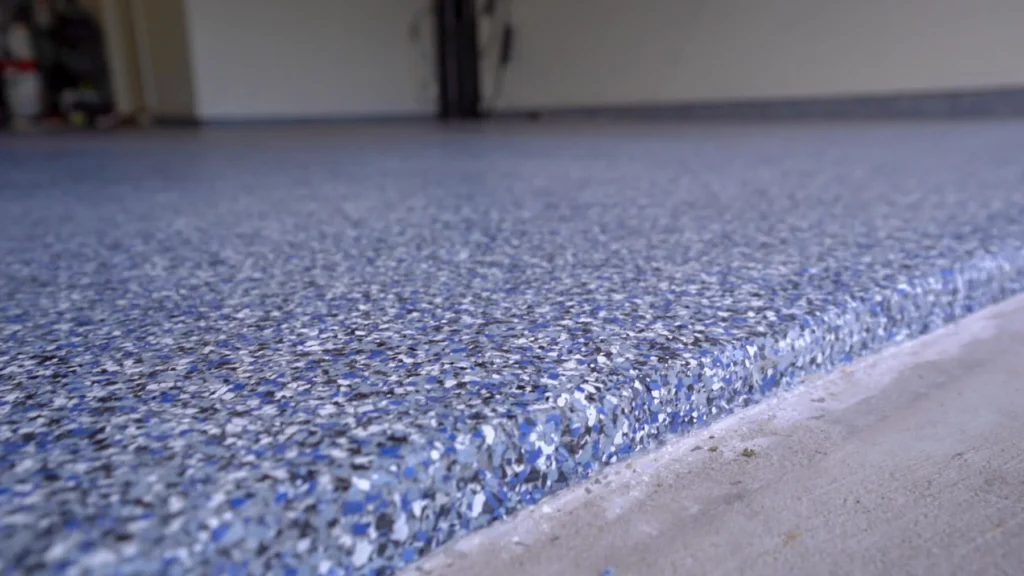
On the left, the kind of building this page is written for. On the right, one of our finished surfaces photographed close enough to see the texture.
How a warehouse job runs
A distribution building cannot close for a week, so the schedule is built around your pick and ship times rather than ours.
We come out and look at the slab, the aisles, the dock aprons, the joints and the racking layout. Square footage off a drawing does not tell us what is already on the concrete, where the point loads land or how much moisture is coming up through it.
You get the areas, the preparation method, the system by zone, the aisle marking and the warranty terms in writing. No surprise change orders halfway through, because the walk is where the surprises get found.
Nights, weekends and phased aisles. One aisle or one dock bay is down while the rest of the building keeps shipping, then we move. Tell us your quietest stretch and we will work to it.
The slab is ground open so the system bonds to concrete rather than to old sealer or a failing coating. Cracks, spalling and old core holes are repaired, and saw cuts and expansion joints are detailed rather than coated over.
The system specified at the walk goes down in order, aisles and walkways are coated in, and the top coat carries aggregate wherever grip has been specified. Foot traffic the next morning on a polyaspartic build.
The commercial floor coating page covers how we work in a building that cannot close, and the installation process goes through every step in detail.
Who it is for
Long aisles, constant wheeled traffic and a dock that never stops. Phasing is the whole conversation here, and it is the first thing we work out on the walk.
Raw material in, finished goods out, and a floor that has to be readable so the two do not mix. Coated aisle marking does more work here than any other single detail.
Smaller floors, tighter windows and a slab that has usually never been sealed. These are often the jobs where grind and seal gets the building out of the dust quickly.
Warranty
Service area
Our own crews, not subcontractors. Commercial work is quoted after a site walk.
Questions
Yes. Epoxy is one of four commercial systems we install, alongside polyaspartic, polished concrete and grind and seal. On a warehouse the answer is often a build that uses more than one: an epoxy base where the point loads are, a faster top coat so the aisle goes back into service overnight. Which combination is right comes out of the site walk.
That is a build specification rather than a yes or no. Hard wheels turning under load are the hardest thing a warehouse floor takes, and they do it in the same places every day. We specify the build around where that traffic actually is, which is why the walk matters more than the square footage.
Yes, on most jobs. Nights, weekends and phased aisles, so one aisle or one dock bay is down while the rest of the building keeps running, then we move across. Give us your quietest stretch and we will build the schedule around it.
Yes. We work aisle by aisle and detail the floor up to the base plates rather than asking you to strip the building. Where a bay can be cleared for a shift we will say so at the walk, because it usually buys you a better edge and a better bond.
Yes, and that is the reason a lot of warehouses call. An uncoated slab gives off fine dust continuously, and sweeping moves it rather than removing it. Sealing the slab stops it at the source, whether that is a full coated build, polished concrete or a grind and seal.
Yes, and coated in rather than taped on. Colour is carried in the system itself, so a walkway line does not peel at the corner the way tape does and does not need replacing every year. The layout is agreed at the walk and drawn into the written scope.
Often, yes. Polished concrete is the slab itself ground and densified, so there is no film on top to chip under a pallet corner, and it holds up well under constant wheeled traffic. It also reflects light down a long aisle, which makes labels readable further away. We sell polished concrete and grind and seal on commercial work, so both are genuinely on the table.
We quote after a site walk, because the price turns on the condition of the slab, the system the building calls for, the aisle marking, the joint detail and how much of the work has to happen outside shipping hours. You get a written scope rather than a number on a card. Request a quote or call (469) 990-9990.
Aisles, dock aprons, staging or the whole slab. We will walk the building, write the scope and schedule it around your pick and ship.
Site walk before we quote · Commercial floor coating · Warranty · hello@mygaragefloors.com