Short answer: rubber where you lift, a hard coating everywhere else. Most people pick one or the other and end up unhappy with both. The two do different jobs.
What each option is actually good at
A coating is a hard finish bonded into the concrete. It handles rolling loads, dropped dumbbells within reason, sled work, spilled pre workout and a bench dragged across it. It cleans with a mop. It does not absorb impact.
Rubber absorbs impact. That is the whole point of it. It is also loud to nobody, it protects the bar knurling, and it keeps the neighbours from hearing every rep. It stains, it curls at the edges, it traps grit underneath, and cheap rubber smells for months.
Foam tiles are for stretching and floor work. Put a squat rack on foam and the rack will sink, rock and mark the floor. Do not build a gym on foam.
Carpet or turf is for sled pushes and a bit of grip. It hides nothing and cleans badly. Use it as a strip, never as the whole floor.
Why a coating alone is not enough under a barbell
A floor coating is only ever as strong as the concrete it is bonded to. Drop 225 pounds from hip height onto a bare slab and the concrete under the impact point takes the hit. The coating goes with it, because it is stuck to the piece that just chipped. That is not a coating failure. It is a concrete failure with a coating on top.
So the rubber is not there to protect the coating. It is there to protect the slab.
Want the number for your garage?
Get an accurate price online in about a minute. No sales visit, no waiting on a callback.
Why rubber alone is not enough either
Rubber mats do not seal anything. Water runs under them. Oil from the car runs under them. Dust from the concrete comes up through the seams, which is why a garage gym floored only in mats always has a grey film on everything. Lift a horse stall mat that has been down two years and look at what is underneath. That is the part people do not photograph.
Mats also move. Without something smooth and sealed under them they creep apart, and the gaps are exactly where an ankle goes.
The layout that works
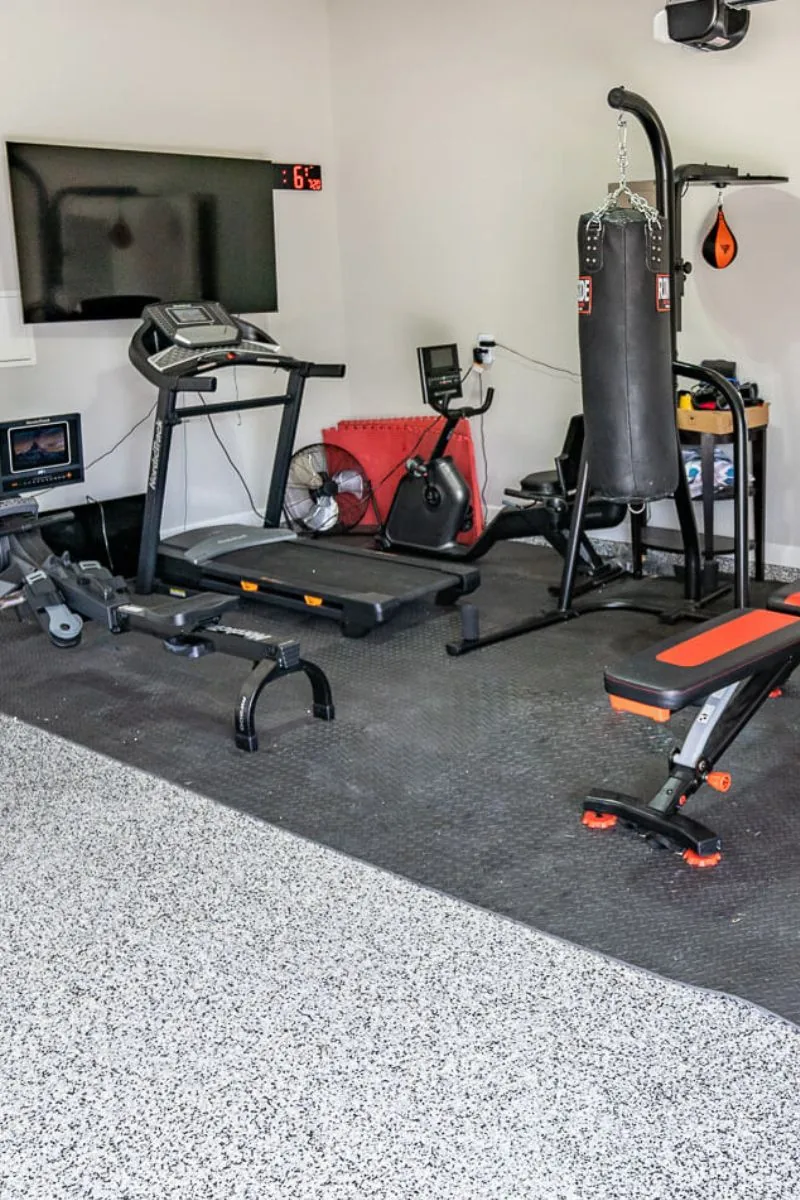
Coat the whole floor. Then put rubber down in the one or two places where weight actually lands: under the rack, and under the platform or the dumbbell rack. Everywhere else stays coated, so it stays cleanable.
That gives you a floor you can mop, a slab that is protected where it needs protecting, and mats that sit flat because they are sitting on something flat.
What to buy for the rubber half
Horse stall mats from a farm supply store are the value pick. Three quarters of an inch thick, heavy enough to stay put, and a fraction of the price of anything sold as gym flooring. They smell for a few weeks. Leave them outside first.
Interlocking gym tiles cost more and look better. They are worth it if the gym is also the room people see. Avoid the thin rolled rubber for a lifting area. Half an inch is not enough under a dropped bar.
Does the coating need to be anything special?
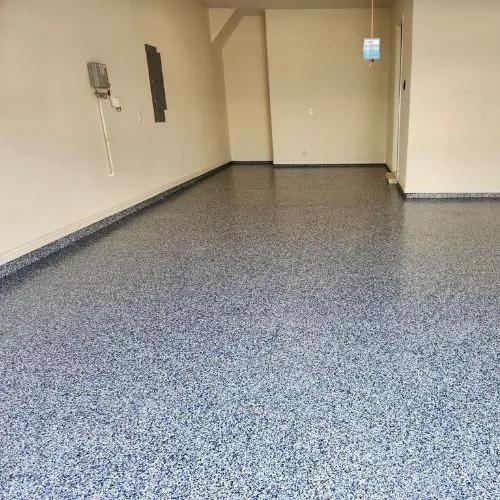
It needs to be ground into the concrete rather than rolled onto the top of it. That is the difference between a coating and a paint, and it is the difference that decides whether the floor survives a rack being dragged two feet to the left.
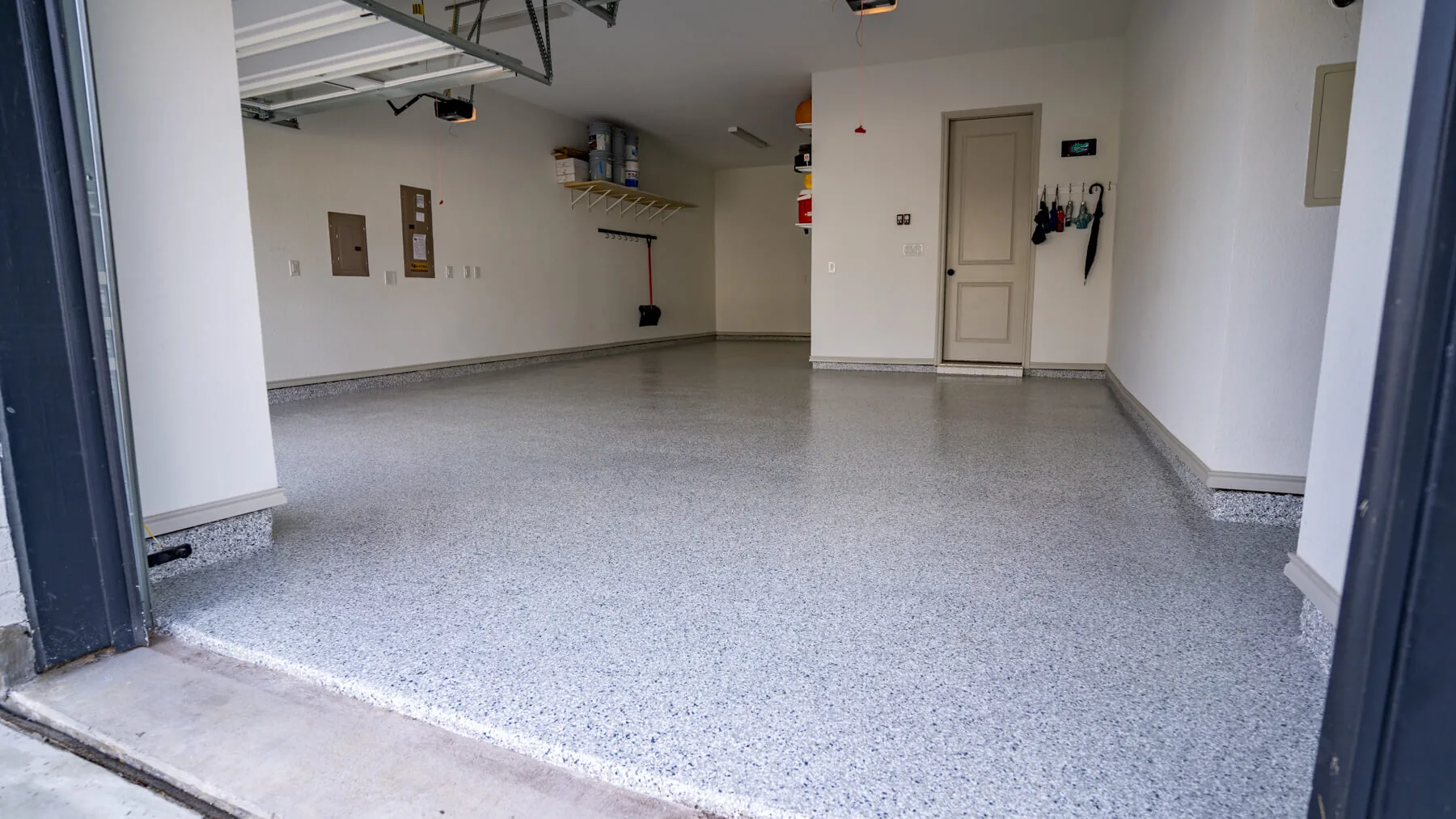
We install one system, a full polyaspartic floor from base coat through clear top coat, and it carries a lifetime warranty. If you are weighing that against an epoxy garage floor for a gym, the honest comparison is in polyaspartic vs epoxy.
For grip, ask for a heavier flake load. Flake is what gives a coated floor texture underfoot, and a gym floor is one of the few rooms where you want more of it rather than less. There is more on that in what flakes actually do.
What it costs
For a two car garage most people land between $1,595 and $4,337 for the coating, with $2,441 being the national average. Rubber on top of that is a few hundred dollars if you use stall mats. The full breakdown by size and slab condition is in the garage floor coating cost guide.
Common questions
Can I just put mats on bare concrete? You can, and plenty of people do. Accept that the slab keeps dusting, anything spilled soaks in, and the day you move the mats you will find out what has been living under them.
Will dropping weights void the warranty? Ours covers the coating. It does not cover a slab that has been fractured by impact, which is exactly why the rubber goes down first.
Is epoxy fine for a home gym? Epoxy is the cheapest flake floor to buy, comparing like for like. It is also harder and more brittle, and in a hot Texas garage with sun coming through the door it is unpredictable. It can hold for years or start letting go in a season, and nobody can tell you which in advance, because it comes down to the prep, the heat and the sun.