Urine, every day
Bare or sealed-only concrete is porous, so urine soaks in and the ammonia smell stays in the slab no matter how hard the room is cleaned. A sealed polyaspartic surface has nowhere for it to go, so it mops off instead of building up.


Dog kennel flooring
A kennel floor is not a garage floor with dogs on it. It gets hosed down, disinfected daily and stood on by animals with claws. We diamond grind the slab, then lay two coats of polyaspartic over a full flake broadcast: non-porous, so nothing soaks in, and textured, so it is not a skating rink when it is wet.
Site walk before we quote · Written scope, no surprise change orders · 5.0 from 1,200+ Google reviews
 Our work
What the floor takes
Specify the floor around these and it lasts. Specify it around how it looks on day one and you are recoating in two years.
Bare or sealed-only concrete is porous, so urine soaks in and the ammonia smell stays in the slab no matter how hard the room is cleaned. A sealed polyaspartic surface has nowhere for it to go, so it mops off instead of building up.
Bleach, quats and kennel-grade cleaners are hard on a coating and they are used daily, not occasionally. Polyaspartic is chemically resistant, which is why it is the system specified where floors get cleaned hard, like commercial kitchens and veterinary clinics.
Runs get hosed out and the water sits until it finds the drain. The coating runs into the cove and up to the drain so there is no open seam at floor level for water to work under.
Dogs scrabble, gates drag and bowls get dropped. The flake broadcast is thick and the clear top coat is hard, so the surface takes point loads and scratching rather than telegraphing every mark.
A smooth sealed slab with water on it is dangerous for the dogs and for your staff. The flake leaves real texture underfoot, and in wash bays and runs we add aggregate to the top coat for extra bite.
We will not put epoxy in a kennel, and this is one of the reasons: it gives off a strong smell for days while it cures, in a building full of animals that cannot leave. Polyaspartic is low odor and low VOC and is back in service the next morning.
Polyaspartic or epoxy
Epoxy is the cheaper coating, and in a building that gets washed down daily that saving has a short life.
Our work
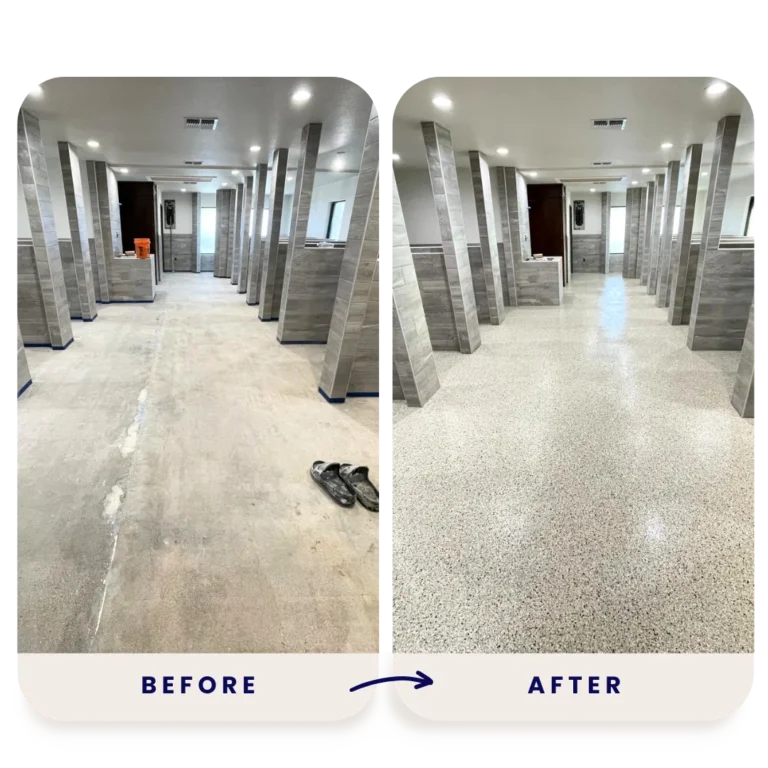
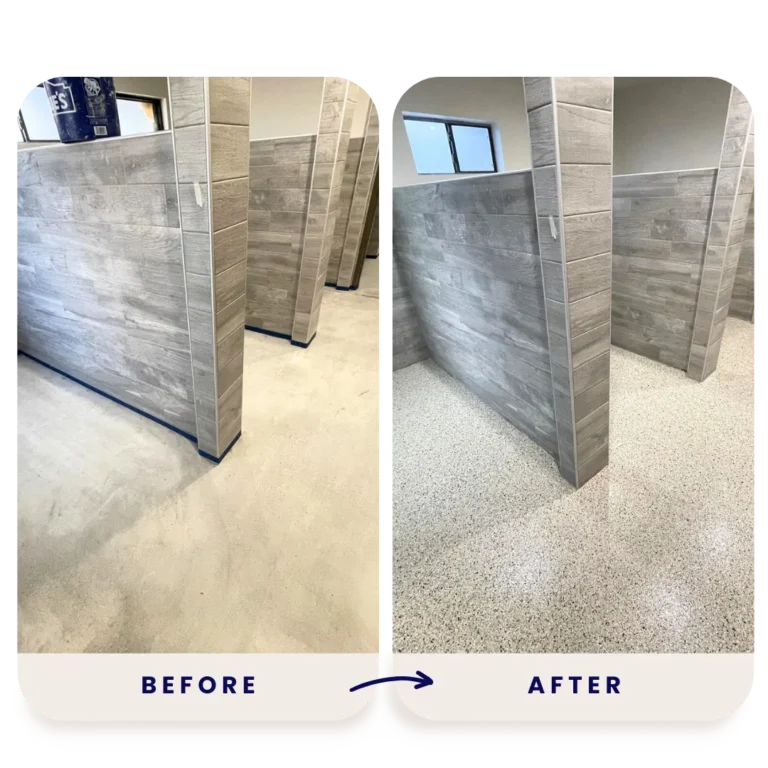
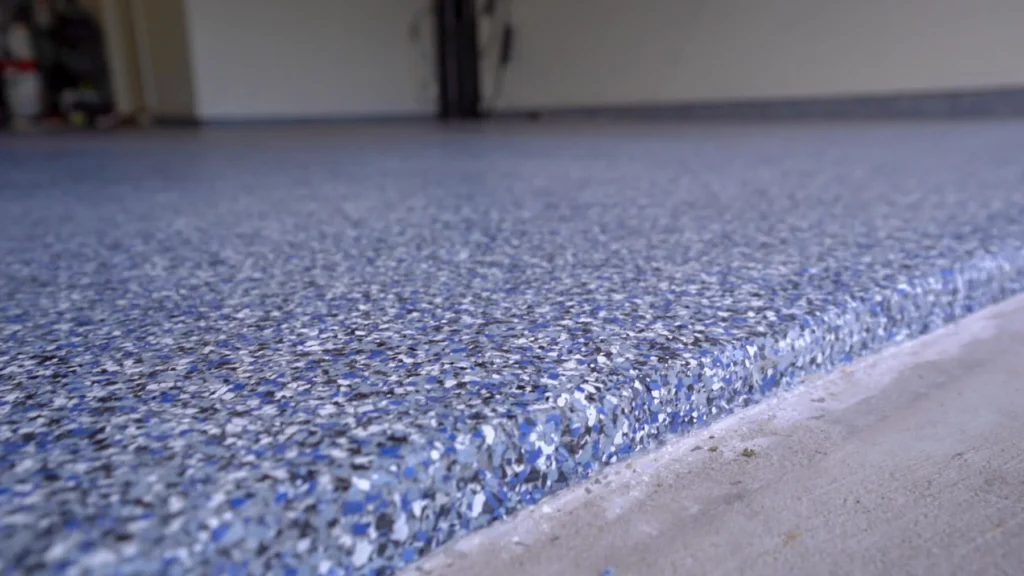
On the left, one of our kennel runs before and after, photographed from the same spot: the stains are diamond ground out of the slab, not covered over. On the right, the finished surface up close.
How a facility job runs
A boarding kennel, a daycare or a vet clinic cannot close for a week, so the schedule is built around your calendar rather than ours.
We come out and look at the slab, the drains, the runs and the wash bays. Square footage off a drawing does not tell us whether the concrete has a sealer on it, where the water goes, or which rooms need extra grip.
You get the areas, the preparation method, the grip specification by room and the warranty terms in writing. No surprise change orders halfway through, because the walk is where the surprises get found.
Nights, weekends and phased sections. One block of runs is down while the rest of the building keeps operating, then we move. Tell us your quietest week and we will work to it.
The slab is ground open so the coating bonds to concrete rather than to old sealer or a failing coating. Cracks and spalling are repaired, and drains and coves are cut in and detailed before anything is coated.
Pigmented polyaspartic base, flake broadcast to refusal, the loose flake scraped back and vacuumed, then a clear top coat with aggregate wherever we have specified grip. Foot traffic the next morning.
The commercial floor coating page covers how we work in a building that cannot close, and the installation process goes through every step in detail.
Who it is for
Runs, corridors, play rooms and wash bays. The highest-wear version of this job, and the one where the daily cleaning routine matters most to the specification.
Non-sterile treatment areas, kennel wards, grooming rooms and back of house. A hard, closed surface that mops clean, in a light color that keeps the room bright.
A garage converted to a dog room, a utility room, or a run on an exterior slab beside the house. That is a residential job and it is priced in the same online form as a garage. See your price in 60 seconds.
Warranty
Service area
Our own crews, not subcontractors. Commercial work is quoted after a site walk.
Questions
No, and that is the main reason to coat a kennel at all. The smell lives in the concrete, not on it: bare or sealed-only slabs are porous, so urine soaks in and stays. A cured polyaspartic surface is non-porous, so there is nowhere for it to go and it cleans off the surface. We grind the slab first, which also takes out what is already in the top layer.
The flake broadcast gives the floor texture on its own, so it has more grip than a smooth sealed slab straight away. In runs, wash bays and anywhere water collects we add an aggregate to the clear top coat and the surface comes out with real bite. Tell us at the site walk where the water lands and we will specify the grip room by room.
Yes, on most jobs. We work nights, weekends and in phased sections, so one block of runs is down while the rest of the building keeps going, then we move across. Give us your quietest week and your daily routine and we will build the schedule around them.
Foot traffic the next morning. Give it 48 hours from the time the top coat goes down before heavy equipment, kennel gates being reset or a full wash down. On a phased job that is what sets how fast we move from one section to the next.
Your normal kennel routine. Polyaspartic is chemically resistant and holds up to bleach, quats and kennel-grade disinfectants used daily, which is the same reason it is specified in commercial kitchens and veterinary clinics. It needs no special cleaner, no stripping and no resealing: a mop, a deck brush or a scrubber is enough.
Where it needs to. We cove the coating up the wall and run it into the drain so there is no open joint at floor level for water to get under. That detail is decided at the site walk and written into the scope, because it is the difference between a floor that stays sealed and one that fails at the edges first.
For a commercial facility we quote after a site walk, because the price turns on the condition of the slab, the drains, the grip specification and how much of the work has to happen at night. You get a written scope rather than a number on a card. Request a quote. For a dog room at home, the online form gives you the real price in about a minute and $99 holds your install day.
Yes. Polyaspartic is ultraviolet stable, so an outdoor run does not amber the way an epoxy one would. On a facility the warranty terms for indoor and outdoor areas are both written into your proposal. On a run at a private home on an exterior slab the term is 10 years, and it excludes appearance change from sun and weather. See patio floor coating for how we handle exterior slabs.
Runs, wash bays, corridors or a clinic ward. We will walk the building, write the scope and schedule it around your bookings.
Site walk before we quote · Commercial floor coating · Warranty · hello@mygaragefloors.com