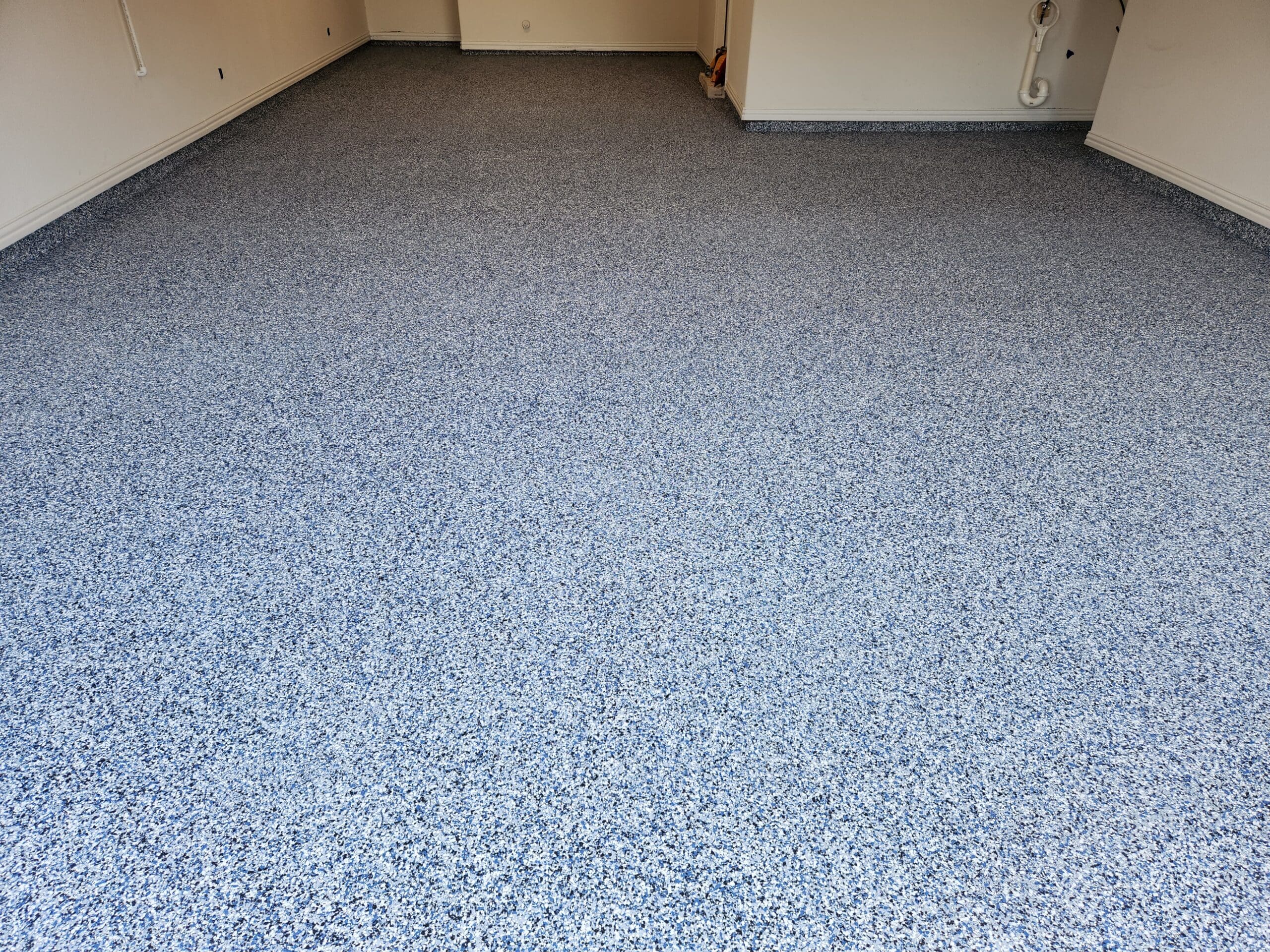

A polyaspartic floor is close to maintenance free, which is most of the reason to buy one. There is no waxing, no resealing and no annual recoat. What it does want is a broom, the occasional mop, and a bit of judgement about what you drag across it. Here is the whole routine.
1. Regular Cleaning
Keep your floor looking fresh by sweeping or blowing out dust weekly. For deeper cleaning, use a mild soap and water solution. There is no need for harsh chemicals or pressure washers.
2. Avoid Damage
Place mats under heavy tools. Don't drag sharp or heavy objects across the floor. These simple steps prevent scratches and wear over time.
Want the number for your garage?
Get an accurate price online in about a minute. No sales visit, no waiting on a callback.
3. Act Fast on Spills
Polyaspartic coatings resist chemicals, but it's still smart to wipe up oil, paint, or chemicals quickly to avoid staining and keep your floor looking new.
What to Clean It With, and What to Skip
Warm water and a squirt of mild dish soap handles almost everything. A soft push broom or a dust mop for the dry work, a flat microfiber mop for the wet work, and a shop vac for the corners. That is the entire kit.
Skip anything harsh. High pH degreasers, citrus strippers, bleach left to sit and steel wool will all dull the clear coat over time. You do not need them. If a mark is not coming up with soap, let the soapy water sit on it for ten minutes rather than reaching for something stronger.
A pressure washer is more force than the floor needs, and it can drive water under the edge where the coating meets the wall. A garden hose and a squeegee does the same job with none of the risk.
What Actually Damages a Coated Floor
Very little does, but three things are worth knowing about. Dragging a loaded toolbox or a steel jack stand across bare coating will scratch it, so put a mat or an offcut of carpet under anything with a hard edge. Welding or grinding directly over the floor will burn it, so use a welding blanket. And a bottle of brake fluid left tipped over for a week will eventually mark it, which is the whole reason the advice is simply to wipe spills when you see them.
Hot tires are what kill cheap coatings. A tire that has been on the highway for an hour is hot enough to soften a coating that was not built for it and pull a little of it away every time you park. Polyaspartic handles that. It is one of the reasons we install it.
The Twice a Year Job
Twice a year, pull everything out and give the floor a proper wash. Sweep it, mop it with soap and water, rinse it and squeegee the water out of the door. It takes under an hour and it is the only scheduled maintenance the floor asks for.
While it is empty, walk the edges. If anything is lifting at a wall or around a drain, send us a photo. That is what the warranty is for, and it is far easier to sort out early than late.
Garage Floor Maintenance FAQs
Do I need to wax or reseal it?
No. The floor is finished when it is installed. There is no topical wax to strip and no sealer to reapply. Anything sold as a garage floor wax is meant for paint or for a sealed slab, not for this.
Can I use a pressure washer on it?
You can, but there is no reason to and a little risk in it. Water forced under the coating at an edge is the one way to cause a problem with a hose. A normal nozzle and a squeegee gets it just as clean.
What takes oil off?
Soap and warm water, usually straight away, because the floor is not porous and the oil is sitting on top rather than soaking in. For an older spot, let the soapy water sit for ten minutes first. The stubborn cases are covered in how to remove oil stains from concrete.
Will road salt or de-icer hurt it?
No. Neither one damages a polyaspartic floor. Rinse it out when the weather breaks so it is not sitting in a puddle for weeks, and that is all it needs.
There is a scratch in it. Can it be fixed?
Usually, yes. Send us a photo before you try anything yourself. Our floors carry a lifetime warranty for as long as you own the home, so start there.