A sealer soaks into concrete or leaves a thin film on it. A coating is ground into the concrete and builds a real thickness on top. They cost different money, last different lengths of time, and solve different problems.
If someone quoted you to seal a garage floor, the first thing to work out is which of the two they actually mean, because both get sold under that word.
What a concrete sealer is
Two kinds. A penetrating sealer sinks in and reacts inside the concrete, leaving the floor looking almost exactly as it did. A film forming sealer, usually acrylic, leaves a thin shiny layer on the surface.
Both slow down staining and both cut the dusting. Neither adds meaningful thickness, neither hides anything, and the film forming kind wears off in the tyre tracks first, which is the part of the floor everyone looks at.
Sealers are cheap. The material is well under a dollar a square foot and it is a job most people can do themselves with a roller on a dry weekend.
What a coating is
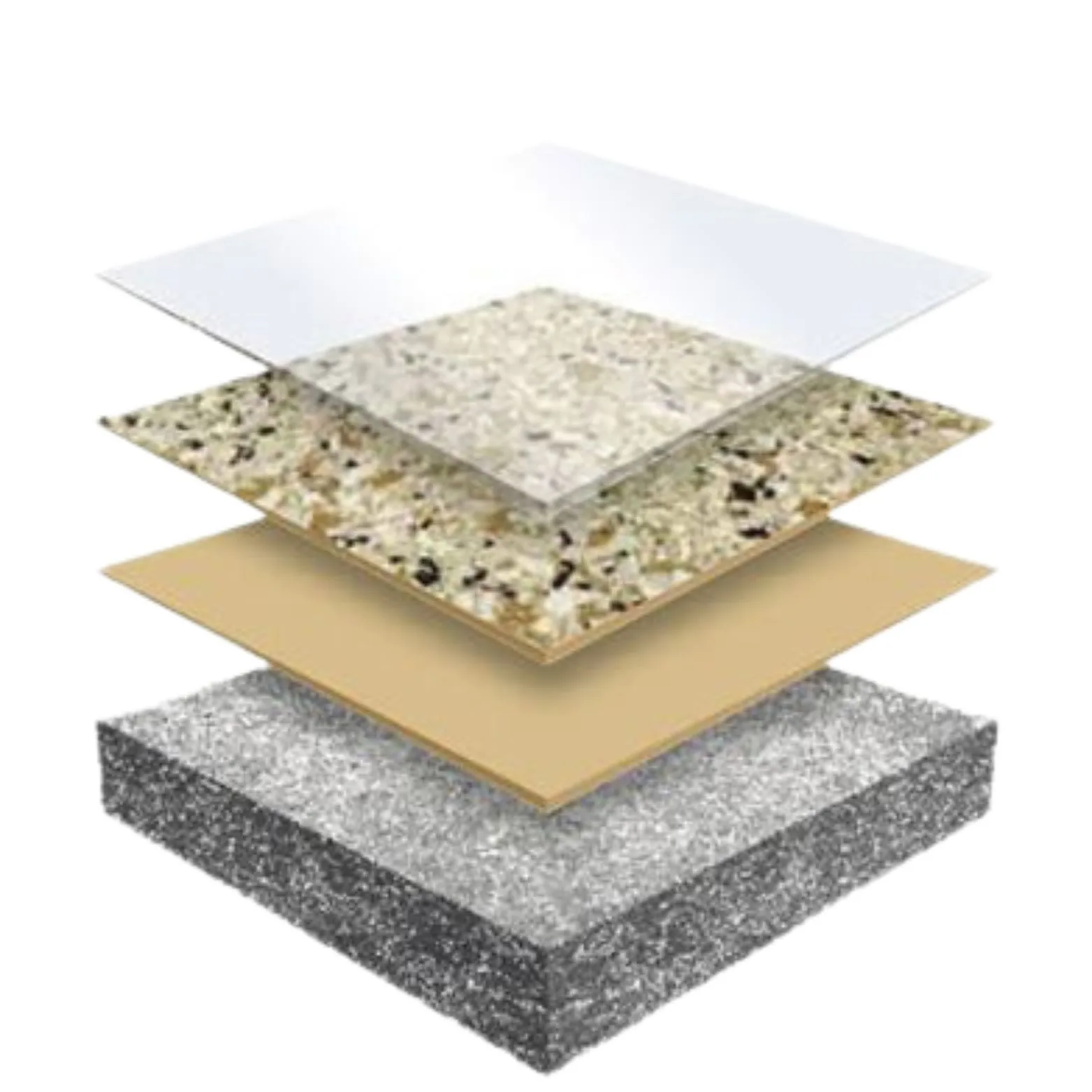
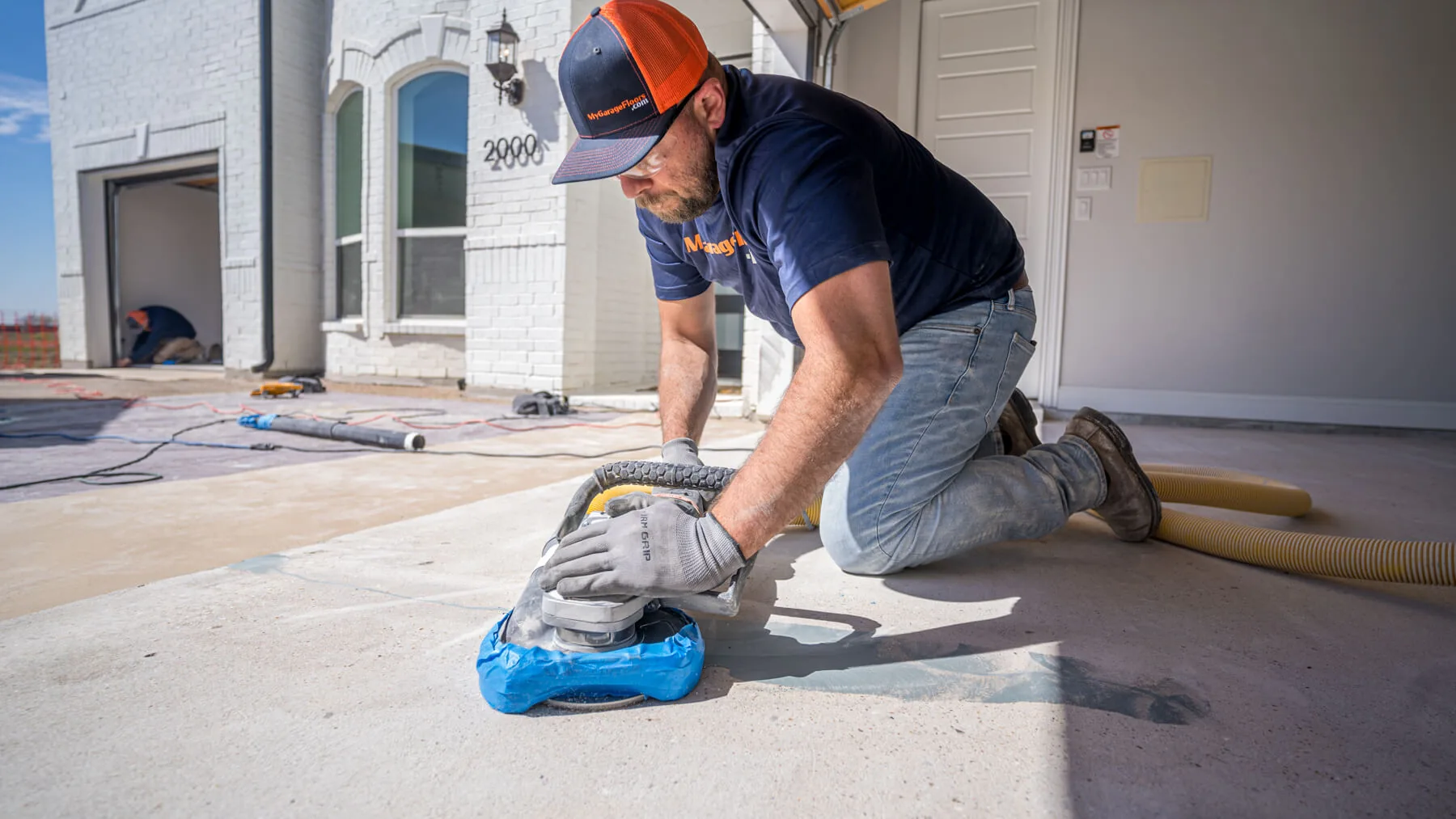
The slab gets ground with diamond tooling until the surface is open and sound. Cracks and pits get repaired. Then a base coat goes down, flake goes into it, and a clear top coat locks it in.
The result is a floor with real thickness that is mechanically keyed into the concrete rather than sitting on top of it. It does not wear off in the tyre tracks, because there is a great deal more of it and because it is bonded into the slab.
Want the number for your garage?
Get an accurate price online in about a minute. No sales visit, no waiting on a callback.
What each one costs
A sealer you apply yourself is material plus an afternoon. Even a large garage is a small number, and that is the entire appeal.
A professionally installed coating runs about $5 to $12 per square foot. For a two car garage that most commonly lands between $1,595 and $4,337, with $2,441 being the national average. Every line that goes into it is in the cost guide.
The number that matters is not the first one though. A sealer gets reapplied, typically every couple of years, and every reapply is another weekend. A polyaspartic floor normally runs 15 to 20 years and ours carries a lifetime warranty. Run either number out over twenty years and they stop being far apart.
Which one you want
Seal it if the slab is newish and clean, you mainly want to stop the dusting and slow down stains, you are happy for it to look like concrete, and you do not mind doing it again.
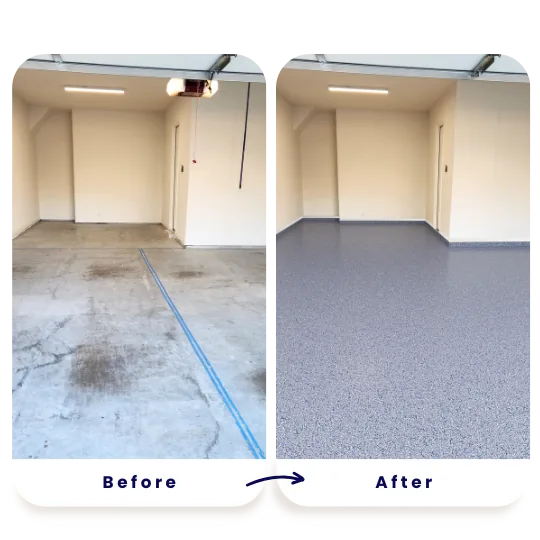
Coat it if the floor is already stained, if you want it to look finished, if things get dropped or dragged on it, or if you want to stop thinking about the floor entirely.
Do neither yet if water is coming up through the slab. Nothing bonds to a wet floor. We do not install over moisture, we let it dry first, and if there is a leak it needs fixing before anything goes down.
Can you coat over a sealed floor?
Yes, but the sealer comes off first. That is what the grinding is for. A coating bonded to a sealer is only as strong as the sealer underneath, which is not very.
Easy test at home. Pour a cup of water on the floor. If it beads and sits there, something is sealing it. If it darkens the concrete and soaks in within a minute, the slab is open.
What about the epoxy kits sold as a sealer?
A hardware store epoxy kit is a coating, not a sealer, and it is thinner than the one a contractor installs. It usually comes with an acid etch rather than a grind, and etching is the weakest part of the whole thing, because it does not open the concrete evenly.
Comparing like for like, epoxy is the cheapest flake floor to buy. How long it holds depends on the prep, the heat and how much sun lands on the floor, and it can be anything from a few weeks to a couple of years. We install polyaspartic instead, and the straight comparison is in polyaspartic vs epoxy. There is also why concrete paint is a different thing again.
Common questions
Will sealing stop oil stains? It slows them down. It does not stop them. Oil left overnight on a sealed floor still marks it.
Does sealing make the floor slippery? A film forming sealer can, especially wet. Coatings solve this with flake, which gives the surface texture. More on that in non slip flooring.
How soon can I seal a new slab? New concrete needs to cure before anything goes on it. Ask whoever poured it for their number and do not rush it.