Every garage floor looks good on the day it goes down. The real question is how it looks after a few Florida summers. Humid air, a damp slab, strong sun through an open door and hot tires off the interstate sort the good floors from the bad ones quickly. This guide walks through each option honestly, including the cheap ones, then gives you a short list of things to check on any quote.
What a Florida garage floor has to survive
Start with the conditions, because they decide the product. Most Florida homes are built slab on grade, right on the ground, and many areas have a high water table. That means moisture can push up from below. The air in a garage is humid most of the year. And garage doors stay open a lot, which lets low afternoon sun reach far across the floor.
- Humidity: affects how some products cure and how well they bond.
- Slab moisture: pushes up from below and lifts coatings that only sit on top.
- Sun: turns some coatings yellow over time.
- Heat and tires: hot tires can soften a weak coating and pull it off, as explained in Florida sun and hot tires.
- Sand: rides in on shoes and tires and acts like sandpaper on soft finishes.
Any floor you pick has to handle all five. The state guide to garage floor coating in Florida goes deeper on each one and how the system is built around them.
The options, one at a time
DIY epoxy kits
Store kits are thin, and the prep that comes with them is usually a degreaser and an acid etch. That leaves the surface mostly closed, so the coating rests on the concrete instead of bonding into it. In a humid garage, cure can be slow and uneven. Hot tires are the usual failure: the coating softens and lifts where you park. A kit is fine for a shed or a workshop corner. As a long term garage floor in this climate, it is a gamble. The humidity side is covered in epoxy vs polyaspartic in Florida humidity.
Garage floor paint
Paint is a film on top of the slab. It looks fresh for a while and it is easy to redo. It is also the first thing to peel when a slab pushes moisture or a hot tire sits on it. Think of paint as a cosmetic refresh, not a floor.
Clear sealer
A penetrating sealer keeps the plain concrete look and cuts down on dusting. It slows stains but does not stop them, and it wears off with traffic and sun. Then you apply it again. It is an honest, low cost choice if you like bare concrete and do not mind the upkeep.
Floor tile
Interlocking plastic tiles float over the slab and hide cracks and stains. The tradeoff in Florida is what happens underneath. Water, sand and grime get between the tiles, and in a humid garage that underside can stay damp. Porcelain or ceramic tile is hard and handsome, but grout lines stain, and a slab that moves can crack tile right along with it.
Professional epoxy
A professional epoxy floor is a big step up from a kit. It is thicker and usually better prepared. The weak points here are sun and time. Epoxy ambers, or yellows, under UV, and a Florida garage with the door open gets a lot of it. Epoxy also cures slowly and is more sensitive to moisture and humidity during the install. Many systems sold as polyaspartic are really an epoxy base under a polyaspartic top coat. For the full side by side, read polyaspartic vs epoxy.
Polyaspartic
Polyaspartic is UV stable, so it does not yellow in sun the way epoxy does. It resists hot tire pickup, it has low odor while curing, and coats are ready for the next quickly, so the garage comes back fast. Be honest about its limits too. It sets fast, so it needs a skilled installer. It costs more than a kit. And it is not a cure for a wet slab. No coating is.
Want the number for your garage?
Get an accurate price online in about a minute. No sales visit, no waiting on a callback.
The prep matters more than the product
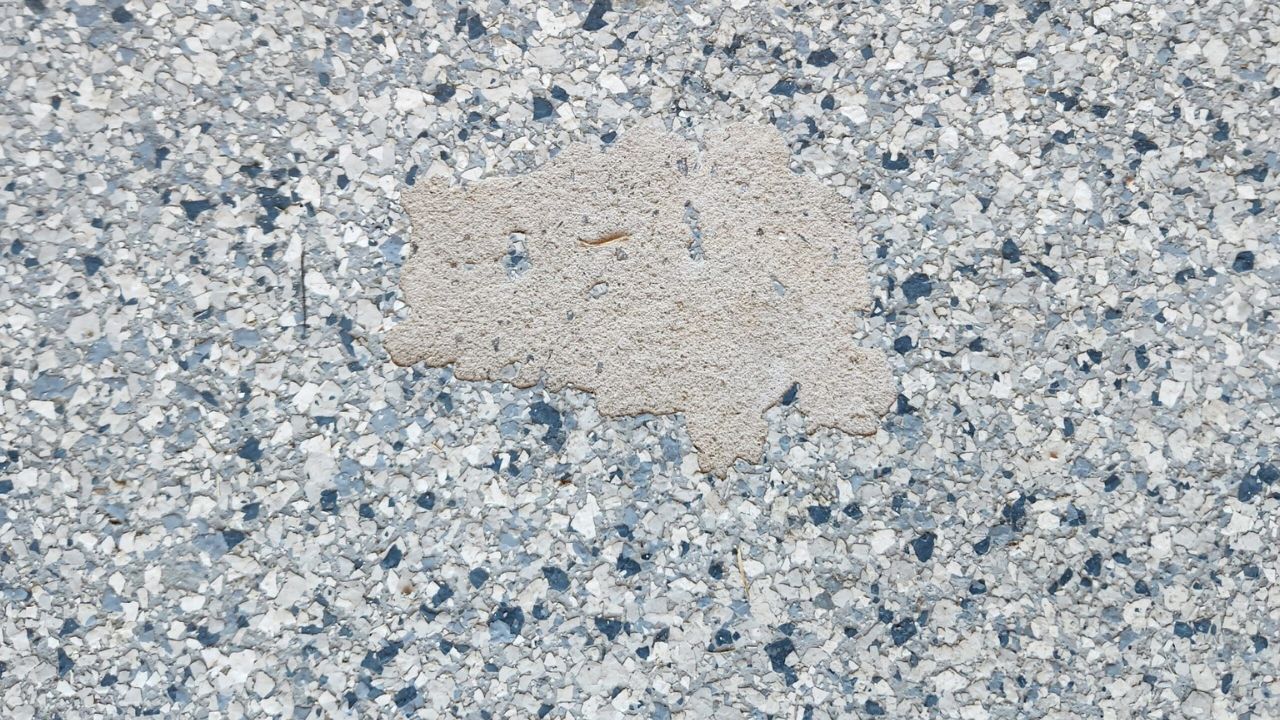
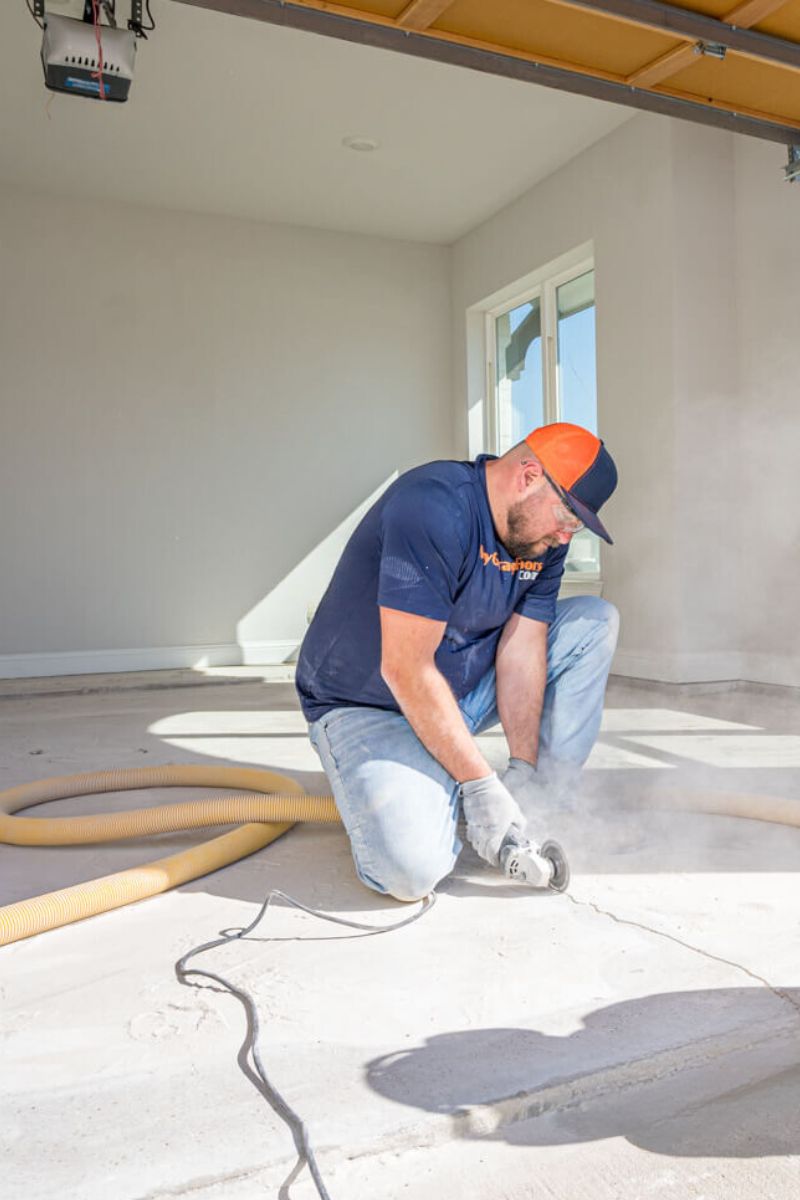
Two floors with the same product can last very different lengths of time. The difference is almost always the prep. A coating that only sits on the surface is the first thing to let go. Diamond grinding opens the concrete so the base coat bonds into it. Acid etching is cheaper and faster, and it leaves a weaker surface to bond to.
Moisture is the other half of prep. A Florida slab on grade can push water up from below, and a coating will not hold it back forever. If a slab is pushing real moisture, we tell you before we start, not halfway through. That can mean extra preparation or a new date. The details are in moisture in a Florida garage slab.
What to check on any quote
Whoever you call, get the answers to these in writing. They tell you more than the color samples do.
- Is every coat polyaspartic? Ask about the base coat and the top coat separately. A polyaspartic top over an epoxy base is a different floor.
- Diamond grind or acid etch? Ask what tool touches the slab before the first coat.
- What percent solids? Higher solids leave more coating on the floor after it cures. Thin, watery products leave less.
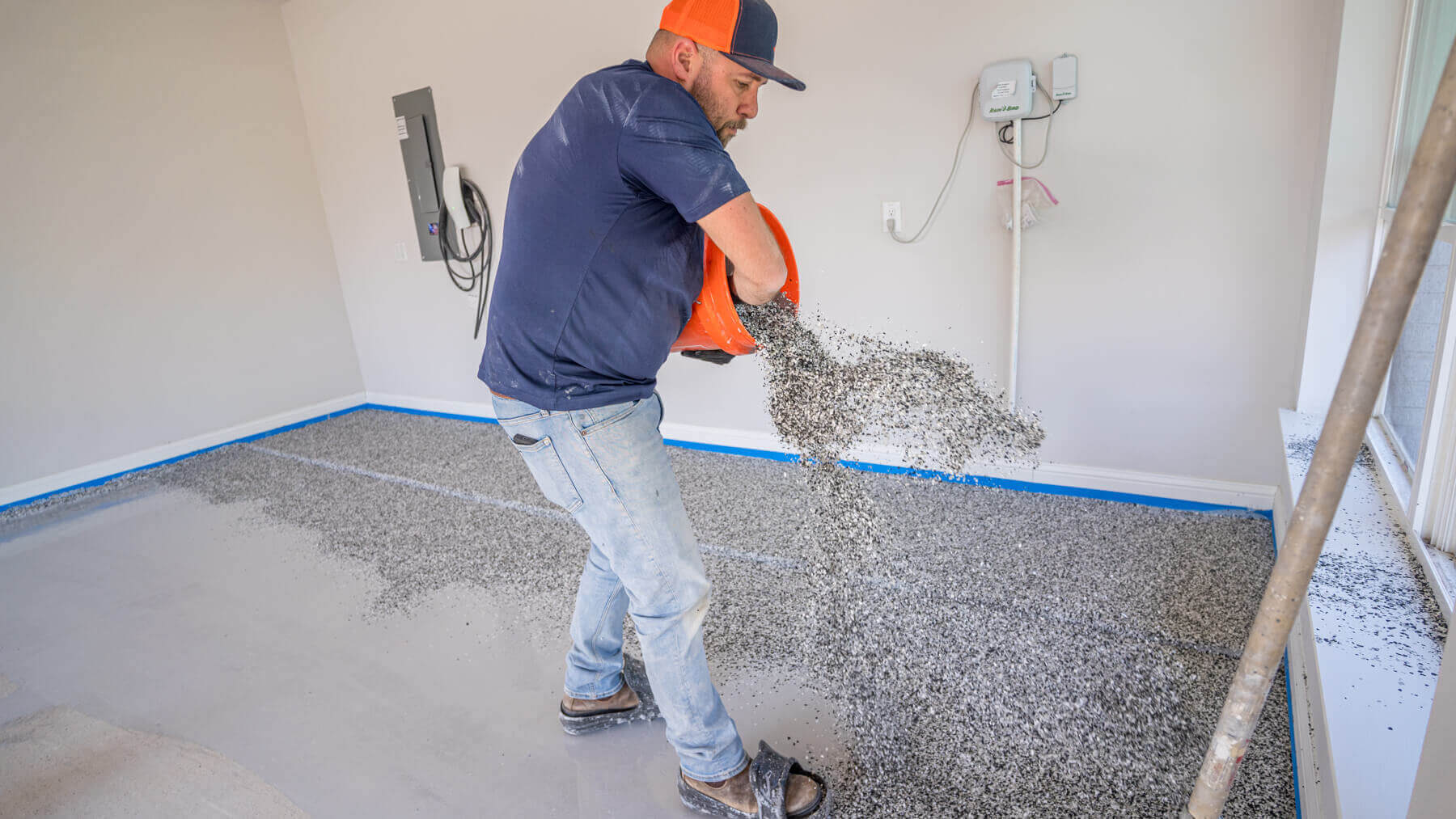
- Full flake broadcast or a light sprinkle? A full broadcast covers the base coat completely and adds texture underfoot.
- Is crack repair included? Find out what kind of repair, and whether it costs extra.
- What happens if the slab tests wet? A good answer comes before the job, not after it fails.
- Who installs it? The company's own installers, or a subcontractor you never met?
- What does the warranty cover? Peeling, blistering, fading and yellowing should be named. Ask how indoor and outdoor surfaces differ.
- Can you see the price without a sales visit? If the price only appears after a pitch at your kitchen table, the pitch is part of the price.
How we answer those questions
Here is our own list, so you can hold us to it. We install polyaspartic only, in the base coat and the top coat, with a full broadcast of vinyl flake. Never epoxy. The material runs 85 to 95 percent solids. We diamond grind every slab first. Standard crack repair is included in the price.
Our own installers do the work, never subcontracted. There is no salesperson and no home visit. You see your exact price online in about a minute. An interior residential garage floor carries a lifetime warranty for as long as you own the home, covering peeling, blistering, fading and yellowing. Outdoor surfaces carry a 10 year warranty, and on those, changes in appearance caused by sunlight, aging or natural wear are not covered. Bring a written quote for the same complete polyaspartic floor and we match or beat it. That is our price match guarantee.
Coastal or inland, the checklist holds
Near the water, salt and sand ride in on the car and on the breeze. A sealed surface you can rinse with a hose matters more there. If you are pricing garage floor coating in St. Petersburg or anywhere along the Gulf, ask how the floor cleans as well as how it looks.
Around the bay the sun is the bigger story. West facing garages take the low afternoon light straight across the floor. When you compare quotes for garage floor coating in Tampa, ask directly whether the floor will yellow.
Inland, the humidity is no lighter and the summer storms are the same. Many newer homes sit on slabs that are still drying out. If you are looking at garage floor coating in Orlando, the moisture question on the checklist matters just as much as it does on the coast.
Long commutes on hot highways bring hot tires home every evening. If you are pricing garage floor coating in Lakeland, put hot tire pickup near the top of your list.