Walk through a Florida neighborhood with the garage doors up and you will see the same two failures again and again. A floor that has gone yellow near the door. A floor with bare concrete showing in two neat stripes where the car parks. They often show up on the same floor, so people blame one thing. They are two different problems with two different causes. Knowing which is which tells you what to buy next time.
Two failures that look like one
Yellowing is a sun problem. Light breaks down the surface of certain coatings and changes their color. It happens slowly, over months, and it starts where the light lands.
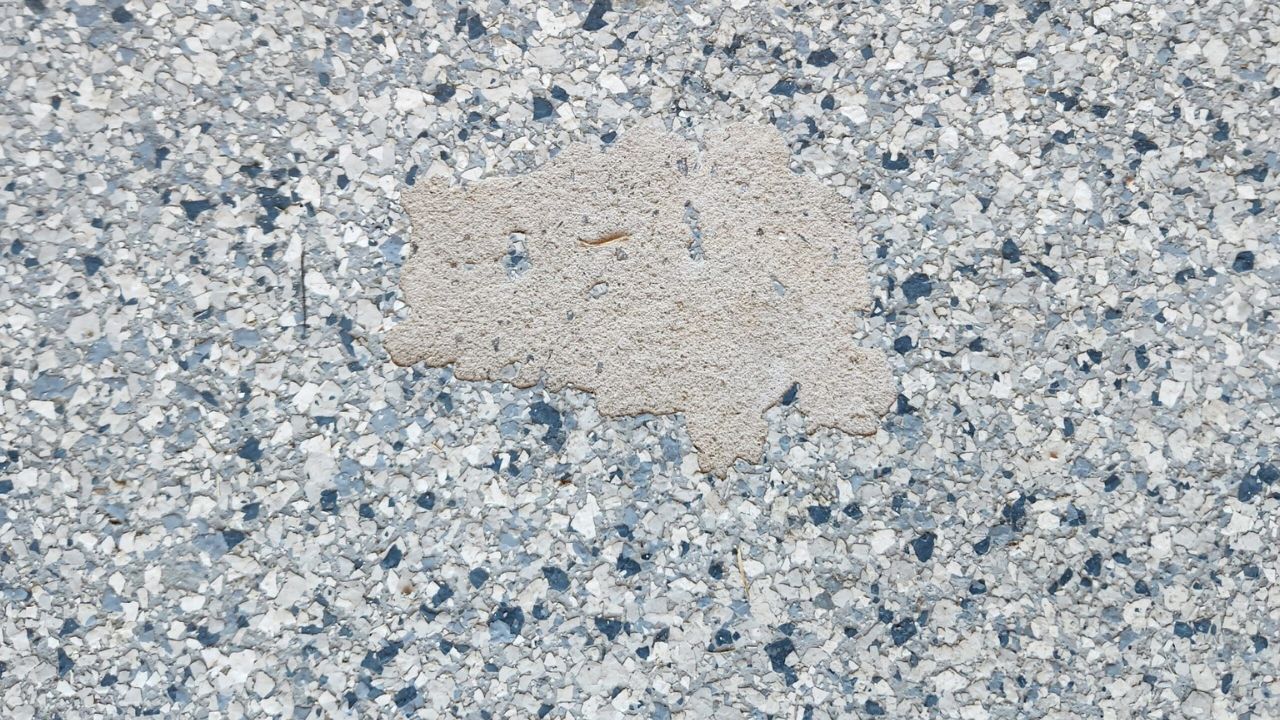
Peeling under the tires is a heat and bond problem. A hot tire grabs a soft coating and pulls it up. It can happen fast, sometimes within the first summer. It starts where the tires sit, which may be nowhere near the sunlight.
A floor that fails both ways usually has a weak top coat and a weak bond. Fixing only one of those does not save it.
How the sun gets into a garage
Most people think of the garage as a shaded room. With the door open, it is not. Florida gets strong sun all year, and the angle of that sun decides how far it reaches.
In summer the midday sun is high overhead. It lights the driveway and the first foot or two of the garage. In winter the sun sits lower in the sky, so its light reaches farther in. A west facing garage gets the deepest light of all, late in the afternoon, when the sun is low in any month. That is the time many people are home, door up, unloading the car or working on a project.
A bright concrete driveway also bounces light up and into the garage. Windows in the garage door add more. So even a floor that never sees a direct beam can take a steady dose of UV. Big newer subdivisions, like those around garage floor coating in Wesley Chapel, have street after street of garages facing every direction, and the west facing ones show it first.
Want the number for your garage?
Get an accurate price online in about a minute. No sales visit, no waiting on a callback.
Why some floors turn yellow
Epoxy is not UV stable. In sunlight it ambers, which means it slowly turns yellow. A gray floor goes tan. A clear top coat goes the color of weak tea. The line usually follows the shape of the light, so you get a clean back half and a yellowed front strip.
This is not an install mistake. It is how the material behaves in sun. A perfect epoxy job will still yellow in a sunny Florida garage. A thicker coat does not stop it, and a clear epoxy top coat makes it easier to see.
Polyaspartic is UV stable. It does not yellow in sun the way epoxy does. That is the main reason we install polyaspartic in the top coat. We use it in the base coat as well, so there is no epoxy anywhere in the floor to turn color. For how this plays out in wet summer air too, see epoxy vs polyaspartic in Florida humidity.
Hot tire pickup, explained
Picture a summer drive home on I-4 or I-75. The road surface is baking. The tires have been flexing at highway speed the whole way. By the time you pull into the garage, the rubber is hot and soft.
The hot tire sits on the floor and warms the coating under it. A coating that softens with heat goes slightly tacky. As the tire cools overnight, it shrinks a little and grips that tacky surface. In the morning you back out, and the tire takes a patch of coating with it. Do that every day and the patch grows into a stripe.
Tires also carry softening oils in the rubber. On some coatings those oils move from the tire into the surface and leave brown marks that will not wash off. That is a stain, not a peel, but it comes from the same weakness: a top coat that is soft enough to let the tire in.
Long commutes make it worse. A garage at the end of a long highway drive, in a commuter town such as Lakewood Ranch, sees the hottest tires most often.
What actually resists it
Two things stop hot tire pickup. A hard top coat that does not go soft in the heat, and a bond that does not let go when a tire pulls on it.
- The top coat. Polyaspartic resists hot tire pickup. It stays hard under a hot tire where many epoxies and most paints soften.
- The bond. We diamond grind every slab first, so the coating bonds into the concrete rather than sitting on it. A coating that only sits on the surface is the first thing to let go.
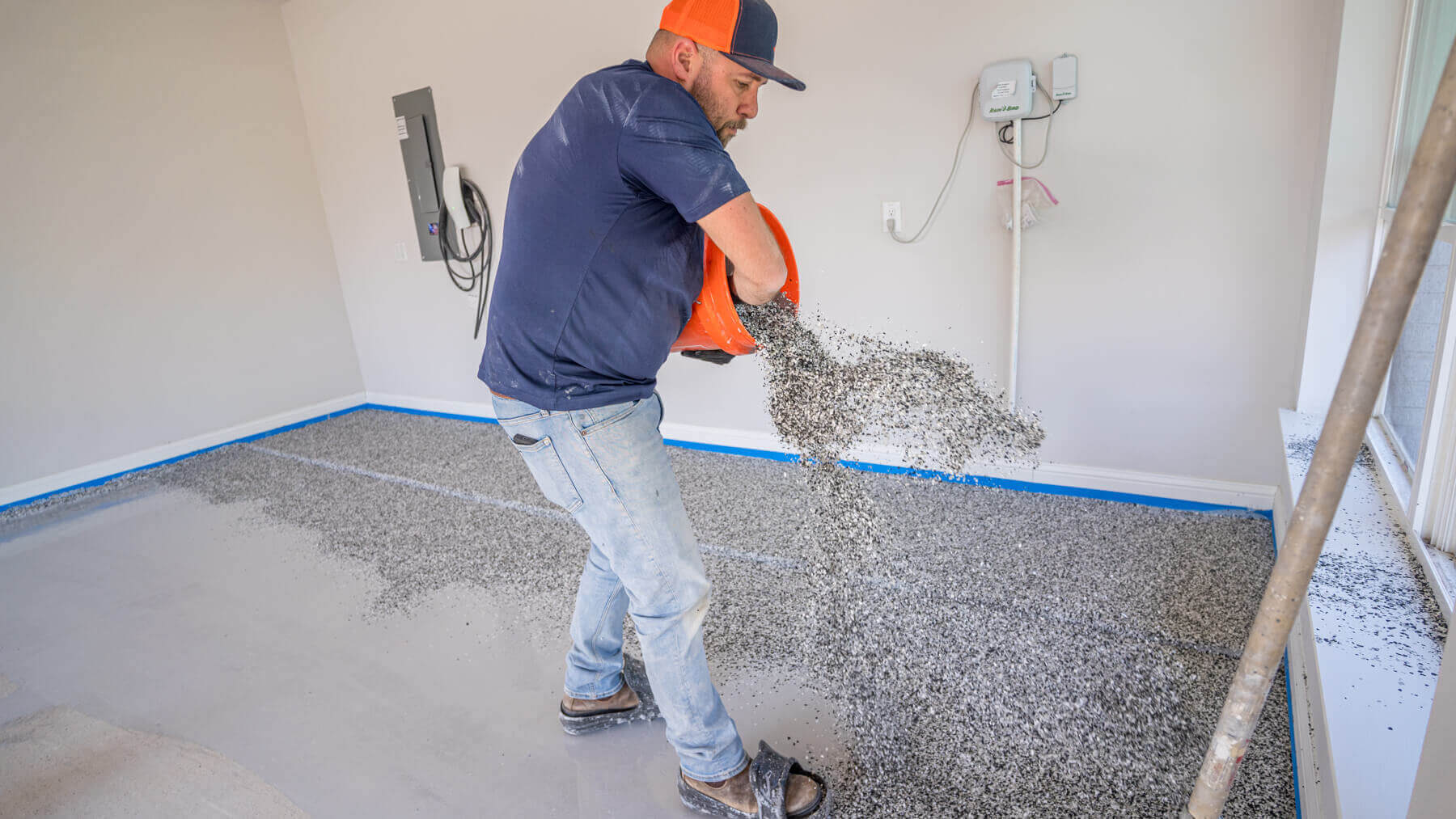
- The build. A full broadcast of vinyl flake between the base and top coats adds body to the floor, so the tire is pressing on a thick layer, not a thin film.
- Solids. The system we install is 85 to 95 percent solids, which means most of what goes down stays down as floor.
No floor is immune to dirt. Tires still track in road grime and rubber dust. On a sealed flake floor, it comes up with a hose and a push broom. The routine is in how to maintain your garage floor coating.
Why store bought kits and paint fail first
Most hardware store floor kits are thin. Many are water based epoxy or a floor paint. They go on over a slab that was washed or etched, not ground. In a Florida garage they fail in a predictable order. The tire paths peel first, usually in the first hot summer. The front strip yellows next.
Clear concrete sealers are a different product. They soak in and do not peel in the same way, but they also do not stand up to hot tires as a floor surface. They wear off in the tire paths and need to be redone. There is a fuller breakdown in sealing a garage floor vs coating it.
Once a failed kit is on the slab, it has to come off before anything better goes down. Diamond grinding removes it along with the weak top layer of concrete. Standard crack repair is included in the price.
What the warranty covers on sun and tires
Inside the garage, the lifetime warranty on an interior residential garage floor covers peeling, blistering, fading and yellowing, for as long as you own the home. Those are exactly the two failures in this guide.
Outside is different, and it is worth being plain about it. Exterior residential surfaces such as driveways carry a 10 year warranty. For outdoor installs, changes in appearance caused by sunlight, aging or natural wear are not covered. A driveway sits in full Florida sun all day, every day, and some change in look over the years is normal. If you are thinking about the slab outside the door too, read driveway coating in Florida.
Sun and heat run high in the inland hills as much as on the coast. Garages around garage floor coating in Clermont deal with the same summer tires and the same afternoon light.
Strawberry country is no different. Long drives on hot roads are part of daily life behind garage floor coating in Plant City.
For the bigger picture on materials and prep across the state, read about garage floor coating in Florida. You see your exact price online in about a minute, with no home visit.