A Florida driveway works hard. It sits in strong sun all year, takes a soaking from afternoon storms most summer days, and in a lot of neighborhoods it gets sprayed with irrigation water that leaves orange streaks. Bare concrete soaks all of that in. A coating changes how the slab looks and how it cleans. It does not change the ground underneath. This guide covers both sides, so you know what you are buying before you buy it.
What a Florida driveway goes through
Most driveways here are a plain slab poured on a compacted sand base. Sand drains well, but it also shifts when water moves through it. A hard storm can wash fine sand out from under a slab edge. Years of that, plus the weight of cars, is why so many older drives have a sunken corner or a crack that keeps opening.
The surface takes its own beating. Sun heats the concrete through the day, then a storm cools it fast in the afternoon. Tires drop sand and grit that grind into the top layer. Shaded drives under big trees stay damp and grow a dark film. Bare concrete is porous, like a hard sponge, so every stain has somewhere to go.
Inland drives get the same sun and the same storms as coastal ones. The advice in this guide holds whether you are pricing garage floor coating in Lakeland or a home near the Gulf, where blown sand and salt get added to the list.
Rust stains from irrigation water
Rust is one of the most common driveway stains in Florida. Many homes run sprinklers off a private well, and well water often carries iron. When that water lands on concrete and dries, the iron oxidizes and leaves orange to brown streaks along the edge of the drive and up the walls. Because bare concrete is porous, the stain sinks below the surface. A pressure washer alone rarely lifts it.
Before a coating goes down, rust staining is treated and the surface is diamond ground. A coating locks in whatever is left under it, so the goal is a clean, open surface first. After the slab is sealed, iron water sits on top instead of soaking in. Catch it early with a hose and a push broom and most of it comes off.
Be clear about one thing. A coating does not stop a sprinkler from spraying iron water. Fix the source too: aim the heads away from the slab, or add a rust treatment system to the well. If you are looking at garage floor coating in Valrico and the sprinklers also hit the garage apron, deal with the rust at the same time. Otherwise you are cleaning the same streaks again and again, just more easily.
Want the number for your garage?
Get an accurate price online in about a minute. No sales visit, no waiting on a callback.
Tire marks, oil and mildew
Tire marks
Tires get hot on summer roads. When a hot tire sits on bare or lightly sealed concrete, it can leave a dark mark that will not scrub out. On a weak coating it can pull the coating right off the slab. That second problem is called hot tire pickup, and polyaspartic resists it. The full story is in why floors yellow and peel under Florida sun and hot tires.
Oil and fluids
Oil, transmission fluid and coolant soak into bare concrete and leave dark patches. On a sealed flake surface they sit on top. Polyaspartic resists oil and most household chemicals, so a drip wipes up instead of becoming part of the slab. Old oil is degreased and ground during prep, because oil left in the pores is a bond problem, not just a looks problem.
Mildew
Shaded driveways grow a black or green film in the rainy season. It feeds on the organic grime that collects in the pores of bare concrete. A sealed surface gives it far less to hold onto. It does not make a drive mildew proof. Shade and standing water grow film on any surface. The difference is that a rinse removes it, instead of a pressure washer and bleach every spring.
Sealer vs coating on a driveway
A lot of Florida driveways get a clear sealer. A sealer is a thin layer that soaks in or sits as a film. It darkens the concrete a little, slows stains for a while, and wears off in sun and traffic. Then you apply it again. It is a maintenance product. The longer comparison is in sealing a garage floor vs coating it.
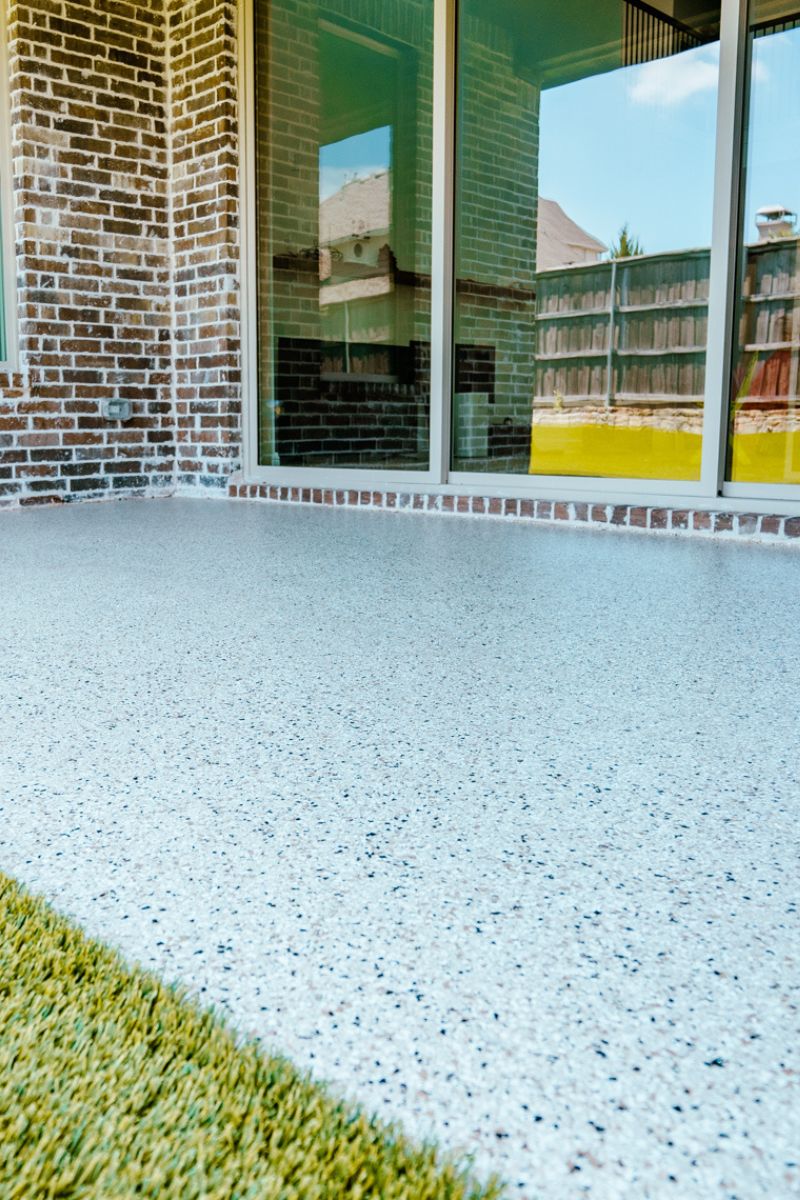
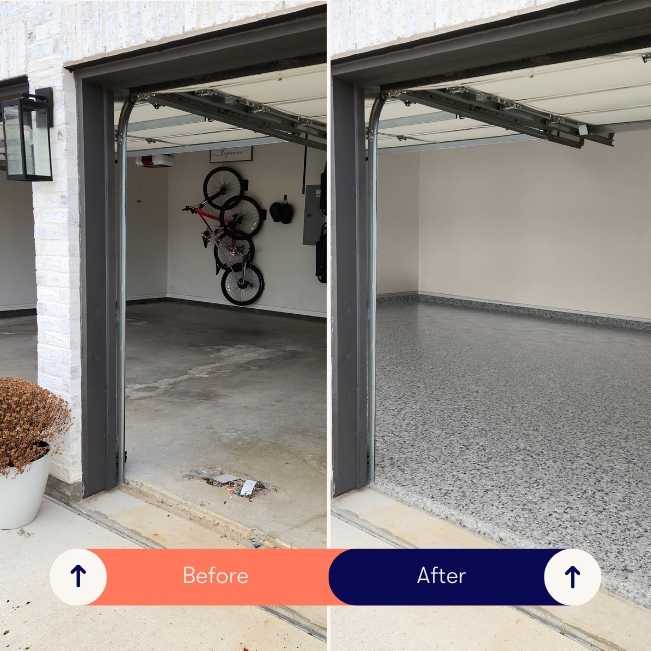
A coating is a built system. We diamond grind the slab, repair cracks, apply a polyaspartic base coat, broadcast vinyl flake to full coverage, and seal it with a polyaspartic top coat. Both coats are polyaspartic, at 85 to 95 percent solids. It is thicker, it bonds into the concrete, and it changes the look of the drive completely. For how every option compares inside the garage, see the best garage floor coating for a Florida home.
- Sealer: thin and clear, needs reapplying, keeps the plain concrete look.
- Coating: built up in layers, flake finish, bonds into the ground surface, cleans with a hose.
- Neither one fixes a slab that is moving.
What a coated driveway needs
A real grind
A coating that only sits on the surface is the first thing to let go, and a driveway is where that shows fastest. Sun, water and tires all work at the edge of a weak bond. We diamond grind every slab so the coating bonds into the concrete instead of resting on it. An acid etch is not the same thing and does not open the surface the same way.
A slab that is dry enough
Driveways sit right on the ground, and much of Florida has a high water table. After a week of storms, a slab can hold a lot of water. If a slab is pushing real moisture, we tell you before we start, not halfway through. That can mean extra preparation or a new date. The background is in moisture in a Florida garage slab.
Texture and crack repair
A full flake broadcast leaves more texture than bare sealed concrete, which helps underfoot when the drive is wet. Any outdoor surface can still be slick in a downpour, so walk it like any wet surface. Standard crack repair is included in the price. Cracks are filled and ground flush before the base coat. A crack from normal shrinkage stays repaired. A crack from a slab that is still settling or being lifted can come back through any coating.
Honest limits
A coated drive is a big upgrade. It is not right for every slab. Here is where we say no, or say wait:
- Heavy trucks and equipment. A box truck, a dumpster or a loaded trailer parked on the drive is a load the slab may not have been poured for. It can crack the concrete under any coating.
- Tree roots. Big trees lift driveway slabs. If a section is already heaved, coating it will not flatten it. The root problem comes first.
- Sunken or moving sections. If a slab is likely to keep moving, we tell you before we start.
- Sun on the appearance. Strong year round sun changes how any outdoor surface looks over time. Polyaspartic does not yellow the way epoxy does, but an outdoor floor still ages in the sun.
- Standing water. If water pools on the drive today, it will pool after coating. Drainage is a grading question.
The outdoor warranty, in plain words
Exterior residential surfaces, including driveways, carry a 10 year warranty. Changes in appearance caused by sunlight, aging or natural wear are not covered on outdoor installs. That is not fine print to hide. It is how outdoor surfaces in strong sun behave, and you should know it going in. Interior garage floors carry a lifetime warranty for as long as you own the home. The details are on the warranty page.
Many homeowners do the garage and the drive together, since the prep and the system are the same. If you are pricing garage floor coating in Wesley Chapel, the driveway can be part of the same project.
Pick a flake blend with the sun in mind. Mid tone blends hide sand and tire dust better than very light or very dark ones. Lighter colors also stay a little cooler to the touch than dark ones in full sun, which is just common sense. You see your exact price online in about a minute, no home visit. For how the system holds up to the state's climate as a whole, start with garage floor coating in Florida.