Moisture is the quiet reason most garage coatings fail. It does not show on install day. It shows months later as a blister, a lifted edge or a white haze under the clear coat. Florida slabs face more of it than most, because of how the homes are built and what the ground under them is like. Here is what causes it, how to check your own slab, and what a coating can and cannot do about it.
Why Florida slabs pick up so much water
Nearly every Florida garage is a slab on grade. There is no basement and no crawl space. The concrete sits right on the ground, so whatever is in the ground is pressing on the underside of your floor.
In much of the state, the water table is close to the surface. Sandy soil drains fast on top, but the water below it does not go far. During the summer rainy season, with storms most afternoons, the ground stays saturated for weeks at a time. A slab in that ground never fully dries out from below. It just moves between damp and less damp.
Lake country makes it plainer. Homes built near lakes, ponds and wetlands sit on ground that holds water close. That is the normal setting for garage floor coating in Land O' Lakes, and it is why a moisture check comes before any coating talk.
The chain of lakes south of Orlando is the same story. Ground that holds water close is the everyday setting for garage floor coating in Kissimmee too.
The vapor barrier you cannot see
Most newer homes have a plastic vapor barrier laid under the slab before the pour. It slows moisture rising from the soil. It does not stop it completely, and it only works if it went in whole.
Older homes may have no barrier at all. Others have one that was torn by boots, rebar or a wheelbarrow during the pour. Some barriers break down over the decades. Once the concrete is poured, nobody can see what is under it. You learn about the barrier by watching how the slab behaves, not by reading the plans.
That matters most in established neighborhoods with older slabs. Homes in places like garage floor coating in Brandon span several building eras, so two garages on the same street can behave very differently.
Want the number for your garage?
Get an accurate price online in about a minute. No sales visit, no waiting on a callback.
Signs your slab is pushing moisture
A slab does not have to look wet to be moving water. Watch for these:
- Dark, blotchy patches that come and go with the weather.
- A white, chalky powder on the surface or along cracks.
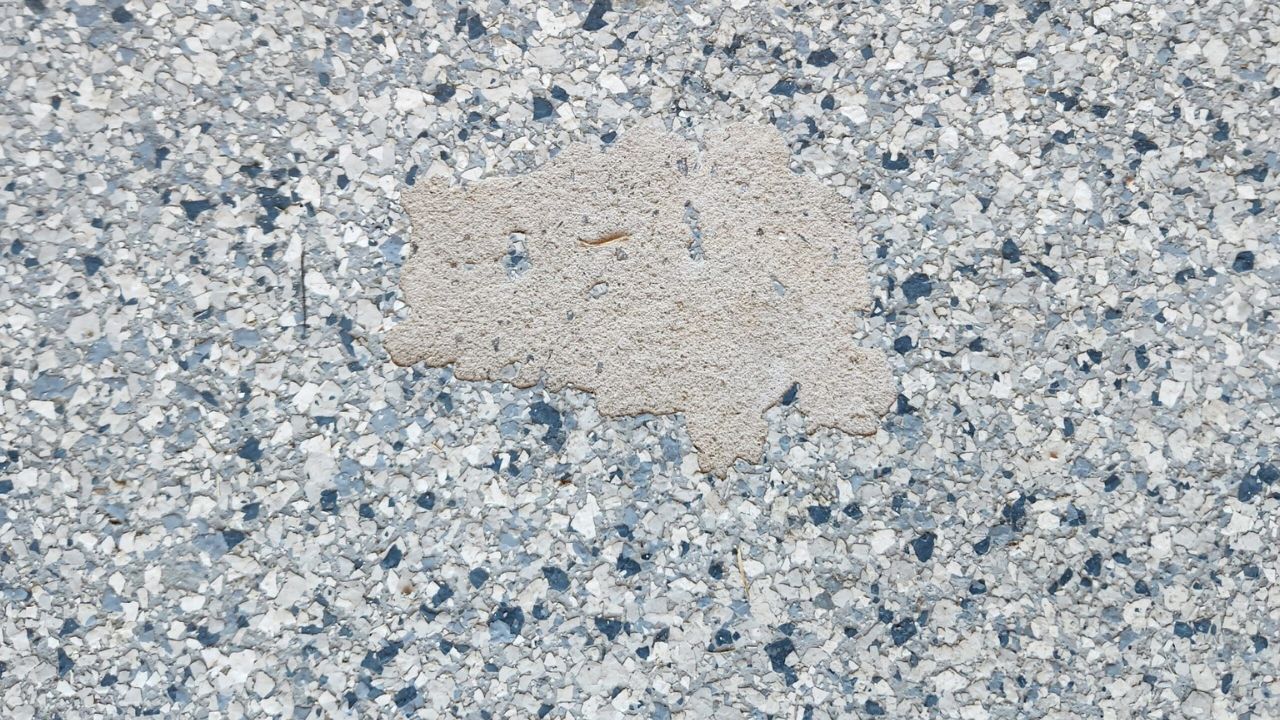
- Old paint or a store bought coating peeling in bubbles, not just in tire paths.
- Cardboard boxes that go soft or show mildew on the bottom.
- A musty smell that comes back even after a good cleaning.
- Rust rings under metal shelves, tool chests or paint cans left on the floor.
What efflorescence is telling you
That white powder has a name: efflorescence. Water moving up through the concrete carries dissolved salts with it. When the water evaporates at the surface, the salts stay behind. A little efflorescence after a heavy storm is common. Efflorescence that keeps coming back means water keeps moving through the slab, and anything you put on top will be in its path.
Condensation is a different problem
Not every wet floor is wet from below. After a cool night, opening the door to warm, muggy morning air can make the slab sweat. That water comes from the air, not the ground. It is on the surface only and dries as the slab warms. It is worth knowing which one you have, because the fix is different. More on that side of things in mold and mildew in a Florida garage.
The plastic sheet test you can do yourself
This simple test tells you where the water is coming from. It costs a roll of tape.
- Cut a square of clear plastic sheeting, about two feet on a side.
- Lay it flat on a clean, dry part of the slab, away from the door.
- Tape down all four edges so no air gets under it.
- Leave it alone for a full day, out of direct sun.
- Lift it and look. Damp concrete or droplets under the plastic means moisture is rising through the slab. Droplets on top of the plastic point to condensation from the air.
Be honest about what this test is. It is a screen, not a measurement. A dry result in a dry week does not prove the slab stays dry in August. A wet result is worth taking seriously. Installers use meters and other tests to get a better read, and you should ask what a contractor plans to use.
Why the grind matters on a damp slab
The way a slab is prepared decides how well a coating holds on to it. There are two common methods. One is acid etching. The other is diamond grinding.
Acid etching washes the slab with acid and then rinses it with a lot of water. On a Florida slab that is already damp, that is the last thing it needs. It also leaves old sealers and the weak top skin of the concrete in place.
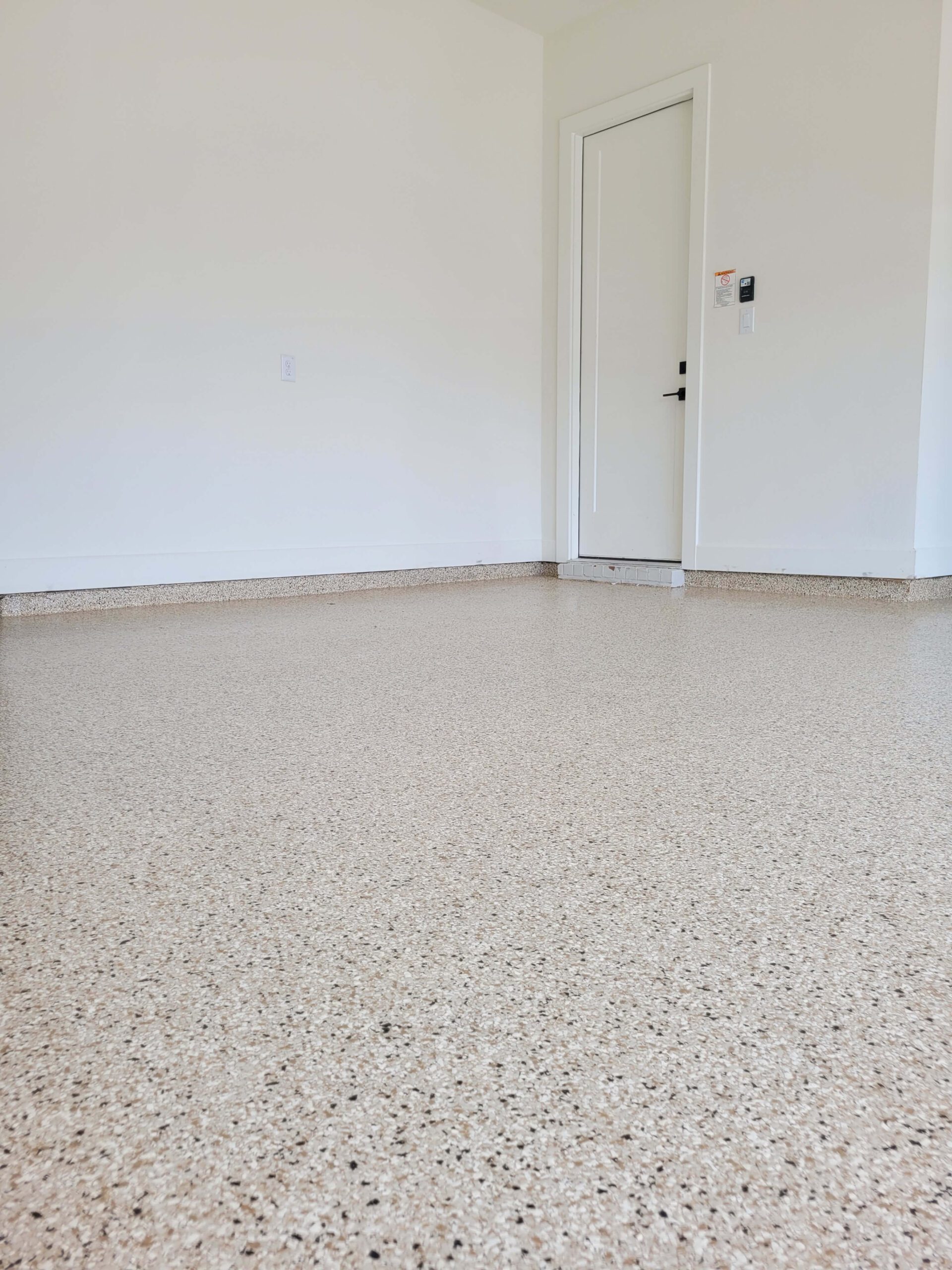
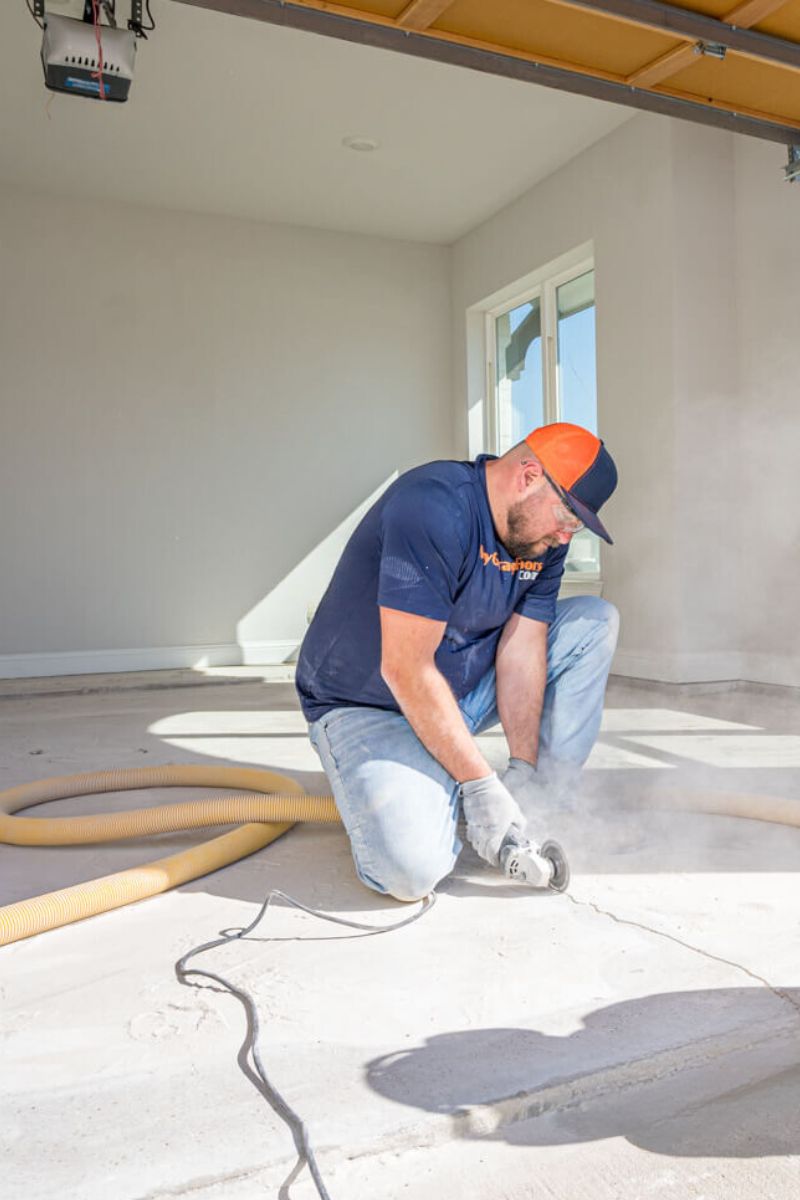
Diamond grinding is dry. It cuts off that weak top layer and any old sealer, and it opens the pores of the concrete. The coating then bonds into the slab, not just onto it. We diamond grind every slab. A coating that only sits on the surface is the first thing to let go when moisture pushes from below. The full sequence is laid out in the polyaspartic installation process.
What we do when a slab is wet
Grinding gives a strong bond. It does not make water disappear. So we check the slab before we start. If a slab is pushing real moisture, or is likely to keep moving, we tell you before we start, not halfway through. That means one of two things: extra preparation, or a new date once the slab has had time to dry.
A slab that is wet because of a recent storm is a timing problem. A slab that is wet all year is a site problem. Those are not the same conversation, and we will tell you which one you have. If your garage took on water in a storm, start with garage floors after a hurricane or flood.
We install polyaspartic only, in both the base coat and the top coat. The material is tolerant of humid air while it cures, which is one reason it suits Florida. That tolerance is about the air. It does not make it safe to coat over water held in the concrete, and no coating does.
What you can do before any coating
Most slab moisture starts outside the garage. A few fixes help any floor, coated or not:
- Clean the gutters and point downspouts away from the garage walls.
- Aim sprinkler heads so they do not soak the apron or the outside of the garage wall every morning.
- Make sure the soil and the driveway slope away from the door, not toward it.
- Run a dehumidifier or a vent fan in a garage that stays closed up.
- Keep cardboard and wood off the bare slab, where they trap water against it.
New construction has its own version of this. A fresh slab still has water from the pour leaving it. Homes in fast growing areas like garage floor coating in Winter Garden often have garages that are simply too young to coat yet.
What a coating will not fix
A coating seals the top of the slab. It makes the floor easy to clean and stops spills from soaking in. It does not stop vapor at its source. It does not fix a slab that is settling or cracking because the ground under it washed out. It does not keep rain from blowing under the garage door. For the movement side, see the 7 causes of garage floor cracking.
Standard crack repair is included in the price. A crack that keeps moving is different, and we will say so. To read more about materials and prep for the whole state, start with garage floor coating in Florida.