Hurricane season in Florida runs from June 1 to November 30. When water gets into a house, the garage is often where it comes in first. It sits lowest, it has the biggest door, and it is full of things that do not like water. This guide is about the floor: what happens to it, how to clean it, when it is dry enough for any new coating, and what a coating can and cannot do for you next season. It is practical, not a sales pitch.
Safety comes before the floor
Do not walk into standing water in a garage until you know the power is off. Garages are full of outlets, freezers, chargers and water heaters close to the floor. If you cannot reach the main breaker without stepping in water, call the utility or an electrician.
- Treat floodwater as dirty. It can carry sewage, fuel and lawn chemicals.
- Wear rubber boots and gloves for the cleanup.
- Check for spilled pool chemicals, gas cans and paint, and keep them apart.
- Do not run a generator inside the garage, even with the door up.
- Follow local health guidance on cleaning and disinfecting.
Take photos of the floor, the walls and everything stored in the garage before you move anything. A claim goes easier when you can show the damage as you found it.
What standing water does to bare concrete
Concrete is tough. A garage slab usually survives a flood as a structure. The problems come from what the water brings with it and how slowly it leaves.
Bare concrete is porous. It soaks up floodwater along with whatever is in it. Silt and mud settle into the surface. Oil from the car, fertilizer from the shelf and anything else in the water get pulled into the top of the slab. As it dries, salts come back up and leave a white crust. The garage can smell musty for a long time after.
Near the coast, storm surge adds salt water. Salt left in bare concrete keeps drawing moisture out of the air and can stain and rust anything metal sitting on the floor. Bayfront homes, like those on the page for garage floor coating in St. Petersburg, face surge and salt together.
Fast moving water can also wash soil out from under the edges of a slab. When the ground under it shifts, the slab can settle and crack. That is a ground problem, and it should be looked at before any new coating goes down. The common reasons are covered in the 7 causes of garage floor cracking.
Want the number for your garage?
Get an accurate price online in about a minute. No sales visit, no waiting on a callback.
What it does to a coated floor
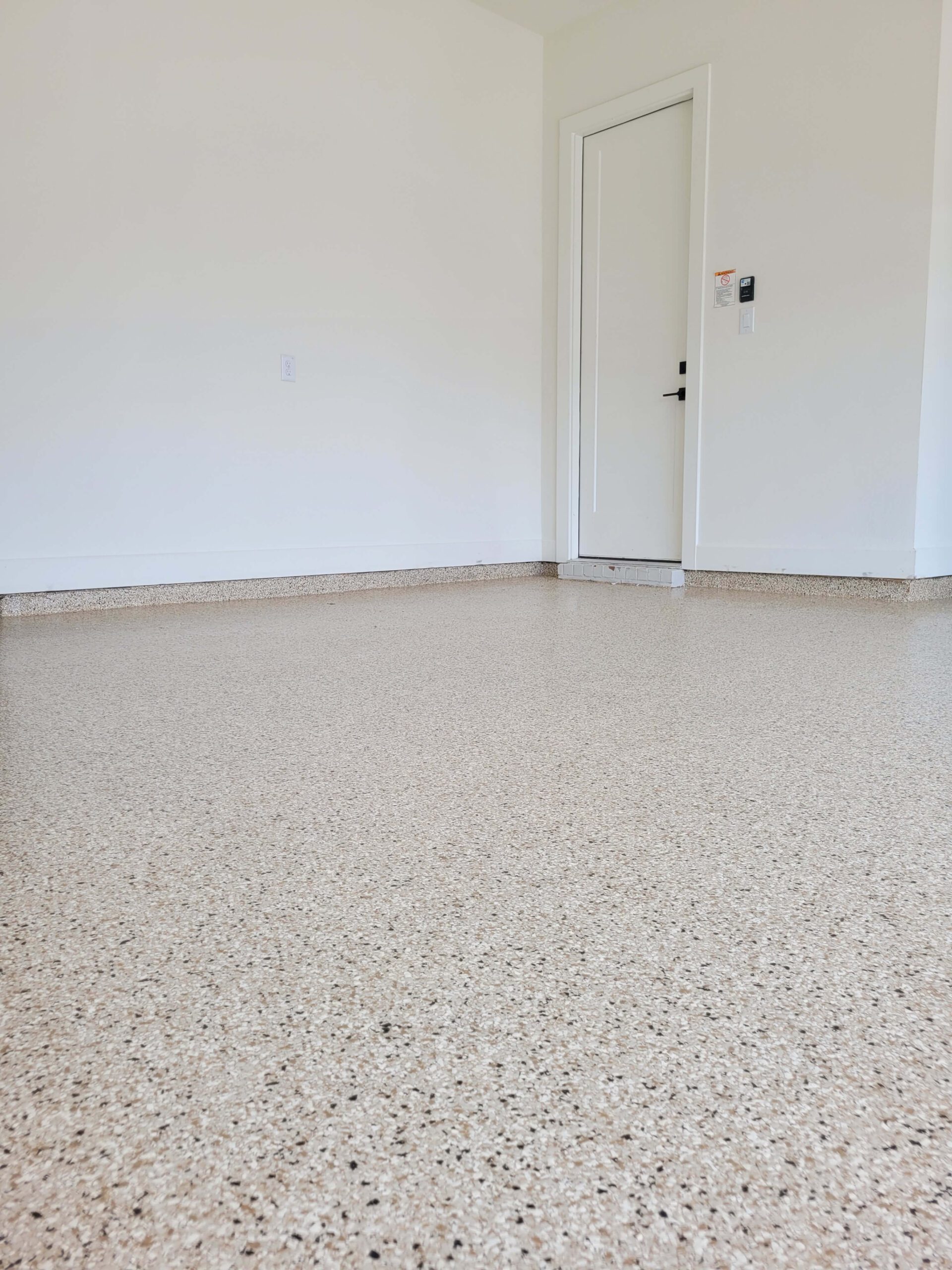
A sealed floor does not soak up the water. The mud and silt stay on top, where you can push them out the door. That is the biggest practical difference after a storm. Cleanup is faster, and the stains do not set into the concrete.
A well bonded coating usually handles water sitting on top of it. The weak points are elsewhere. Water can get in at a bare edge, an old crack or a spot where the coating was already lifting. After a big storm, the ground under the slab stays soaked, and moisture can push up from below. A coating that only sits on the surface is the first thing to let go when that happens.
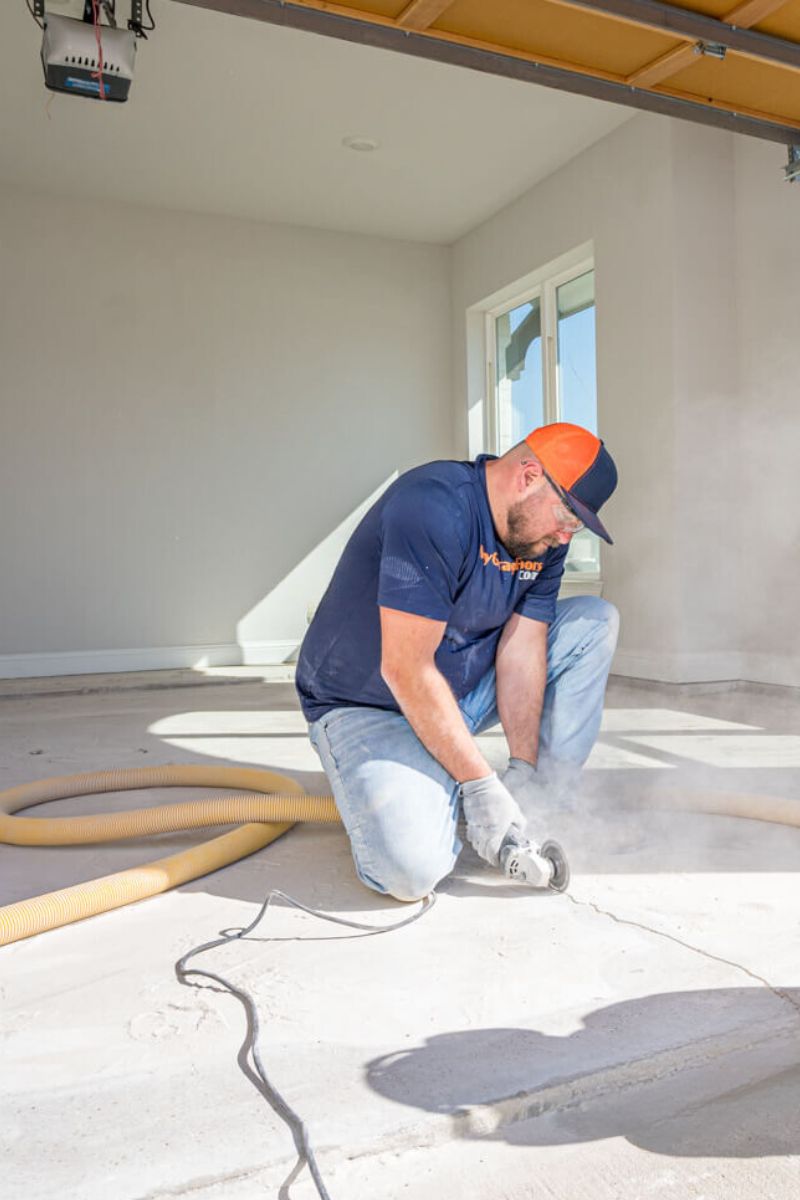
We cannot promise that any floor comes through a flood untouched. What we can say is how we build it. We diamond grind every slab so the coating bonds into the concrete, and we use polyaspartic in both the base and top coat. That gives the floor its best chance.
Cleanup steps for a flooded garage floor
- Get wet boxes, rugs, cardboard and wood off the floor and out of the garage. They hold water against the slab.
- Push out mud and silt with a squeegee or a shovel while it is still wet. Dried mud is much harder to move.
- Rinse the floor with a hose, working toward the door.
- Scrub with a mild detergent and a stiff push broom. On a coated floor, skip harsh acids and wire brushes.
- Disinfect as local health guidance advises.
- Dry it out. Open the door when the air outside is drier than inside, and run fans and a dehumidifier when it is not.
Do not seal the garage up while the slab is still wet. Trapped damp air is how a flooded garage turns into a moldy one. There is more on that in mold and mildew in a Florida garage.
Drying before any coating or recoat
A slab can look dry on top and still be full of water inside. After a flood, the concrete is soaked, and the ground under it is often soaked too. In much of Florida the water table rises after heavy rain, so the slab is being fed from below while it tries to dry from above.
That is why there is no fixed waiting period that fits every garage. It depends on how long the water stood, the soil, the weather after the storm and whether the slab has a vapor barrier. A simple plastic sheet test is a good first check. It is explained in moisture in a Florida garage slab.
Coating too soon is the most common mistake after a storm. The floor looks great for a few weeks, then blisters as the trapped water tries to leave. If a slab is pushing real moisture, we tell you before we start, not halfway through. It means extra preparation or a new date. We would rather move the date than put down a floor that will lift.
Low lying waterfront areas take the longest to dry out. Homes near the canals and the bay, like those on the page for garage floor coating in Apollo Beach, often sit on ground that stays wet well after the water goes down.
What a coating can and cannot do
It is worth being clear here, because storm season brings a lot of overpromising.
- It can keep water and mud on the surface instead of in the concrete.
- It can make cleanup a job for a hose and a push broom.
- It can resist oil, salt and most household chemicals that spill in a flood.
- It cannot waterproof your house or stop water from coming in.
- It cannot stop water from flowing under the garage door.
- It cannot protect drywall, cabinets or anything stored on the floor.
- It is not hurricane proof, and no floor coating is.
Keeping water out is a job for the door seal, the grading, the drains and, when a storm is coming, barriers or sandbags. The floor coating is what makes the mess easier to deal with afterward. The same advice holds from inland lakes to Gulf beaches, including the homes behind garage floor coating in Venice.
Storm season prep in the garage
A little work in early June saves a lot of work in October. Most of it costs nothing.
- Get things off the floor. Metal shelves with the bottom shelf left empty are better than boxes stacked on the slab.
- Swap cardboard for plastic bins with lids.
- Store pool chemicals, fuel, fertilizer and paint up high and apart from each other.
- Keep a squeegee, a push broom, fans and a dehumidifier where you can reach them after a storm.
- Have a door professional look at the garage door and its bracing. It is the largest opening in most houses.
- Clear the floor drain, if you have one, and check that the driveway slopes away from the door.
On the coast, rinse the slab after any surge or salt spray reaches it. Salt left behind keeps working on bare concrete and metal. More on that in salt air and coastal garages.
Gulf coast towns further north, like those on the page for garage floor coating in Hudson, sit low and close to the water, so this prep list matters there every season.
When the slab is dry and sound, and you want a floor that is easier to recover next time, read about garage floor coating in Florida. You see your exact price online in about a minute, with no home visit.