Most coating comparisons are written for a dry garage on a mild day. A Florida garage is not that garage. The air is wet for most of the year. The slab often sits close to the water table. The sun comes through an open door hard enough to bleach a plastic trash can. Those three things decide which coating lasts. This guide looks at epoxy and polyaspartic through that lens and nothing else.
Why humidity matters before the coating is even dry
Every floor coating cures through a reaction. Wet air gets into that reaction. Epoxy is the more sensitive of the two. It cures slowly, so it spends hours open to the air in the garage. In a humid garage, moisture can settle on the surface while the coat is still soft.
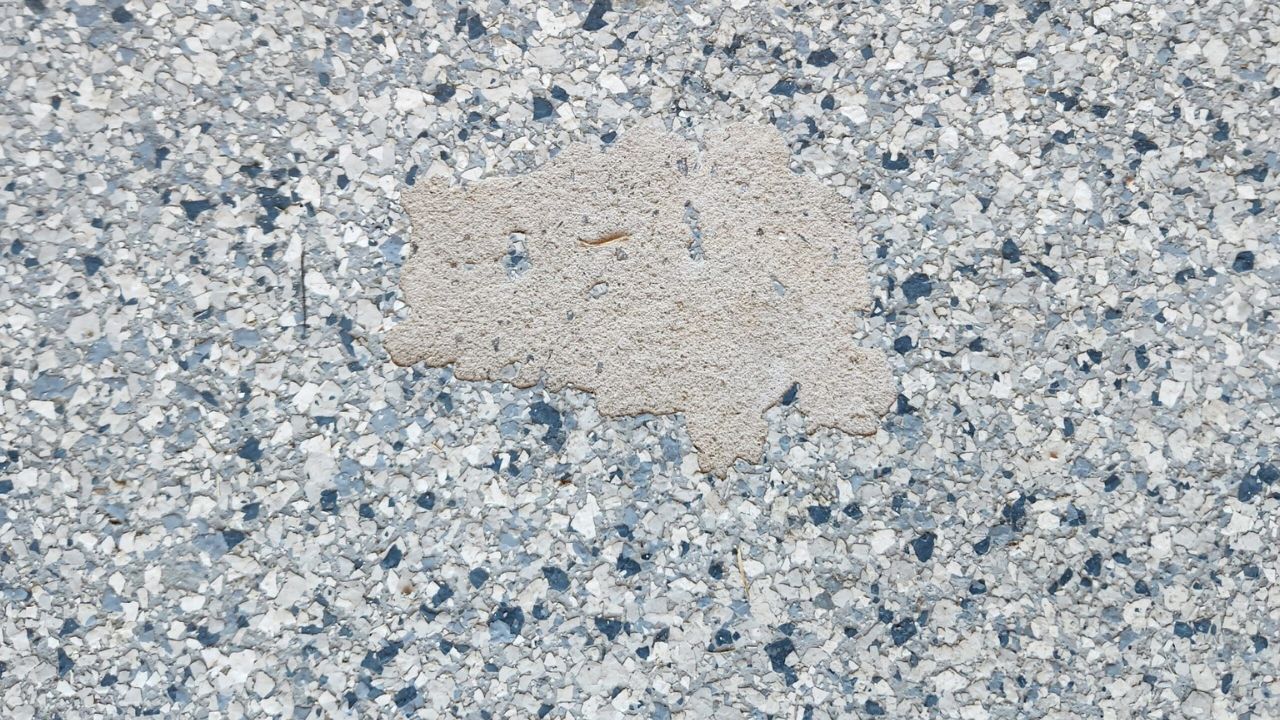
When that happens, epoxy can form a cloudy or greasy film on top, often called blush. It can also cure soft or uneven. The next coat may not grab well over that film. None of it shows on install day. It shows up later, as a coat that peels in sheets.
Polyaspartic is more tolerant of the air it goes down in. It sets faster, so it spends less time exposed. That shorter window is a real advantage in a summer garage where the door has to stay open for airflow and the air outside feels like a wet towel. Moving away from the coast does not help much in summer. That wet afternoon air is the normal working condition behind garage floor coating in Orlando.
Heat in a closed Florida garage
A Florida garage with the door shut in summer is an oven. Heat changes how a coating behaves during the install and for years after it.
During the install, heat shortens working time for any coating. A good installer plans for that with smaller batches, careful timing and an early start. That part is skill more than product.
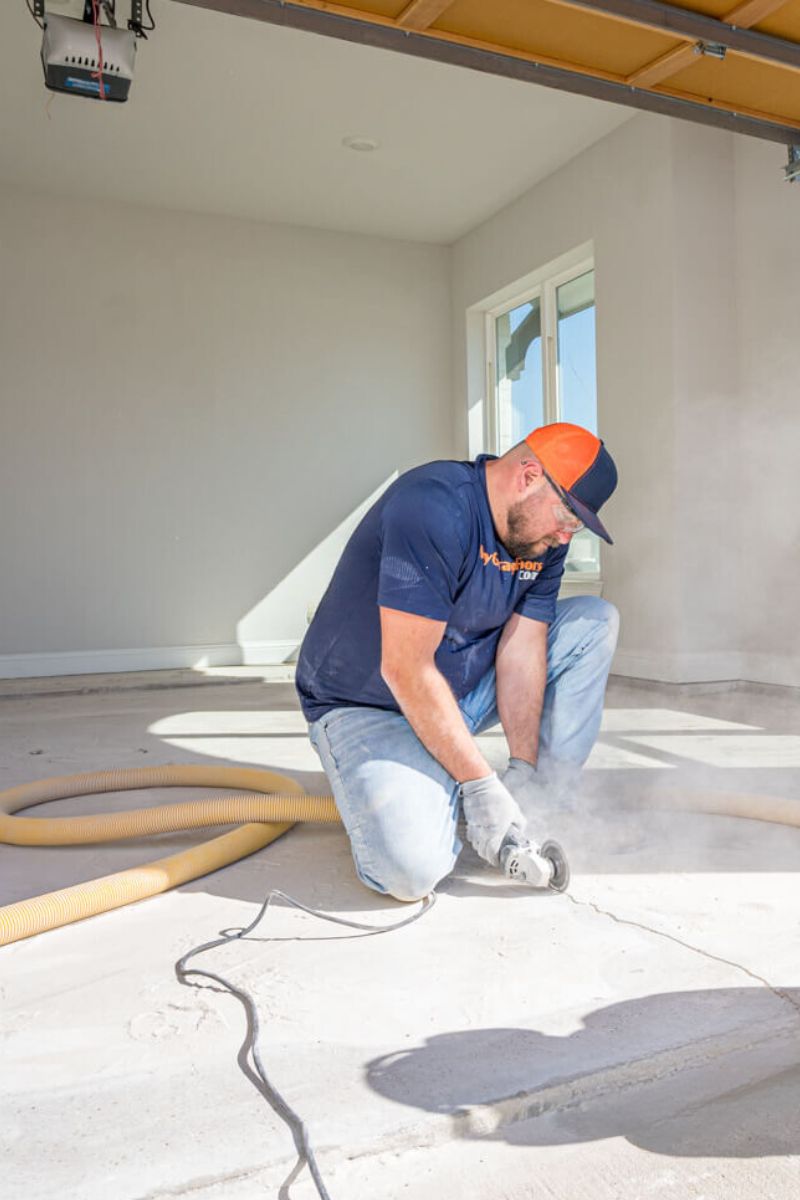
After the install, the bigger question is heat cycling. The slab warms through the afternoon and cools overnight, nearly every day of the year. A coating that only sits on the surface is the first thing to let go when the concrete under it moves. That is why prep matters as much as material. We diamond grind every slab so the coating bonds into the concrete instead of resting on top. Inland, in places like Lakeland, afternoons run among the hottest in the state.
Want the number for your garage?
Get an accurate price online in about a minute. No sales visit, no waiting on a callback.
The sun through an open door
Florida sun is strong all year, not just in summer. A west facing garage with the door up in the late afternoon gets direct light across the floor. This is where epoxy shows its biggest weakness.
Epoxy is not UV stable. In sunlight it ambers, which means it turns yellow. It starts in the strip nearest the door. You end up with a two tone floor: clean at the back, yellow at the front. A clear epoxy top coat makes it more obvious, not less.
Polyaspartic is UV stable. It does not yellow in sun the way epoxy does. In a home where the door is open while you work, wash the car or carry in groceries, that is not a small detail. We go deeper on sun and tire damage in why Florida garage floors yellow and peel.
Moisture coming up from below
Wet air is half the story. The other half comes up through the slab. Most Florida homes are built slab on grade, and in many areas the water table sits close to the surface. Moisture vapor moves up through the concrete and pushes on whatever is on top of it.
Neither epoxy nor polyaspartic cures a slab that is pushing real moisture. Any coating can blister or lift if the pressure underneath is high enough. The difference is in how the job is handled. The slab should be checked before anything goes down. If a slab is pushing real moisture, we tell you before we start, not halfway through. That can mean extra preparation or a new date. The full picture is in moisture in a Florida garage slab.
Low lying neighborhoods built near retention ponds and wetlands are where this comes up most. Newer subdivisions around garage floor coating in Riverview are a good example of the kind of ground where a moisture check is worth doing first.
Where the two coatings actually differ
Strip away the sales talk and the comparison for a Florida garage comes down to a short list.
- Cure in wet air. Epoxy cures slowly and is more sensitive to humidity while it does. Polyaspartic sets faster and spends less time exposed.
- Sun. Epoxy yellows in UV. Polyaspartic holds its color.
- Hot tires. Epoxy can soften under hot tires and lift. Polyaspartic resists hot tire pickup.
- Odor. Many epoxy systems smell strong while curing, which matters when the garage is attached to the house and the windows stay shut for the air conditioning. Polyaspartic is low odor while curing.
- Getting the garage back. Epoxy needs long waits between coats. Polyaspartic coats are ready for the next one quickly, so the garage comes back fast.
Epoxy does have a place. It costs less as a raw material, and it is fine in a dark, dry, air conditioned room that never sees sun. A Florida garage is rarely that room. For the general side by side, outside of climate, see polyaspartic vs epoxy.
Watch for the hybrid system
Plenty of quotes say polyaspartic but only use it on top. The base coat is epoxy, and a polyaspartic clear coat goes over it. That is a hybrid. The top coat helps with sun. But the coat that bonds to the concrete is still the one most sensitive to humidity during its cure. In a Florida garage, that is the coat you most need to get right.
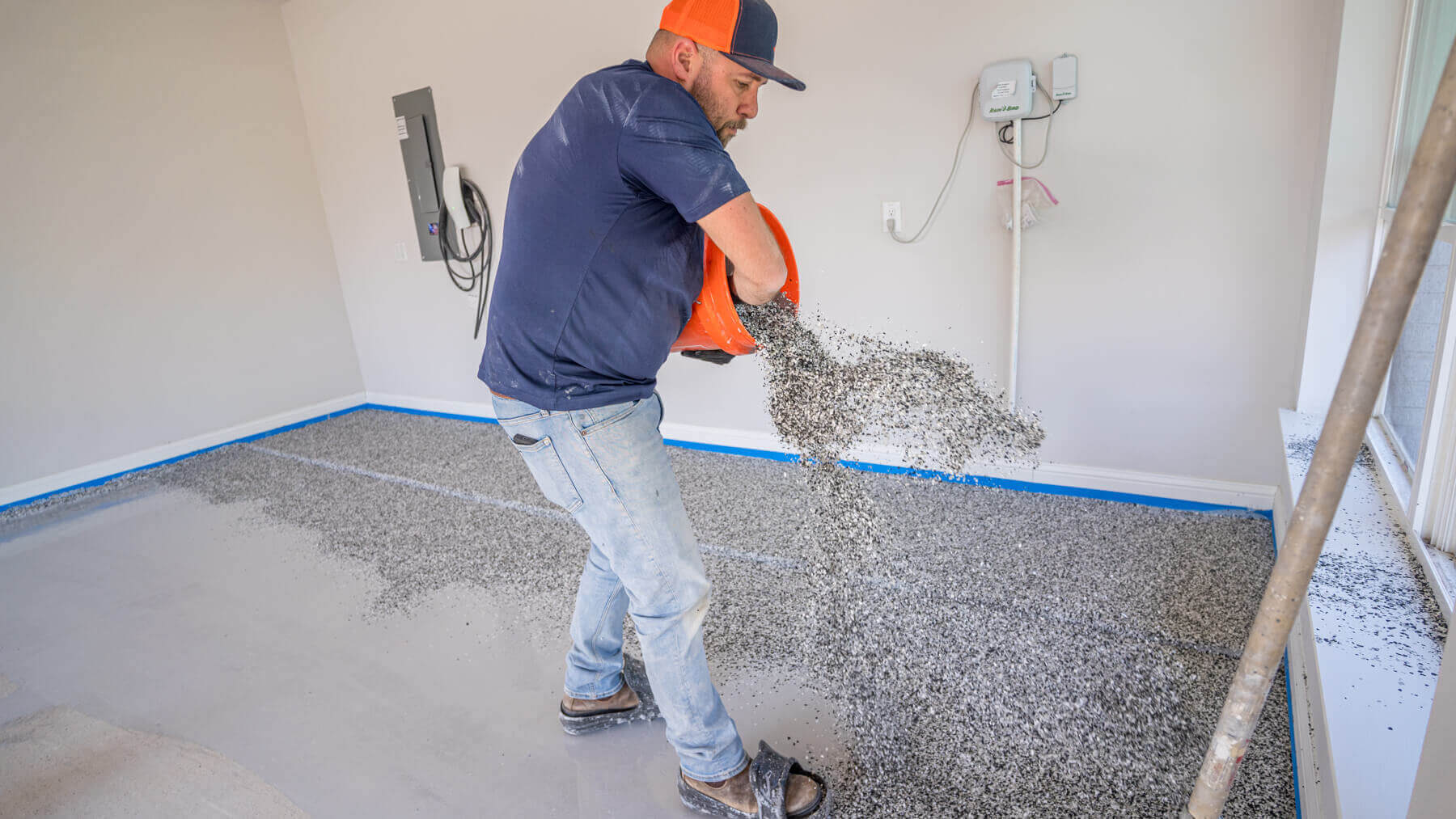
We install polyaspartic only, in the base coat and the top coat, with a full broadcast of vinyl flake in between. There is no epoxy anywhere in the system. When you compare quotes, ask what is in each coat by name.
What to ask any contractor in Florida
These questions sort out most quotes in a few minutes.
- Is the base coat polyaspartic or epoxy? Is the top coat?
- Do you diamond grind the slab, or acid etch it? Grinding opens the concrete so the coating bonds into it. Acid etching puts more water into a slab that may already have plenty.
- How do you check for moisture, and what happens if the slab is wet?
- What is the solids content? The system we install runs 85 to 95 percent solids.
- Is crack repair included, or is it extra?
- Who does the install: your own people or a subcontractor?
- What does the warranty cover in writing? Does it name yellowing and peeling?
Our answers are short. Standard crack repair is included in the price. Our own installers do the work, never subcontractors. The interior garage warranty is lifetime for as long as you own the home, and it covers peeling, blistering, fading and yellowing. The terms are on the warranty page.
The short version
Humidity punishes slow cures. Sun punishes coatings that yellow. Heat cycling punishes coatings that only sit on the surface. Polyaspartic over a diamond ground slab answers all three better than epoxy does. It will not fix a slab that is pushing heavy moisture, and nobody honest will tell you it does.
The same rules hold on the coast, where salt air is added to the list. Homes near the bay, like those on the page for garage floor coating in Tampa, deal with all of it at once.
For a broader look at materials, prep and what a finished floor includes, read about garage floor coating in Florida. You see your exact price online in about a minute, with no home visit.