Open a Florida garage after a week of summer rain and you know the smell. Damp, stale, a little sour. That is mildew, and it shows up in new builds and old block homes alike. The floor is part of the story. It is not the whole story. This guide explains where the musty smell comes from, what a sealed floor really changes, and what only airflow and drier air can fix.
Why Florida garages get musty
Mildew needs three things: moisture, warmth and something to feed on. A Florida garage supplies all three for most of the year. The air outside is humid from late spring well into fall. Afternoon storms soak the driveway and blow rain under the door. Most garages are not air conditioned, so the air inside stays as wet as the air outside, and often hotter.
Then there is the door. Every time it opens, warm wet air rolls in. When it closes, that air sits. Boxes, a spare fridge and stored lawn gear block airflow along the walls. Corners stay damp. That is where mildew starts. It makes little difference whether the house sits near the lakes inland or close to the Gulf. A homeowner looking at garage floor coating in Orlando lives with the same summer air as one on the coast.
Under the slab, many parts of the state have a high water table. Most Florida homes are built slab on grade, with the garage floor poured straight onto the ground. Some older slabs have no vapor barrier, or one that has broken down. Moisture from below can move up through the concrete. The guide to moisture in a Florida garage slab covers how to test for it and what it means for a coating.
Bare concrete holds water and food for mildew
Concrete looks solid. It is not. It is full of tiny pores, and bare concrete soaks up water like a stiff sponge. A bare floor that gets wet from a dripping car, a mop or a storm does not just dry on top. It holds water inside and gives it back to the air slowly.
The pores also trap grime. Dust, pollen, grass clippings, leaf bits, spilled drinks and tire residue all work into the surface. That film is food. Wet concrete plus food plus heat is a good home for mildew. You see it as gray or black speckling near the walls, under shelving and around the water heater.
Sweeping does not get it out of the pores. Scrubbing helps for a while. Then the next wet week brings it back, because the surface still drinks water and still holds dirt.
Want the number for your garage?
Get an accurate price online in about a minute. No sales visit, no waiting on a callback.
What a sealed floor changes
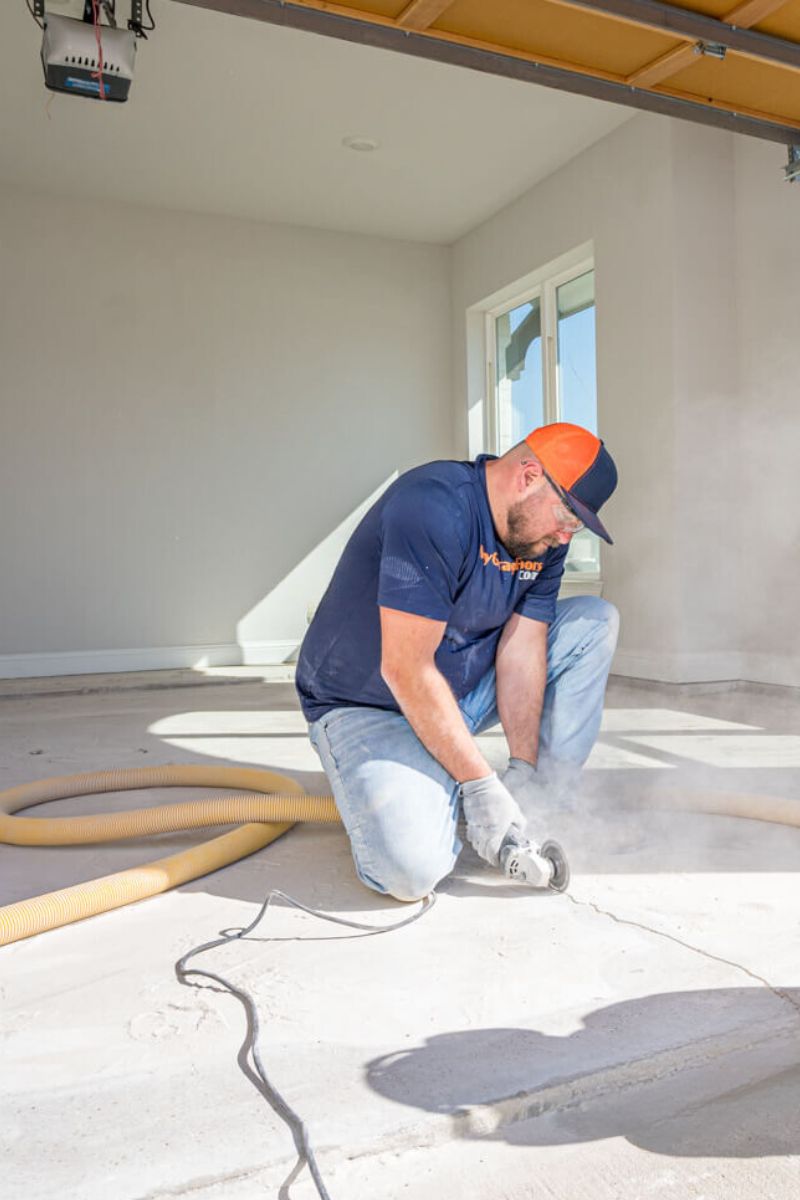
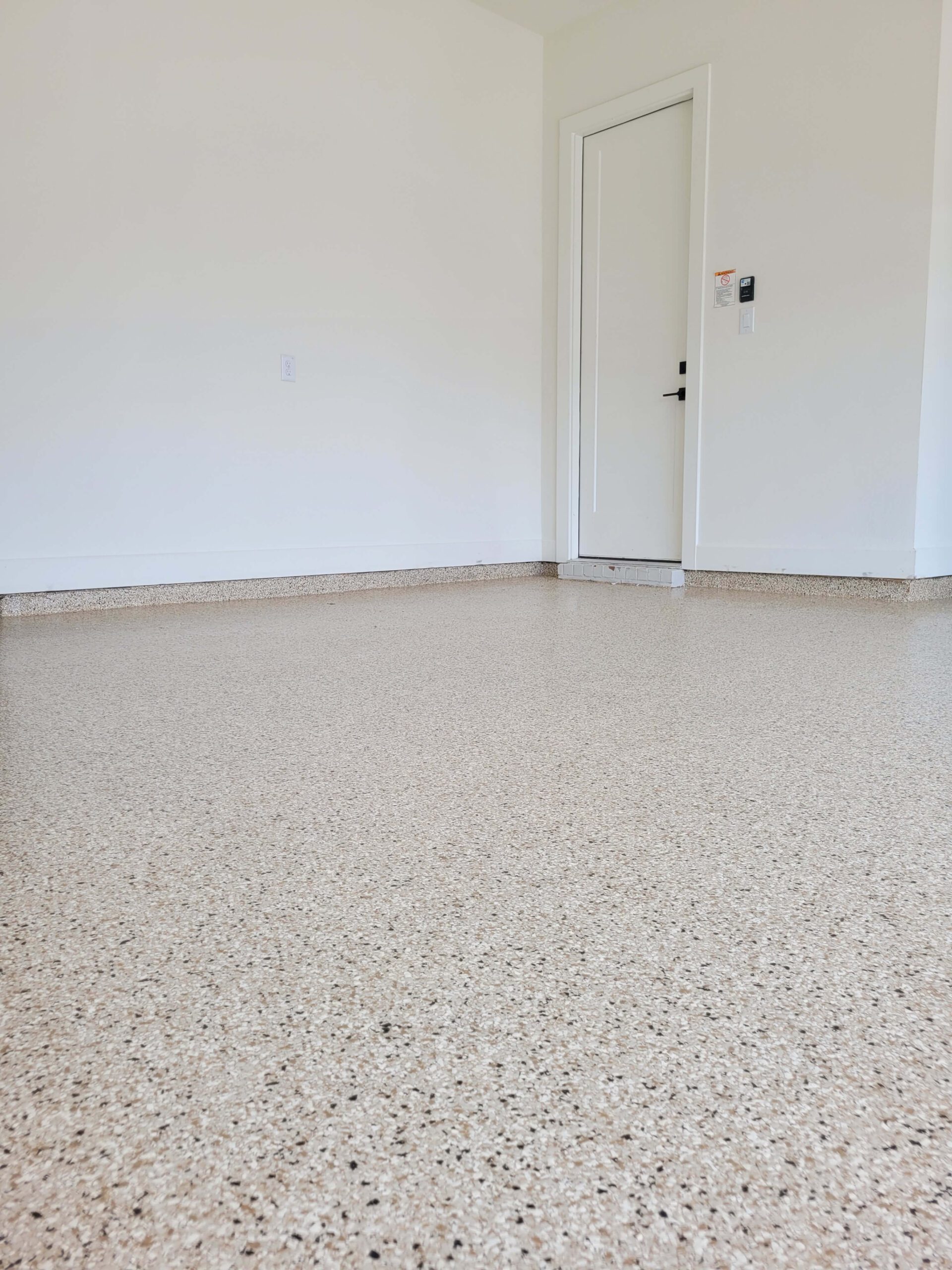
A full polyaspartic coating closes that surface. We diamond grind every slab first, so the base coat soaks into the open concrete and bonds into it instead of sitting on top. Then a full broadcast of vinyl flake goes down, and a polyaspartic top coat seals it. The result is a floor that does not soak up spills and does not hold grime in pores.
- Water stays on top. A spill or rainwater sits on the coating until you push it out. It does not wick into the slab.
- Dirt has nowhere to hide. Grime sits on a sealed surface, not inside it, so it rinses off.
- Cleaning is fast. A sealed flake floor cleans with a hose and a push broom. People tend to clean it more often because it is easy.
- Less dust. Bare concrete sheds fine dust as it wears. A coated floor does not.
If you are weighing a clear sealer against a full coating, read about sealing a garage floor vs coating it. A thin sealer slows water down for a while. It wears in traffic and leaves the pores open again.
What the floor does not fix
This is the honest part. A coated floor removes one place mildew likes to live. It does not change the air in the garage. If that air stays humid and still, mildew can still grow on drywall, wood shelving, cardboard boxes, the back of the door and anything stored against the walls.
- It does not dry out humid air.
- It does not fix a roof leak, a leaking water heater or a gap under the door that lets rain in.
- It does not remove mold already growing in drywall or framing. That needs its own repair.
- It is not a mold treatment for the house. If there is mold in the living space, or anyone in the home has health concerns, talk to a mold professional.
It also matters what is happening under the slab. If a slab is pushing real moisture, we tell you before we start, not halfway through. That can mean extra preparation or a new date. A coating laid over a wet slab without that step is a coating that can blister.
Airflow, dehumidifying and daily habits
Drier air is what stops mildew on the walls and on the things you store. Most of the work is simple.
- Move the air. A wall fan keeps air from sitting in corners. Wall vents help if the garage has none.
- Run a dehumidifier. In a closed garage, a dehumidifier sized for the space and drained to the outside does more than anything else. Keep the door shut while it runs.
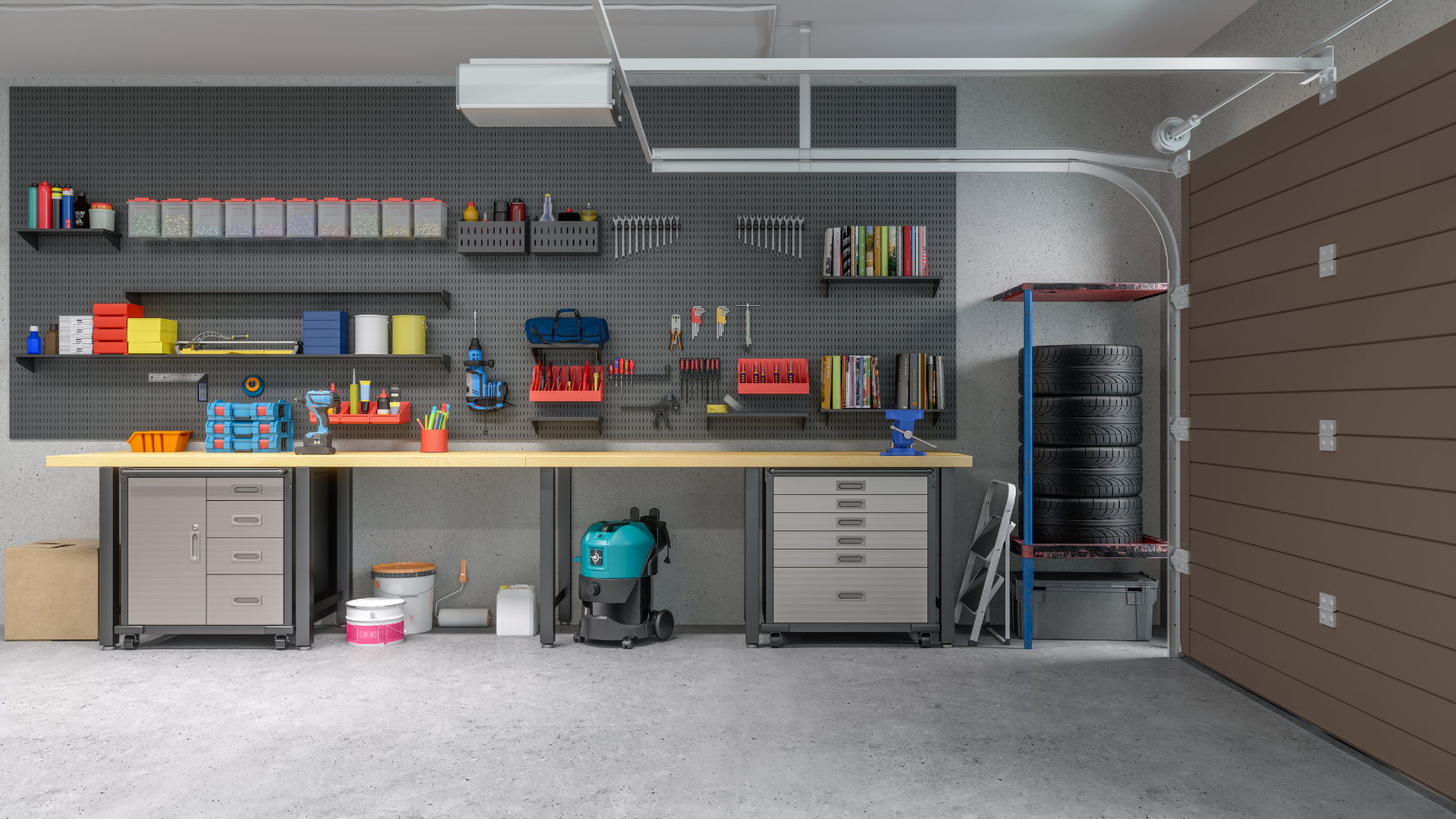
- Get things off the floor and away from the walls. Open shelving with a gap behind it beats boxes stacked against block.
- Swap cardboard for plastic bins. Cardboard soaks up humidity and feeds mildew.
- Fix the door seal. A worn bottom seal lets wind driven rain in during summer storms.
- Let a wet car drip out. After a storm, leave the door cracked for a while if it is safe to.
None of this is specific to one town. The routine is the same whether you are pricing garage floor coating in Lakeland or living a short drive from the beach.
Closed-up garages and seasonal homes
A garage that stays shut for months is the worst case. No one opens the door, no air moves, and the summer humidity has the whole season to work. Owners who leave for the summer often come back to a musty garage, spotted boxes and a film on the floor. If that is you, the guide to coating the garage of a Florida winter home covers how to set it up before you leave.
Newer homes are not immune. Fresh concrete gives off water as it cures, and a tightly built new house can still have a garage with no airflow at all. That is as true for a new build looking at garage floor coating in Wesley Chapel as it is anywhere else.
A coated floor helps here because there is nothing for grime to soak into while you are gone. Pair it with a dehumidifier on a humidistat and the garage stays much fresher.
Cleaning a musty garage, before and after
Before any coating, deal with the mildew you have. Empty the garage. Clean walls and shelving with a mildew cleaner made for the job, following its label. Throw out soaked cardboard. Fix leaks. Get the air moving. The floor itself gets diamond ground as part of the coating work, which takes off the stained top of the concrete.
After the coating, keep it simple. Rinse with a hose, scrub with a push broom and mild soap, and squeegee the water out the door. Do it at the end of storm season and any time the floor gets a film. The full routine is in how to maintain your garage floor coating.
If a recent storm left standing water in the garage, start with garage floors after a hurricane or flood. Drying comes before anything else.
A homeowner comparing garage floor coating in Brandon with a DIY kit should ask one question: does it seal the pores, or just color the top? Only the first one changes how the floor handles damp air.
For how the full system holds up to the rest of the climate, from sun to storms, see garage floor coating in Florida.