A Florida pool deck works harder than almost any slab at the house. It sits in full sun, gets splashed every day in summer, and carries bare wet feet. Most decks start as plain concrete or a spray texture, and many end up cracked, stained or faded. There are several ways to redo one. Each has real tradeoffs, and some of the claims made about them are louder than the facts. This guide lays the options out plainly.
What a Florida pool deck goes through
- Sun from every angle. An open deck gets sun most of the day, all year.
- Constant water. Splash, wet feet, afternoon storms and the hose. The deck is wet and dry over and over.
- Pool water. Splash carries treated pool water onto the deck, and it dries there.
- Ground movement. Decks are thin slabs on sandy soil, next to a heavy pool shell. They settle and crack.
- Bare feet. Unlike a driveway, people walk this surface barefoot, so heat and grip are part of the job.
Those conditions are the same in an open backyard near Wesley Chapel and under a screen cage.
Under a cage, partial shade changes how the deck ages, but not what it needs. The guide to lanai floor coating in Florida covers screened spaces in detail.
Hot underfoot: the honest answer
Every surface in full Florida sun gets hot. Concrete, pavers, paint and coatings all do. A polyaspartic flake coating is not sold as a cooling product, and we do not claim it is one.
What is common sense: lighter colors stay cooler than dark ones. A dark flake blend on a sunny deck will be hotter underfoot than a light one. If heat matters to you, pick a light blend, and plan for shade near the steps and the paths people use most. The eight flake colors are on the colors page.
Spray texture coatings, often called "cool deck" style finishes, are marketed for heat. If staying cool underfoot is the top priority, that is a fair reason to look at one. Just weigh it against the tradeoffs below.
Want the number for your garage?
Get an accurate price online in about a minute. No sales visit, no waiting on a callback.
Wet bare feet and texture
A pool deck needs grip. Smooth paint and glossy sealers are the worst for this. They get slick when wet.
A full broadcast flake floor has more texture than bare sealed concrete or smooth paint, because the flake sits in the coating and gives the surface some tooth. It is still a wet surface next to a pool. Walk, do not run, applies to every deck, whatever is on it.
The options compared
Pavers
Pavers look good and a single broken one can be swapped out. They also move. The sand in the joints washes out in heavy rain, weeds and ants move in, and pieces settle unevenly over time. They need re-sanding and resealing to stay sharp. Pavers are usually a full tear out and rebuild, not a coating over what you have.
Spray texture
This is the knockdown, troweled acrylic finish many Florida decks already have. It is made for pool decks and is often lighter in color. The texture can be rough on feet and knees, it holds dirt in its peaks, and it needs repainting from time to time as the color fades and wears.
Paint
Deck paint is the cheapest refresh. It is also a thin film sitting on the surface. It gets slick when wet unless grit is added, it chalks in sun, and it peels where water collects. Most painted decks need redoing often.
Epoxy
Epoxy is a poor fit for an open pool deck. It is not UV stable, so it yellows and dulls in sun, and outdoors it can lift and peel. It is a common failed coating on Florida patios.
Polyaspartic with full flake
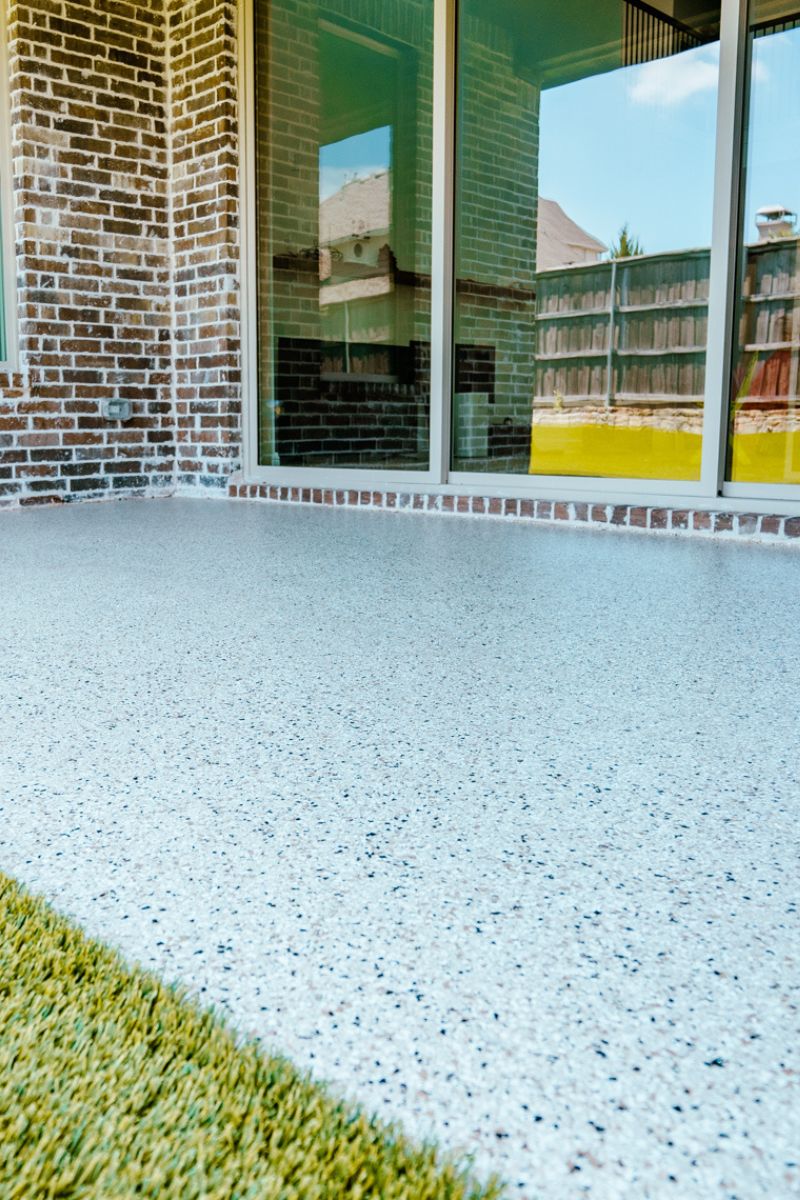
This is the system we install: polyaspartic in the base coat and the top coat, with a full broadcast of vinyl flake. It is UV stable, so it does not turn amber in sun. It bonds into diamond ground concrete instead of sitting on top. It is 85 to 95 percent solids and cleans with a hose and a push broom. The tradeoffs: it is not a cooling product, dark colors get hot, and like every outdoor surface its appearance changes over years of sun. More on that under the warranty below.
Sun is the main thing that breaks outdoor coatings down. The guide to why floors yellow and peel in Florida sun explains what UV does to epoxy and why polyaspartic holds its color.
Cracks in old pool decks
Most older decks are cracked. Some cracks are from shrinkage when the concrete cured. Others come from settling soil, roots, or the deck moving separately from the pool shell. Standard crack repair is included in the price.
What a coating cannot do is stop the ground from moving. If a deck is still settling, or a section is lifting, a repaired crack can come back through any surface, coated or not. If a slab is likely to keep moving, we say so before we start. The joint where the deck meets the pool coping is also left free to move, because it needs to.
Many newer communities with pools, such as Riverview, sit on sandy fill, and settling cracks there are common.
The same is true further south around Parrish. A deck with a few stable cracks is a good candidate. A deck that is breaking up in pieces may need concrete work first.
Pool water, splash and cleaning
Splash is constant, and it dries on the deck. Polyaspartic resists most household chemicals, oil and salt, so normal splash is not a concern. Do rinse the deck with fresh water from time to time, especially around the skimmer and where pool water puddles.
Treat pool chemicals with more care than splash. Store them off the deck, and if a bucket of acid or a bag of shock spills, rinse it up right away rather than leaving it to sit. That is good practice on any surface.
Day to day, a sealed flake deck cleans with a hose and a push broom. Leaves, pollen and sunscreen rinse off. Shaded corners that turned green on bare concrete are far easier to keep clean, because there are no open pores holding moisture and grime. On a newer home, in Lake Nona or anywhere else, the deck can take the same colors as the garage floor.
The driveway takes its own beating from tires, oil and rust from irrigation water. The guide to driveway coating in Florida covers it, and the same system can coat both.
The outdoor warranty and what it leaves out
Exterior residential surfaces, including pool surroundings, patios and lanais, carry a 10 year warranty. That is shorter than the lifetime warranty on an interior garage floor. A pool deck has a harder life than a garage, and the warranty reflects that.
Be clear on one thing before you choose. For outdoor installs, changes in appearance caused by sunlight, aging or natural wear are not covered. A deck in full sun will not look identical after many summers. The full terms are on the warranty page.
You see your exact price online in about a minute, with no home visit and no salesperson. That holds whether you are pricing garage floor coating in Windermere or anywhere else, and the same polyaspartic system goes on the deck as in the garage.
For how the whole system handles sun, humidity and storms across the state, see garage floor coating in Florida.