Live near the Gulf and salt gets into everything. It rides in on the car, settles out of the air, and comes home on beach chairs and fishing gear. Most people notice it on the car first. The garage floor takes it too, and bare concrete handles it badly. This guide covers how salt and sand reach a coastal garage, what they do to concrete, what a coating changes and what it does not.
How salt gets into a coastal garage
There are a few routes, and most coastal garages see all of them.
- On the car. Roads near the water carry salt spray and wet sand. Tires and the underside of the car pick it up and drip it onto the floor.
- On gear. Beach chairs, coolers, wetsuits, rods and kayaks come back wet with salt water and get set down on the slab.
- On boats and trailers. A trailer backed into the garage after a launch brings salt water and grit with it.
- In the air. Close to the water, salt air leaves a fine film on every surface. Open the door and it drifts in.
A garage a few blocks from the bay sees more of this than one far inland. That is the daily reality for anyone looking at garage floor coating in St. Petersburg or along the barrier islands.
What salt does to bare concrete
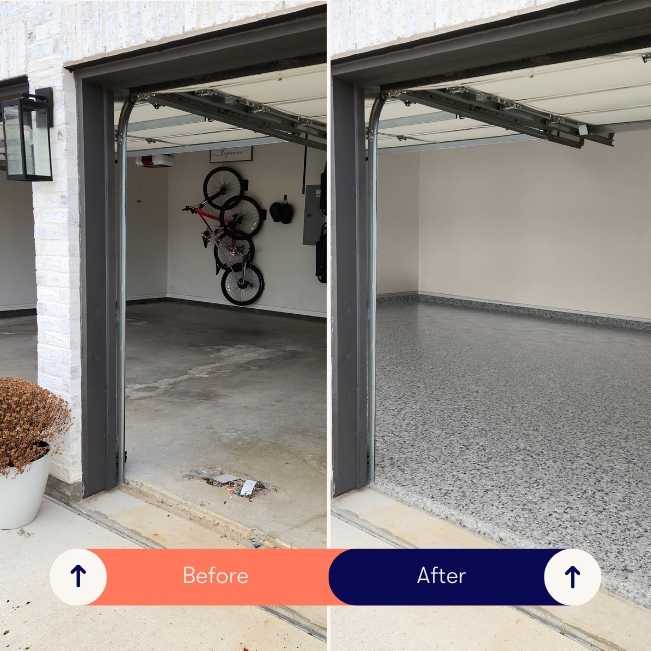
Bare concrete is porous. Salt water soaks into it. When the water dries, the salt stays behind in the pores as crystals. The next wet spell dissolves it and carries it a little deeper. Over years, that wet and dry cycle can scale the surface, leaving a rough, flaking top layer.
You may also see a white crust. Some of that is salt left behind by evaporation. Some may be efflorescence, minerals pushed up from inside the slab by moisture. Both are signs water is moving through bare concrete. The guide to moisture in a Florida garage slab explains how to tell them apart.
The bigger worry is deeper down. Garage slabs often have steel reinforcement. When salt reaches steel, it rusts. Rust takes up more room than steel, so it pushes on the concrete around it and can crack or pop the surface. That is one of the well known causes of garage floor cracking, and it is slow, so it rarely shows up in a slab's early years.
Want the number for your garage?
Get an accurate price online in about a minute. No sales visit, no waiting on a callback.
Sand is the other problem
Coastal garages collect sand. It blows in, it falls off tires and it pours out of beach bags. Under a tire, sand works like sandpaper. Every time the car rolls in, it grinds grit into the floor.
On bare concrete, that wears the surface and makes dust. On a thin paint or a cheap kit, it scuffs through the film near the tire paths, which is where coatings that only sit on the surface start to let go. On a full flake floor, the top coat takes the wear and the flake hides the fine scratches that do happen. It is still a floor. Sweep the sand out and it lasts longer.
Rust stains near the coast
Salt air rusts metal quickly. Bike stands, tool chests, steel shelving legs, trailer jacks and the bottom of the garage door all rust. When they sit on wet concrete, the rust runs into the pores and leaves orange stains that do not scrub out.
On a sealed floor, rust sits on top of the coating. Wipe it up early and it comes off. Left for a long time under a wet metal leg, any surface can stain, so a plastic foot or a rubber mat under steel shelving is a cheap fix for the problem. In a beach town such as Clearwater, it is the first thing to plan for.
What a coating does and does not do
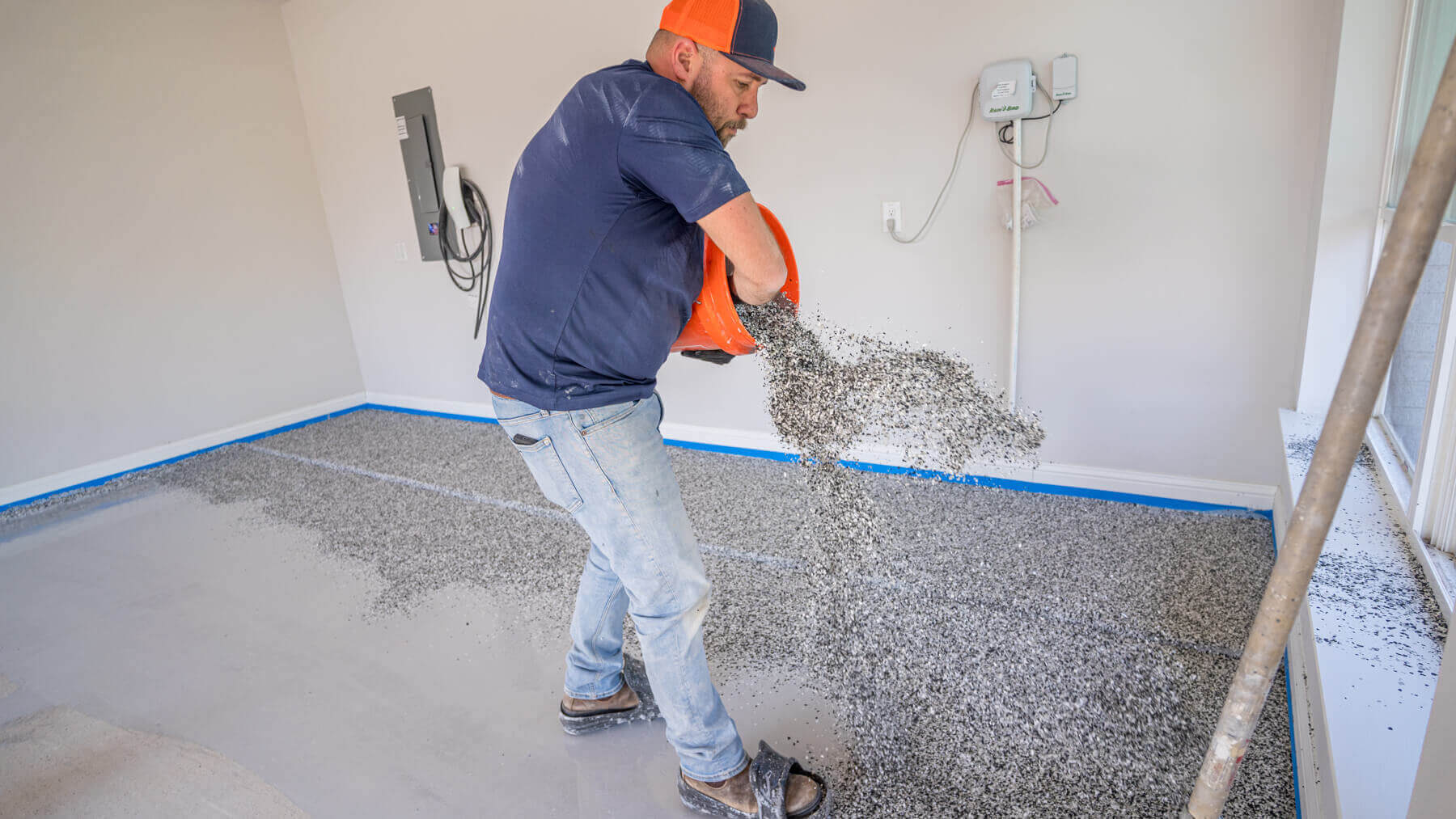
A full polyaspartic system closes the pores that salt water would soak into. We diamond grind every slab first, so the base coat bonds into the concrete instead of sitting on top of it. A full broadcast of vinyl flake and a polyaspartic top coat finish it. Polyaspartic resists oil, salt and most household chemicals. It is also UV stable, so the sun through an open door does not turn it yellow.
Here is what it will not do.
- It does not stop salt air from rusting your car, your tools or the door tracks.
- It does not pull salt back out of a slab that has already absorbed it for years.
- It does not repair steel that is already rusting inside the concrete. Standard crack repair is included in the price. A slab that is spalling badly from rusted steel needs that fixed first, and we say so before we start.
- It does not keep storm surge or flood water out of the garage. That is a different problem. Read garage floors after a hurricane or flood for that.
A coastal slab that is still pushing moisture from below is the other thing to check. Near the water, the water table is often close to the surface. If a slab is pushing real moisture, that means extra preparation or a new date. A homeowner pricing garage floor coating in Apollo Beach should hear that from any installer before work starts, not after.
A rinse routine that works
Salt is easy to handle on a sealed floor if you do not let it build up. A simple routine does most of the work.
- Rinse after beach days. Hose off the floor where the car and gear sat. Fresh water carries the salt out.
- Rinse the car outside. Wash the tires and underside in the driveway, not in the garage.
- Sweep sand out often. A push broom by the door makes it a habit.
- Use a mat at the house door. It keeps sand from tracking inside and catches drips.
- Use mild soap. Skip acid cleaners and harsh solvents. They are not needed on a sealed floor.
- Squeegee it dry. Push the water out the door so it does not sit in the corners.
The longer version is in how to maintain your garage floor coating. The same habits also keep a coastal garage from turning musty.
Choosing a floor for a beach garage
Coastal garages get more sand, more water and more grit than most. A few choices make life easier. Flake blends with some variation in them hide sand and water spots better than a solid color. Lighter blends make a garage feel brighter, which helps when you are rinsing gear at night. There are eight flake colors to choose from.
The driveway takes the same salt and sand before the car ever reaches the garage. If you want the outside slab to match, see driveway coating in Florida. Outdoor surfaces carry a 10 year warranty, and changes in appearance caused by sunlight, aging or natural wear are not covered outdoors.
Garages in Sarasota and further south toward Venice deal with the same salt and sand. You see your exact price online in about a minute, with no home visit.
For how the whole system handles humidity, sun and storms across the state, start with garage floor coating in Florida.